 The Independent Uganda: You get the Truth we Pay the Price



Kampala, Uganda | URN | The Parliament of Uganda is today proceeding with the second and third readings of the Protection of Sovereignty Bill, 2026. The decision to fast-track the legislation comes just eight days after its first reading on April 15, 2026, effectively bypassing the standard 45-day window typically reserved for committee scrutiny and public consultation.
The Uganda Bankers Association, Uganda Human Rights Commission, and various women’s rights groups like FIDA Uganda are scheduled to give their views tomorrow, Friday, April 24. raising questions about how their input can be considered if the bill is passed today.
Promoted by the Ministry of Internal Affairs, the bill seeks to “protect Uganda’s sovereignty from foreign interference” by imposing a rigorous regulatory framework on any individual or entity receiving external support. Key provisions of the Bill include mandatory registration requiring any person whose activities are “directly or indirectly supervised, directed, controlled, or financed” by a foreigner to register as an “agent of a foreigner”.
The bill controversially defines Ugandan citizens residing abroad (the diaspora) as “foreigners” and requires prior ministerial approval before receiving foreign financial support exceeding Shs 400 million within 12 months. In the Bill, any policy advocacy or implementation related to government policy requires cabinet-level authorization; developing a policy without such approval is a criminal offense.
The bill introduces some of the harshest penalties in Uganda’s legislative history. For example, the bill proposes 20 years’ imprisonment for “economic sabotage” or developing policies without cabinet approval. The Bill also proposes fines of up to four billion shillings for organizations found in contravention.
Additionally, the bill proposes forfeiture of funds to the state if received without ministerial clearance. Critics argue that by skipping the 45-day scrutiny period, Parliament is ignoring the catastrophic risks associated with the Bill’s vague language. “This Bill is designed to crush free speech and turn ordinary criticism of government policy into ‘economic sabotage’,” warned the Uganda Law Society (ULS), which has dubbed the legislation the “Anti-Sovereignty Bill”.
Some of the key risks identified by stakeholders include economic collapse as business leaders warn that the broad definition of “agent” could capture any company with foreign shareholders or loans, deterring vital foreign direct investment. The Uganda Bankers Association said that by classifying the diaspora as foreigners, families relying on remittances for school fees and healthcare could face criminal charges if they do not seek ministerial approval.
The NGOs, media houses, and even religious institutions receiving international grants would effectively operate under the whim of the minister of internal affairs, who holds “unlimited discretion” to revoke registrations. Legal experts argue the Bill violates Article 1 (sovereignty belongs to the people) and Article 38 (right to civic participation) of the Constitution.
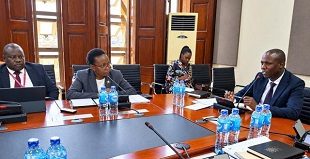
As of 10:00 AM today, a joint committee (Defence and Internal Affairs; Legal and Parliamentary Affairs) was scheduled to meet with the Attorney General and the Ministry of Internal Affairs for “consideration” of the bill. However, simultaneously, the Order Paper for today’s plenary session lists the Bill for its final readings and adoption, signalling that the “scrutiny” phase may be a mere formality.


I WONDER!!!!
I don’t understand i have my sister who works from abroad (madam) what should i do to receive her money?
For parliament to hurriedly to pass such a dangerous bill signals trouble for the country. Us who have been thinking of bringing some tangible development back home in Uganda will now have to go back to the drawing board and see elsewhere.
The world is very big and each country has its own economic policies…some are very conducive for investments whilst others are hash and hard to put up with…just like this one they’re introducing today.
Instead of controlling what’s going of the country…you busy hindering the investors from coming.
Madness of a highest order is on display..
I don’t understand i have my sister who works from abroad (madam) what should i do to receive her money?
THE HIDDEN BURDEN ON THE RUSHING DEBATE ON THE BILL
The Rushed Debate on Uganda’s Protection of Sovereignty Bill, 2026: A Critical Analysis
1. The Speed of Passage — A Procedural Scandal
The Parliament of Uganda is proceeding with the second and third readings of the Protection of Sovereignty Bill, 2026 just eight days after its first reading on April 15, 2026 — effectively bypassing the standard 45-day window typically reserved for committee scrutiny and public consultation.
This is constitutionally and procedurally alarming. The 45-day window exists precisely so that expert bodies, civil society, affected communities, and the general public can interrogate a bill’s implications before it becomes law. The Uganda Bankers Association, Uganda Human Rights Commission, and various women’s rights groups like FIDA Uganda are scheduled to give their views on April 24 — raising serious questions about how their input can be considered if the bill is passed on the same day. Consulting stakeholders after a bill is passed is not consultation — it is theatre.
2. The Content of the Bill — Vague, Broad, and Dangerous
The haste is made worse by the substance of what is being rushed through.
The bill’s most alarming feature is not what it regulates, but how it does so — through undefined terms, unchecked ministerial power, and criminal penalties that demand no proof of intent. Clause 5 prohibits any act that promotes the interests of a foreigner “against the interests of Uganda,” yet nowhere defines what that phrase means. Any activity a government official deems contrary to Uganda’s interests could trigger a prosecution.
The Minister of Internal Affairs can, by statutory instrument, declare any entity to be a “foreigner” without parliamentary approval — a single clause that renders the bill’s entire reach unpredictable, and difficult to reconcile with Articles 1 and 79 of the Constitution, which vest sovereign authority in the people and charge Parliament with its guardianship.
Critics argue that by skipping the 45-day scrutiny period, Parliament is ignoring the catastrophic risks associated with the bill’s vague language.
3. Unprecedented Penalties Without Adequate Deliberation
The bill introduces some of the harshest penalties in Uganda’s legislative history — including 20 years’ imprisonment for “economic sabotage” or developing policies without Cabinet approval, fines of up to four billion shillings for organizations found in contravention, and forfeiture of funds received without ministerial clearance.
Laws imposing penalties of this magnitude demand the most rigorous parliamentary debate, not the least. The inversely proportional relationship between the severity of the penalties and the brevity of the debate is deeply troubling.
4. Risks to the Economy and Foreign Investment
Any Ugandan company with foreign ownership, foreign directors, or foreign funding is captured as an “agent of a foreigner.” Standard corporate activities — executing investor decisions, operating within supply chains, managing cross-border contracts — would require government registration and ongoing disclosure.
On 10 December 2025, the United States and Uganda signed a five-year, USD 2.3 billion health cooperation MOU — one of the largest bilateral health agreements in Uganda’s history — covering HIV/AIDS, tuberculosis, malaria, and pandemic preparedness. Under Section 22 as currently drafted, any single transaction through NGO channels above UGX 400 million would require the Minister’s written approval. The administrative burden alone would paralyze delivery.
Experts warn the sovereignty bill could reduce remittance inflows by up to 30%.
5. Constitutional and Human Rights Risks
The bill defines a “foreigner” to include a Ugandan citizen residing outside Uganda — meaning diaspora Ugandans could be treated as foreigners in their own country. Its scope extends beyond traditional NGOs, potentially reaching individuals, churches, charities, and other organizations that seek or rely on foreign support.
The bill risks becoming the latest in a pattern of legislation that mirrors laws previously struck down by the courts. The Public Order Management Act (POMA) was framed in the language of public order but granted police sweeping powers to effectively prohibit public gatherings — and the Protection of Sovereignty Bill appears to replicate this approach with new clothing. 
6. The Timing Is Politically Suspicious
The manner in which this bill has been introduced is a clear indicator of bad faith. It comes at a time when the 11th Parliament is profoundly vulnerable, with many members having already lost their seats and being on their way out.  Passing transformative legislation through a lame-duck parliament, at breakneck speed, with stakeholder input scheduled after the vote, undermines the very democratic legitimacy that sovereignty is supposed to protect.
Conclusion
The rushed passage of the Protection of Sovereignty Bill, 2026 is a governance failure on multiple levels — procedural, constitutional, economic, and democratic. The Justice Forum (JEEMA) has called on Parliament to withdraw the bill, warning that it risks undermining civil liberties and diverting attention from more effective ways of safeguarding Uganda’s national integrity.  Speed in legislation of this magnitude is not efficiency — it is recklessness. A bill that claims to protect Uganda’s sovereignty should itself be subjected to the sovereign will of the Ugandan people through meaningful, unhurried democratic deliberation.
Proposal
Let the legislation follow the due processes, and allow stakeholder ample time to internalize the clauses, make assessment, and propose alternative solutions
Fr. Charles Oyo (Ph.D.) Uganda Martyrs University
God help Uganda
We need more formidable instruments to stop this bill from proceeding.
The constitution is now looked unto as a dummy.
If the bill is not revised, the country is becoming a total mess in the near future