The Independent Uganda: You get the Truth we Pay the Price


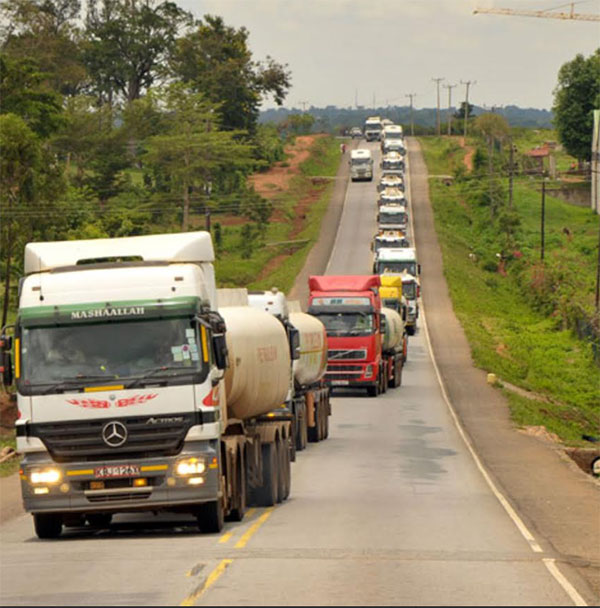
Currently, petroleum prices are still significantly higher than pre-war levels, when Brent crude was trading below $73 per barrel before the outbreak of the Iran war
Kampala, Uganda | ISAAC KHISA | Insurance leaders across Africa are warning of a potential economic slowdown as surging global petroleum prices ripple through key sectors, driving up operating costs, inflation and financial risks because of the US-Israel war against Iran, which began on Feb. 28.
Speaking at the 11th Continental Reinsurance CEO Summit in Kigali on April 16, Godfrey Kiptum, chief executive officer of the Insurance Regulatory Authority Kenya, said the spike in energy prices is likely to trigger broad-based economic strain similar to previous global shocks.
“We know that the rise in petroleum prices will have a huge impact on the rest of the economy. Production may go down, and we could see a repeat of past disruptions, such as during the Russia–Ukraine war, when grain supply was affected,” he said.
Currently, petroleum prices are still significantly higher than pre-war levels, when Brent crude was trading below $73 per barrel before the outbreak of the Iran war.
Kiptum said the knock-on effects could include rising inflation and higher interest rates, with direct implications for insurers through elevated claims costs, reduced investment returns and tighter liquidity conditions, factors that could ultimately slow economic growth across the continent.
He said Kenya’s economy had been projected to expand by 5.2%, but that outlook is weakening. “The IMF is already projecting growth to come down to about 4%, and other forecasts also point to a slowdown,” he said.
The impact is expected to be particularly severe for net oil-importing countries, with Kiptum warning of “trouble for the continent” if global tensions persist.
He added that insurance costs have already begun to rise, particularly in maritime transport, energy and geopolitical risk covers.
Across the region, regulators say the effects are already feeding into insurance market fundamentals. In Zimbabwe, Grace Muradzikwa, Commissioner of Insurance, Pensions and Provident Funds, highlighted the country’s heavy reliance on the US dollar as a key vulnerability.
With more than 80% of transactions conducted in US currency, fluctuations linked to global energy shocks are quickly transmitted into the domestic economy.
“So for us, we are really monitoring the impact. One of the most immediate responses that we’ve taken is really to monitor expense ratios for our regulated entities,” she said.
Muradzikwa added that the country has implemented a risk-based capital regime, the Zimbabwe Integrated Risk-Based Capital Framework, to ensure insurers hold capital commensurate with the risks they underwrite.
In Ghana, Abiba Zakariah, Commissioner of the National Insurance Commission, said the Gulf conflict has reversed earlier gains recorded when fuel prices had declined.
“Before the war, our economy had been improving, and, for the first time in memory, oil prices had actually dropped. So it had dropped, but it has now gone up because of the war,” she said.
“From a reinsurance perspective, war risk is not covered mostly in Ghana. So, for now, the insurance products that we have have not experienced the effect yet. But as this happens, we expect it to spill over to other lines of business, and we suspect that reinsurance will increase their insurance rates, and probably withdraw certain cover.”
In Rwanda, Faith Batamuriza, Head of Retirement Benefits Supervision at the National Bank of Rwanda, said inflationary pressures are building but remain manageable, with the country’s economic growth projected at 7.2% in 2026, down from 9.4% in 2025.