 The Independent Uganda: You get the Truth we Pay the Price


Lessons for politicians from the life of a man who should have been president of Kenya
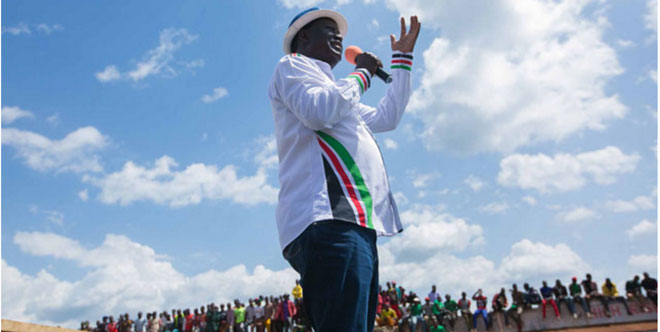
THE LAST WORD | Andrew M. Mwenda | I have always been fascinated by Raila Odinga. It was therefore a big shock to me to hear of his death on October 15. Raila towered above Kenyan politics like a colossus. I always wished for him to have a chance to become Kenya’s president. He never did. In that sense, he falls in the category of Chief Abafemi Awolowo, the legendary Nigerian politician whom I think was cheated by history to lead that country. Both men had leftist leanings. But unlike Awolowo, who was doctrinaire, Raila was a pragmatist. While Awolowo tended to hold onto his ideological guns, Raila was always willing to negotiate and compromise with his opponents.
It is the pragmatist in Raila that made him a statesman who held Kenya together. He saw himself as seeking to introduce progressive politics into the governance of Kenya. He felt his country is dominated by the rich, who rig public policy to favor their interests. He always argued that the top politicians in Kenya are those whose parents and now even grandparents were the founding leaders of that country. He believed his mission was to political shift power from the privileged few to the underprivileged majority in Kenya. Yet he too was from that privileged class, his father having been the first vice president of independent Kenya.
It is this contradiction that gave Raila his enormous power and helped stabilize Kenyan politics. At critical moments in history, Kenya came close to being torn asunder by class and ethnic strife. At each of these moments, Raila demonstrated extraordinary political skill and maturity of judgement, pulling that country from the brink. It is most likely that he won elections for the presidency twice – in 2007 and in 2017. Twice he was cheated but he never became bitter. Instead, he was always willing to meet, negotiate, compromise and even work with those who robbed him of the presidency. And he did all this without losing his political base.
This set Raila apart from most politicians but most especially those of Uganda. Take the example of Dr Kizza Besigye and Robert Kyagulanyi hereinafter referred to as Bobi Wine. Besigye has been a towering politician in Uganda: teargassed, beaten, imprisoned and charged with rape, terrorism, treason etc. It is the mark of his deep commitment to his principles that he has refused to be silenced or cowed. I always felt that this sacrifice has given him enormous political capital to reach out across the political divide and compromise with President Yoweri Museveni.
In my personal conversations and in my media interviews with him, Besigye has said he fears to make such gestures because his base would desert him. A man strong enough to stand up to Museveni’s brutality has been cowardly to stand up to his radical extremist base, to which he became hostage. I always tried to excuse him, believing that this may be because Besigye, unlike Raila, lacked a loyal ethnic base. Then came Bobi Wine. He has a loyal ethnic base but like Beisgye, he seems hostage to it, allowing it to dictate his behavior instead of him leading it.
Uganda is stable because Museveni has always had a commanding political lead, but most importantly because he has effective personal control of the military, police and security apparatus. Otherwise closely contested electoral outcomes could have turned into civil war. Kenya is stable because Raila always had the courage to use his political capital to cool down the tempers of his political base despite obvious electoral malpractice. For instance, after the 2017 elections, he went to court, and the election was annulled. But the repeat of the campaign generated risky political temperatures that Raila pulled out because he clearly understood any outcome would lead to more violence and leave the country worse off.
What set Raila above most politicians was his capacity to place the interests of his country above his personal ambition. It is ironic that at times many of his critics accused him of the exact opposite. At every critical moment when Kenya was sharply polarized, Raila found the wherewithal to talk to his opponents and reach some compromise. Hence, even though he never became president, he made all Kenyan presidents depend on his political capital and skill to govern. His willingness to work with any president was both intriguing and illuminating.
After the 1997 elections, which he lost to President Daniel arap Moi, Raila entered a “cooperation” agreement with KANU and joined the cabinet. Yet Moi had jailed Raila for eight years, tortured him and even kept him in solitary confinement. Later his NDP merged with KANU, and he was elected its secretary general. Later he fell out with Moi and split KANU. He helped form a united opposition movement. When the united opposition couldn’t agree on a presidential candidate, Raila literally hoisted Mwai Kibaki to the position that defeated KANU in the 2002 presidential election.
Raila later fell out with Kibaki, organized opposition to a constitutional referendum organized by the government, defeated the government. He built a new opposition coalition that won the 2007 presidential election with William Ruto as his running mate. Cheated, he accepted to work with Kibaki as prime minister when post-election violence pushed Kenya to the brink. In 2012, he ran for the presidency against Uhuru Kenyatta and Ruto, repeating it in 2017. After that, he allied with Uhuru against Ruto in the 2022 elections. But after bitter fights, he made peace with Ruto, and they became allies again. Up until his death, Raila was a stabilizing factor to Ruto’s presidency.
That was Raila. Without ever becoming president, he always provided presidents with the necessary backbone to govern. That made him influential. He demonstrated that one can meaningfully impact the destiny of a nation and be a statesman without being a president. That the power to shape and influence events does not necessarily come from a job, however coveted, but from the role one chooses. The crowds that thronged JKIA to welcome his body and the presence of every major political figure at his home to pay him homage confirm this. Raila’s life teaches us that we do not have to be in State House to contribute to the stability and prosperity in our countries. That in our diverse roles, we have enormous power and capacity to shape and influence the destinies of our countries. But this is only possible when we place our visions for our countries above our personal desires for particular jobs in the state.
***

amwenda@ugindependent.co.ug



Musing privately, I have often told myself that Kenya sells more intellectual property to Uganda than Uganda sells to Kenya (newspapers, magazines,mobile money, music and other household brands).
Yet in 1986 when Dr KB was preaching revolution to our young impressionable minds,Kenya was the typical African problem.
1. A leader Uganda media used to call him Laisi – a weather beaten former old school teacher who had overstayed in power for 8 years.
2. A one party multi party democracy (KANU) meant everything
3.An ailing economy with constant threats of sanctions from IMF.
4.A checkered human rights record( the murder of Robert Ouko in 1989 and the Scotland yard inquiry that it engendered.)
5.A barren countryside that could barely feed its hungry youths(chapatis and Ugali were Kenya staples)
Uganda on the other hand had defeated its ugly past and expunged the brazen UPC slogans of No Change from it’s politics..
Affable young intellectuals traversed the country preaching hope of better things to come and Utopia.
Major. Victor Bwana, Serwanga Lwanga, Bogere and the crown prince Dr Kizza Besigye.As young students we could forego lunch just to attend their numerous lectures.
The life of Rails Odinga and his country is a clear demonstration of a society that has evolved and steered clear of divisive politics and created an all inclusive society where divinity is accorded according to how one has contributed to a better society.
In Uganda the death of an opposition leader would most likely cause celebration in certain circles.
I still recall the words of Mr James Nsaba Buturo when Milton Obote died in exile in Zambia.
And today 40 years on Uganda remains the same supermarket for Kenyan goods the only difference is that the shoppers are mostly those who make a living by shouting No Change .
Thank you
I swear if I was a son of a President or Vice President, I would ensure to either equal him/her or surpass the record. Never know without Jaramogi, Raila wouldn’t have emerged, just like Uhuru who didn’t seem to have any aspiration until Baba Moi fished him in at the urging of Maama Ngina.
Ruto is the man, for cutting his own teeth and breaking the two horse family hegemonies, but you can see how the system is bullying him. Question is, who will take Raila’s place? Kalonzo or some newbie? A new face may do a better job breaking the cycle of the ethnically-inclined power syndicate. Not forgetting that hardliner politics shouldn’t fix a place on our young continent. Compromise, dialogue and people-centered cooperation is the safest bet to grow our democracy and national stabilities. We salute Baba Raila for his contribution for alternative leadership and a stable Kenya even though I was always on the Uhuruto side. Rest In Peace, Baba!!
Andrew,
I read your article on Raila Odinga with my usual interest in your perspective. Your portrait of Raila as a pragmatic stabilizer is powerful and, in many respects, accurate. However, in framing Raila’s life as a universal lesson for politicians, particularly those in Uganda, you present a dangerously one-sided argument. Your thesis—that placing country above personal ambition through constant compromise is the pinnacle of statesmanship—ignores the corrosive long-term consequences of such a strategy and unfairly maligns the principled stand of opposition figures like Dr. Kizza Besigye.
Your central flaw is the conflation of stability with progress. You praise Raila for “cooling down the tempers of his political base” after being “cheated” of the presidency. But what you call “pulling the country from the brink,” others can rightly call the normalization of electoral injustice. Each time Raila negotiated with a regime that had allegedly stolen an election, he sent a clear message: the political cost of rigging is manageable, payable through a power-sharing deal. While this averted immediate violence, it arguably entrenched a system where the rules of the game need not be respected, so long as the loser can be co-opted. This is not statesmanship; it is a transactional politics that mortgages long-term democratic integrity for short-term calm.
This leads to the most troubling part of your article: the stark and unfair comparison with Uganda’s opposition. You chastise Dr. Besigye for being a “hostage” to his “radical extremist base” and for lacking the “courage” to compromise with President Museveni. This is a profound misreading of the Ugandan context. The suggestion that Besigye’s refusal to legitimize a regime he believes is fundamentally illegitimate is an act of cowardice, rather than principle, turns reality on its head.
Standing up to a brutal regime is the very definition of courage; compromising with it after decades of persecution, rigged elections, and human rights abuses could be seen as capitulation. Besigye’s base is not “extremist” for demanding genuine political change; they are citizens who have been systematically disenfranchised. To ask their leader to “compromise” with a system that offers no democratic pathway to power is to ask him to betray their struggle for a seat at the table of their oppressor. Raila operated in a Kenyan system with a degree of competitive fluidity; Besigye faces a Ugandan state that is a closed, militarized monopoly. The two contexts are not analogous.
Similarly, your critique of Bobi Wine for being “hostage to his ethnic base” ignores the fact that Bobi Wine’s movement, for all its flaws, represents a bold attempt to transcend ethnic politics through a populist, youth-driven agenda. To reduce it to mere ethnic calculation is simplistic. The challenge of leading a base yearning for radical change is not a sign of weakness, but a reflection of the intense pressure that comes from representing a populace with no other recourse.
You admire that Raila made presidents “depend on his political capital and skill to govern.” But this is a backhanded compliment. It confirms that Raila’s influence was not in transforming the system, but in becoming its indispensable fixer—the man who could manage the crises that the system itself created. He was a shock absorber for a flawed democracy, preventing a breakdown but also preventing a fundamental overhaul. True, one does not need to be in State House to have influence. But one does need to be in State House to enact a legislative agenda, command the security forces, and set the national direction without permission from a political rival.
The ultimate irony of Raila’s celebrated pragmatism is that he never achieved his stated mission: to shift power “from the privileged few to the underprivileged majority.” The same political dynasties and elite networks he decried remain firmly in power. His legacy is a stable Kenya, for which he deserves immense credit, but it is a stability that has largely preserved the status quo.
Raila Odinga was a complex and formidable figure who served his country in moments of dire need. However, to present his path of perpetual compromise as the superior model of leadership is to advocate for a politics of managed decline. For every Raila who stabilizes a system by acquiescing to its flaws, there is a need for a Besigye who refuses to legitimize it, and a Bobi Wine who tries to overturn it. Theirs may be a more difficult and less immediately “successful” path, but it is no less vital. The struggle for genuine democracy requires not just pragmatists who make broken systems work, but also principled dissidents who insist that the system itself must be fixed. History needs both, and praising one should not require dismissing the other.
Raila Odinga’s long and complex political journey has come to symbolise both resilience and contradiction. For decades, he was at the centre of Kenya’s political evolution, a figure who could mobilise masses but also one whose endless alliances (political prostitution ) and ambitions often appeared to shift with convenience for mainly personal gains. Many Kenyans who consider themselves progressive now feel that his time had simply run its course. As Kenya steps into a new political phase without Raila’s presence, the coming years will test whether the country can consolidate reform and stability beyond personality politics.
However, attempts to draw parallels between Kenya’s Raila politics and Uganda’s ongoing political struggle risk misunderstanding the distinct nature of each country’s context. Uganda remains a state gripped largely by military rule that shape political access and opportunity. Comparing the two contexts without acknowledging these structural realities obscures the real barriers to democratic progress in Uganda.
Equally troubling are claims often speared by Mwenda that Kizza Besigye, privately admitted to him
that he feared to alienate or labeled by his supporters which is why he could agree to an alliance with Museveni. Besigye has consistently denied ever saying such things, and it is disingenuous to keep repeating claims that serve only to distort his record of political defiance. He remains one of the few Ugandan politicians who has openly and consistently challenged state repression.
Meanwhile, Uganda’s political stagnation continues to be reinforced by opportunism within sections of the elite. Some leaders, including figures from the politically marginalised Acholi region such as Norbert Mao and even the Chief Justice, now appear more preoccupied with preserving their relevance than promoting reform. Their public statements often align with the ruling establishment, yet the people they represent continue to face poverty, exclusion, and neglect. For all their visibility, their tangible achievements for ordinary Ugandans remain limited. Is this the kind of alliance and reform Mwenda likes to see in Uganda?
If this self-serving brand of politics continues, Uganda will remain trapped in mediocrity while others in the region move forward. Kenya’s example shows that political renewal is possible when citizens refuse to be held hostage by the past. Uganda, by contrast, continues to mistake loyalty to power for leadership and that is its greatest tragedy.
Andrew Mwenda tribute to Raila Odinga reads like political hagiography disguised as analysis. It portrays Raila as a heroic pragmatist who kept Kenya stable and suggests Uganda’s opposition could learn from his willingness to compromise. This is not only simplistic but deeply misleading. It romanticises surrender as wisdom and mistakes transactional politics for statesmanship.
Let’s begin with the myth at the centre of Mwenda’s argument — that Raila “held Kenya together” through compromise. What Mwenda calls “pragmatism” was, in truth, accommodation of injustice. Each time Raila accepted a rigged election or signed a “handshake” deal, he did not heal Kenya’s democracy; he tranquilised it. Temporary calm was purchased at the cost of accountability. The message to Kenya’s political elite was clear: elections can be stolen safely, so long as the loser is appeased. That is not peace; it is paralysis masquerading as stability.
To claim Raila “put country above ambition” also stretches credibility. His career was marked not by sacrifice but by survival. His alliances with Moi, Kibaki, Uhuru, and later Ruto reveal not selfless patriotism but relentless calculation. He perfected the art of staying relevant by becoming indispensable to every regime that outmanoeuvred him. Far from dismantling Kenya’s elite order, Raila became its safety valve, the opposition leader who could be trusted to absorb public anger, call for calm, and eventually shake hands with power. Kenya owes him moments of courage, yes, but it also bears the consequences of his compromises.
Mwenda’s attempt to use Raila as a mirror for Uganda’s opposition is equally flawed. Comparing Raila’s Kenya with Museveni’s Uganda is to confuse turbulence with tyranny. Kenya’s imperfect democracy still allows space for negotiation; Uganda’s political arena is militarised, surveilled, and closed. To suggest that Dr Kizza Besigye should “compromise” with a regime that has brutalised, imprisoned, and rigged elections against him for two decades is not realism, it is moral blindness.
Besigye refusal to legitimise an entrenched autocracy is not obstinacy; it is principle. In Uganda, where power is maintained through coercion, not competition, dialogue is not reconciliation, it is absorption. To demand compromise from a prisoner while ignoring the nature of his jailer is to mock justice itself.
Similarly, dismissing Bobi Wine as “hostage to his ethnic base” reveals a lazy reading of Uganda’s new political generation. His movement — messy, youthful, and passionate — is not ethnic populism but an attempt to break from it. He represents millions who have known nothing but one-man rule and who see defiance as their only form of participation.
Mwenda celebrates Raila as a man who made presidents depend on him. But this is not a virtue; it is a symptom of failure. A democracy that relies on one man to “hold it together” is a democracy that has never truly stood on its own. Kenya survived not because Raila compromised, but because its people refused to let the country burn.
Raila Odinga was a complex and consequential figure — but not the saint of pragmatism Mwenda imagines. His politics calmed storms but preserved the weather system that caused them. Uganda does not need another Raila; it needs leaders who refuse to sanitise repression in the name of stability. True statesmanship is not managing decay — it is ending it.
So, you’re saying that every Kenyan Government was bad and repressive-from Moi’s to Kibaki’s to Uhuru’s to Ruto’s and that, perhaps, Raila would have been the only benevolent democrat or someone else who has not stood up to be counted? This is grand oppositionist arrogance and self-righteousness. Better a stable country where things may be systematically worked out than irreversible anarchy.