The Independent Uganda: You get the Truth we Pay the Price


COMMENT | JEREMIAH NYAGAH | As Uganda marks World Environment Day 2026 under the theme: “Climate Action Begins with You: Act Now”the conversation will likely focus on carbon emissions, global targets and international commitments. But in Uganda’s refugee-hosting districts, climate change is experienced in far more immediate ways.
It is the woman who walks farther each year in search of firewood. It is the farmer staring at a field scorched by drought after months of waiting for rain.
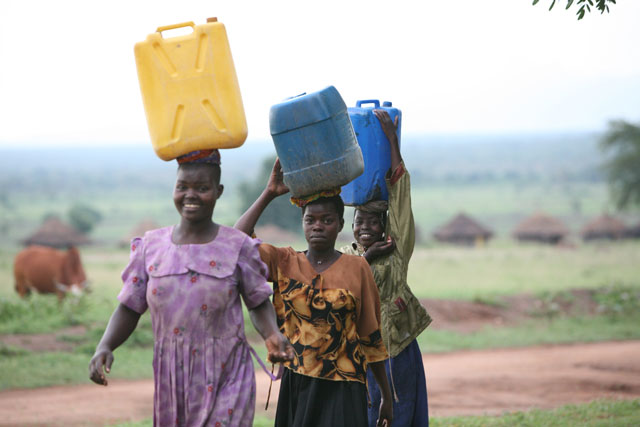
It is the child whose school day begins with a journey to fetch water miles way before sunrise.
And it is the refugee family trying to rebuild a life while sharing increasingly strained natural resources with the community that has welcomed them. Here, climate change is not a future threat. It is already reshaping lives.
Uganda’s refugee-hosting districts sit at the intersection of two global challenges: climate change and forced displacement. Home to more than a million refugees, many of these areas are also among the country’s most environmentally vulnerable.
Years of population growth, expanding cultivation, dependence on fuelwood and recurring climate shocks have placed immense pressure on forests, wetlands, water sources and agricultural land.
Uganda loses an estimated 122,000 hectares of forest cover annually due to agricultural expansion, charcoal production, and rising demand for fuelwood. The consequences are shared by everyone.
When forests are depleted, both refugee and host families struggle to access fuel and building materials. When rainfall becomes erratic, harvests fail across entire communities. When water sources shrink, tensions can emerge over resources that were once sufficient for all.
Climate change does not distinguish between refugee and host. Its impacts ripple across communities, deepening existing vulnerabilities and creating new ones.
Children often pay the highest price. A failed harvest is not simply an agricultural setback; it can mean poorer nutrition, interrupted education and increased health risks. Environmental degradation affects not only the landscape but also the opportunities available to the next generation.
Every drought, flood or failed growing season makes it harder for vulnerable families to provide the stable foundation that children need to thrive.
This is why climate action must be understood as more than an environmental agenda. It is an investment in people. It is an investment in livelihoods, dignity and future generations.
The encouraging news is that some of the most effective climate solutions are already emerging from communities themselves.
Across refugee-hosting districts, women are leading efforts to restore degraded land, adopt climate-smart farming practices and strengthen household resilience. As the primary managers of food, water and energy within many households, women understand better than most what is at stake when natural resources decline.
Young people are equally important. In places where unemployment remains a major challenge, climate action is increasingly creating opportunities for innovation and enterprise. Youth are engaging in tree growing, waste recycling, renewable energy, sustainable agriculture and environmental restoration. They are proving that climate resilience and economic opportunity can go hand in hand.
Refugees, too, are helping drive change. Far from being passive recipients of assistance, many are investing in sustainable livelihoods, participating in environmental restoration initiatives and contributing knowledge, labour and leadership to community resilience efforts.
These stories matter because they challenge a common misconception. Communities affected by climate change are often portrayed as victims. In reality, they are among the most important architects of the solutions.
That is why inclusion must sit at the heart of climate action. Too often, those who depend most directly on natural resources have the least influence over decisions about how those resources are managed. Women continue to face barriers in accessing land, finance and agricultural services.
Young people struggle to secure the capital and opportunities needed to grow green enterprises. Refugees are frequently excluded from decision-making processes despite their deep stake in local environmental outcomes.
If climate action is to succeed, these inequalities cannot be ignored.
Organisations such as World Vision Uganda, through the Uganda Refugee Resilience Initiative consortium, are demonstrating what a more inclusive approach can look like. By supporting climate-smart agriculture, ecosystem restoration, sustainable natural resource management and energy-efficient technologies, the programme is helping communities reduce environmental pressure while strengthening livelihoods.
More importantly, it recognizes that resilience is not built through technology alone. It is built when people have the knowledge, resources and opportunity to shape their own futures.
Uganda must continue investing in climate-smart agriculture, renewable energy, landscape restoration and nature-based enterprises. Greater support is needed for women’s economic empowerment, youth-led innovation and community-driven environmental stewardship. Access to climate finance must reach the grassroots, where some of the most transformative solutions are already taking shape.
But perhaps the most important lesson is this; climate resilience cannot be achieved by leaving anyone behind.
The woman collecting water, the young entrepreneur planting trees, the refugee rebuilding a livelihood, the farmer adapting to unpredictable seasons and the child whose future depends on the decisions we make today are all part of the climate story.
As Uganda confronts a changing climate, the question is not whether communities should be included in climate action. The question is whether climate action can succeed without them. The answer is no.
A resilient environment and resilient communities are inseparable. Protecting one requires investing in the other. And if Uganda is to build a sustainable future, climate action must place people especially the most vulnerable, at its very centre.
******
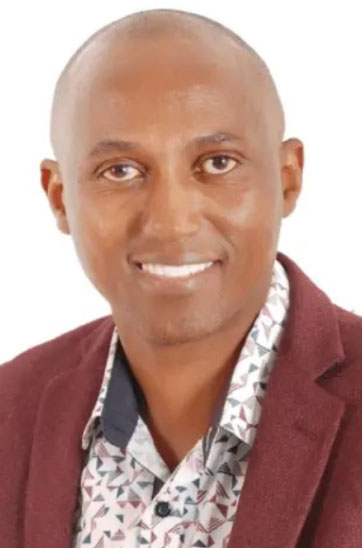
The writer is National Director, World Vision Uganda.