The Independent Uganda: You get the Truth we Pay the Price



COMMENT | ENOKA K BAINOMUGISHA | Every culture in the world has developed beliefs in one or more supernatural beings believed to possess supreme power over human affairs. These deities are expected to provide protection, meet human needs, explain the mysteries of existence, and offer answers to questions that human beings cannot otherwise resolve.
But this raises a fundamental question: Why do human beings everywhere seem drawn to the idea of supernatural powers?
Nobody needs to teach a child to fear danger, seek protection, or become curious about the world. These tendencies are deeply rooted in human nature. In much the same way, the human mind has an extraordinary capacity to search for meaning, recognize patterns, and imagine explanations for things it does not understand.
Two fundamental human needs help explain the enduring appeal of religion.
The first is our fear of death and our desire to survive. The second is our need to understand the world and find answers to questions about existence, suffering, misfortune, and the future.
Death is the ultimate uncertainty. We know that we will die, but we do not know with certainty what, if anything, happens afterward. It is therefore understandable that human beings would imagine a power capable of protecting them from death or offering them life beyond it.
The human mind also finds uncertainty uncomfortable. We want explanations for why things happen and what they mean. When reliable evidence is unavailable, however, we can become vulnerable to explanations built on imagination, tradition, intuition, or wishful thinking.
An explanation can feel satisfying without necessarily being true. The human need for an answer is not proof that the answer we believe is correct.
This distinction is essential to understanding religion.
From belief in deities to the institution of religion
Once a society develops a belief in a supernatural being, people inevitably begin interpreting that being. They describe its character, define its wishes, establish rules in its name, and develop rituals intended to secure its favour.
Over generations, these interpretations become traditions, sacred stories, moral codes, and organized systems of worship. This is one way religious institutions develop.
Religion consequently offers a structured explanation of how supernatural forces supposedly operate. It tells believers how to seek protection, how to prepare for death, how to understand suffering, and how to answer questions about the origin and purpose of life.
But we must distinguish between the existence of a belief and the truth of what that belief claims.
The fact that millions of people believe in a deity demonstrates the power and importance of that belief in their lives. It does not, by itself, establish that the deity exists or that the religious explanations associated with it are true.
That question requires evidence, reasoning, and a willingness to examine alternative explanations.
Religion often claims responsibility for the good things that happen in people’s lives. Success is attributed to divine favour, recovery to answered prayer, and survival to supernatural protection.
Yet when things go wrong, the explanations frequently change. Misfortune may be blamed on human disobedience, insufficient faith, evil spirits, or the devil. The deity is rarely held responsible.
This creates a belief system in which success confirms the faith, while failure can always be explained away without challenging it.
A belief that can explain every possible outcome may be emotionally reassuring, but it becomes difficult to test objectively.
Religion and the pursuit of power
Every human society develops leadership structures. Political leaders, traditional authorities, and community elders exercise power because people expect them to maintain order, resolve disputes, protect the community, or provide direction.
A political leader may claim authority through an election, tradition, or law. A religious leader may claim authority through divine appointment, revelation, prophecy, or a special relationship with the supernatural.
Some religious leaders present themselves as intermediaries between humanity and a higher power. They claim to know what the deity wants, understand its intentions, or communicate messages that ordinary believers cannot independently verify.
This creates a powerful imbalance. If a leader claims to speak on behalf of an invisible, all-powerful being, questioning that leader can be portrayed as questioning the deity itself. The leader’s personal authority then becomes difficult to challenge.
Religion can also influence behaviour through a combination of moral reasoning, social pressure, fear, promises of reward, and threats of punishment. In some historical and contemporary settings, religious authority has also been enforced through coercion and violence.
The promise of heaven and the threat of hell can become powerful instruments of influence, particularly when people are taught that their eternal destiny depends on obedience to religious rules or authorities.
When a human being claims to speak for an unquestionable supernatural authority, who holds that human being accountable?
That is one of the most important questions anyone can ask about organized religion.
The danger is not that every religious leader is dishonest or that every believer is incapable of independent thought. The danger is that any institution becomes vulnerable to abuse when its leaders can claim unquestionable authority and discourage scrutiny.
Religion becomes especially powerful when it presents its authority as coming directly from the supernatural. The institution does not merely claim to offer guidance; it may claim to possess the only legitimate route to divine favour, spiritual security, or eternal life.
The believer is then encouraged to depend not only on the deity but also on the institution that claims to represent it.
What happens when religious beliefs meet scientific evidence?
Religious beliefs become vulnerable when people are encouraged to examine their foundations critically.
Throughout history, scientific discoveries have challenged traditional explanations of the natural world. These challenges have not always been welcomed by religious authorities.
Galileo’s support for the view that Earth moves around the Sun brought him into conflict with the Catholic Church. In 1633, the Inquisition condemned him and compelled him to recant his position. His case became a lasting symbol of the conflict between scientific inquiry and religious authority.
Nicolaus Copernicus had developed a mathematical model placing the Sun, rather than Earth, at the centre of the planetary system. His book was published in 1543, the year of his death, and was later placed on the Catholic Church’s Index of Forbidden Books pending correction in 1616.
Charles Darwin’s theory of evolution by natural selection offered a scientific explanation for the diversity of life that challenged traditional interpretations of creation.
These developments illustrate a broader principle: explanations of the natural world must remain open to revision when stronger evidence becomes available.
Many traditional religious accounts were developed in societies that lacked modern scientific methods and the accumulated knowledge we possess today. Some believers interpret their sacred texts literally; others understand them metaphorically but rarely do they reconcile them with scientific findings.
Nevertheless, where a literal religious claim contradicts well-established evidence, the question is unavoidable: should we reject the evidence to preserve the belief, or reconsider the belief in light of the evidence?
Science has repeatedly demonstrated that human beings can explain many natural phenomena without invoking supernatural intervention.
An honest search for truth must allow evidence to challenge what we believe, even when the belief is deeply cherished.
Why religion is declining in some societies
Religion’s influence is not equally strong in every society, and its decline in some countries offers an important opportunity for reflection.
In Nordic countries such as Sweden, Norway, and Finland, traditional Christian affiliation and religious participation have weakened over time. One possible explanation is that people become less dependent on religious promises when governments and public services provide greater security against the uncertainties of life.
Consider the needs for which people frequently pray: recovery from illness, protection against hunger, education for their children, financial security, help during unemployment, and support in old age.
Where functioning public institutions provide accessible healthcare, education, social protection, and economic opportunities, people may feel less compelled to seek these necessities through prayer.
When people have access to education, reliable information, personal freedom, and institutions that protect their rights, they are better positioned to question inherited beliefs without fearing that they will lose access to essential services or social acceptance.
The lesson is not that every religious person is ignorant or that every secular society is successful. It is that human beings become more independent of religious authority when they have reliable alternatives for meeting their material and social needs.
China, India, and the role of religion in development
The experiences of China and India raise another important question: how do religion, political institutions, social traditions, and public policy influence national development?
China has achieved extraordinary economic growth over recent decades, lifting hundreds of millions of people out of extreme poverty. India has also made substantial economic and social progress, although its development has followed a different path.
China’s ruling Communist Party promotes official atheism and has exercised extensive control over religious organizations. India’s political system, by contrast, operates within a diverse religious society and a constitutional framework that protects religious freedom, although religious tensions remain an important political issue.
Nevertheless, the comparison raises a legitimate question about the consequences of religious divisions, inherited social hierarchies, and traditions that restrict individual opportunity.
The caste system, rooted in South Asian social history and associated particularly with Hindu social structures, has contributed to longstanding inequalities in India. Such hierarchies can limit social mobility and access to opportunity, even as laws and social movements work to challenge discrimination.
The broader lesson is that no society should be exempt from examining traditions simply because they are old or sacred.
The real objective should be a society in which people are governed by fair laws, accountable institutions, reasoned public policy, and respect for individual rights—not by unquestionable religious or political authority.
Back to Africa: What are people really seeking in church?
Let us now turn to Africa, where religious institutions play an enormous role in the lives of millions of people.
Have you ever wondered why some Born Again churches attract large congregations, often with substantial numbers of women? Both men and women seek security, hope, healing, belonging, and answers to life’s uncertainties. However, in communities where women face economic insecurity, unequal opportunities, family pressures, or limited access to dependable public services, churches can offer a promise of something deeply attractive: a sense of protection, hope, and the promise that someone is listening.
When reliable healthcare is difficult to obtain, when employment is scarce, when families struggle to survive, and when institutions fail to provide adequate support, prayer can become an accessible source of comfort.
The problem arises when religious leaders exploit these vulnerabilities by promising miracles, guaranteed wealth, healing without evidence, or supernatural solutions to problems that require practical intervention.
A desperate person may surrender money that should have paid for food, school fees, rent, or medical treatment because a religious leader has promised a breakthrough.
A person suffering from illness may delay seeking effective medical care because they have been assured that prayer alone will bring healing.
A struggling family may be encouraged to interpret poverty as a spiritual problem rather than confront the economic, educational, and institutional factors contributing to its circumstances.
These practices deserve serious scrutiny.
The question is not whether people should be allowed to pray. The question is whether anyone should be permitted to exploit another person’s suffering by making promises they cannot substantiate.
Why should poverty be treated primarily as a spiritual problem when education, healthcare, economic opportunity, accountable leadership, and hard work can address many of its causes?
Africa does not need less compassion. It needs compassion. It needs schools that educate, hospitals that heal, governments that serve their citizens, and economic systems that create opportunity.
It needs citizens who can distinguish between hope and evidence, between faith and fact, and between genuine service and exploitation.
Prayer may provide comfort to a believer, but it is not a substitute for the institutions and practical efforts required to improve human lives.
What if religion offers comfort but not the truth?
We now arrive at one of the most important questions in this entire discussion.
Suppose a person believes that a religious ritual will protect them, heal them, or bring them prosperity. The ritual may reduce anxiety and give that person renewed confidence. Their subjective experience may be genuine, even if the supernatural explanation for it has not been established.
This resembles, in some respects, the placebo effect.
A placebo can produce measurable improvements in certain symptoms, particularly those influenced by expectation, perception, and the mind-body relationship. If a person takes a substance believing it to be a powerful medicine, and the substance produces an improvement through expectation rather than through the claimed medicinal mechanism, the improvement does not prove the original claim.
Likewise, if prayer gives someone peace of mind, that experience does not by itself prove that a supernatural being intervened.
The distinction is between the psychological benefit of a belief and the truth of the explanation attached to it.
But what happens when a religious leader goes beyond offering comfort and claims to possess supernatural powers that can guarantee healing, wealth, protection, or success?
What happens when that leader demands money in exchange for a miracle, discourages medical treatment, or threatens believers who question the promises being made?
At that point, the issue is no longer simply faith. It becomes a question of honesty, evidence, informed consent, and accountability.
A medical professional who knowingly deceives a patient about a treatment’s effectiveness violates fundamental principles of medical ethics. Religious leaders who make demonstrably deceptive claims in order to exploit vulnerable people should likewise face appropriate scrutiny and, where their conduct violates the law, legal consequences.
The principle must be consistent: no one should be permitted to use another person’s desperation as an opportunity for personal enrichment.
If faith is natural, why must it be taught?
We have examined why human beings seek protection, why we search for answers, how religious institutions acquire authority, and how that authority can sometimes be used to influence or exploit believers.
Now consider a final question.
If belief in a deity is as natural and instinctive as breathing, why do we need religious teachers to tell us which deity exists, what that deity wants, which book is sacred, which rituals must be performed, and which religious institution holds the truth?
We do not need a teacher to explain that we experience fear, pain, curiosity, or the desire to survive. These are ordinary features of human life.
If the identity and demands of a supreme deity were as self-evident as breathing, why would humanity require so many competing interpretations, scriptures, prophets, doctrines, and institutions?
Perhaps what is natural is not belief in any particular deity, but the human tendency to search for explanations, seek reassurance, recognize patterns, and hope that forces beyond our control will protect us.
Perhaps religion is one of humanity’s attempts to satisfy those needs. That possibility deserves examination rather than automatic rejection.
And if religious leaders claim to provide the authentic message of a supreme being, we should be entitled to ask them to demonstrate why their claims deserve our confidence.
We should be able to ask for evidence without being accused of disrespect. We should be able to question doctrine without being threatened with eternal punishment. We should be able to examine sacred texts without surrendering our right to think independently.
A belief that is true should not need protection from honest questions.
The future of humanity depends, in part, on our willingness to distinguish what we wish to be true from what we have good reason to believe is true.
Education, scientific inquiry, freedom of thought, accountable leadership, and the courage to question established authority are essential to that effort. We should not surrender these principles merely because a claim is presented in the language of the sacred.
But let no religious leader claim immunity from scrutiny. Let no institution place itself above reason. And let no vulnerable person be persuaded that surrendering money, medical care, or independent judgment is the price of divine protection.
If religion promises protection from death and answers to life’s greatest questions, we must ask: where is the evidence that those promises are true?
And if the answers cannot withstand honest examination, we must have the courage to reconsider them.
Humanity does not progress by making questions forbidden. It progresses by asking difficult questions, testing possible answers, correcting its mistakes, and refusing to confuse certainty with truth.
That is the freedom of thought we should defend—not freedom from religion, but freedom to examine religion without fear
*****
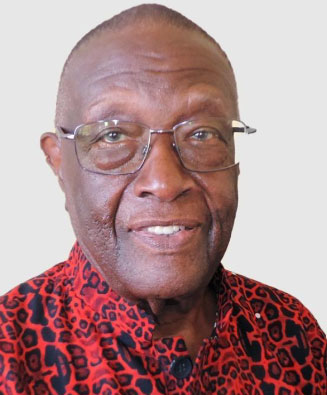 Enoka K Bainomugisha is a senior citizen