The Independent Uganda: You get the Truth we Pay the Price



COMMENT | RONALD AMANYIRE | People are understandably frustrated by what appears to be an overnight collapse in electricity service delivery following the transition from UMEME to Uganda Electricity Company Limited (UEDCL). However, many are overlooking a fundamental reality. UMEME was a private company operating under a commercial model. Its survival depended on efficiency, revenue collection, customer satisfaction, and profitability. UEDCL is a government-owned entity. The incentives are fundamentally different.
Even before taking over the main distribution network, UEDCL was already responsible for electricity distribution in many of Uganda’s most remote and challenging areas with small hydroelectric dams to generate power. Districts such as Kanungu were under its management while UMEME concentrated on the main grid and major commercial centres. Yet even then, service delivery in many remote areas was a persistent challenge.
What many people fail to appreciate is that organisations inherit institutional cultures. Certain attitudes that become entrenched within public institutions do not disappear simply because a larger mandate has been handed over. In many government entities, efficiency is often not the determining factor between success and failure. Salaries will be paid, offices will remain open, and operations will continue regardless of whether performance improves or stagnates. Consequently, efficiency becomes an aspiration rather than an imperative.
Many public agencies proclaim a commitment to customer service while displaying little urgency when service actually deteriorates. Ugandas experience this reality daily. Delayed responses, weak accountability, and a lack of urgency have become familiar characteristics across numerous government institutions that interact directly with the public.
Another challenge is the corrosive effect of patronage and nepotism.
With recruitment influenced by connections rather than competence, organisations become vulnerable to the gradual infiltration of individuals who occupy positions without possessing the practical capability to deliver results. Competence is not measured by certificates, diplomas, or degrees hanging on a wall. Competence is measured by performance, initiative, problem-solving ability, and the capacity to deliver outcomes under pressure.
There is also a frequently overlooked factor: organisational chemistry.
Successful service delivery depends not only on individual competence but also on teamwork, trust, discipline, and camaraderie. A few weak links, internal divisions, poor supervision, or a lack of shared purpose can compromise the effectiveness of an entire organisation. When that happens, even technically qualified personnel can find themselves operating within a dysfunctional system.
Can UEDCL adopt and sustain the performance culture of UMEME (which had its own challenges) that private operators are compelled to maintain? Infrastructure can be transferred overnight. Vehicles, offices, substations, and networks can all be handed over. But a culture of efficiency, accountability, urgency, and customer focus cannot be transferred through a handover document.
Ultimately we do not care whether the electricity distributor is public or private. We care whether the lights stay on, faults are repaired promptly, and service is reliable. Ownership is irrelevant to the consumer. Performance is everything.
*****
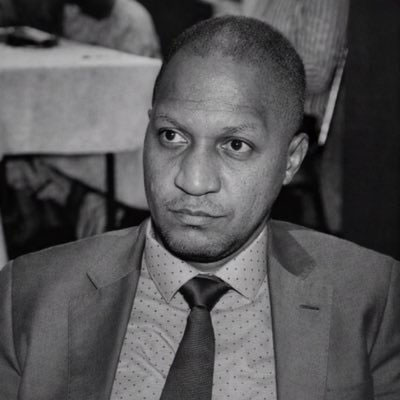 Ronald Amanyire is a transport expert. This piece is adapted from twitter @amronaldo