The Independent Uganda: You get the Truth we Pay the Price


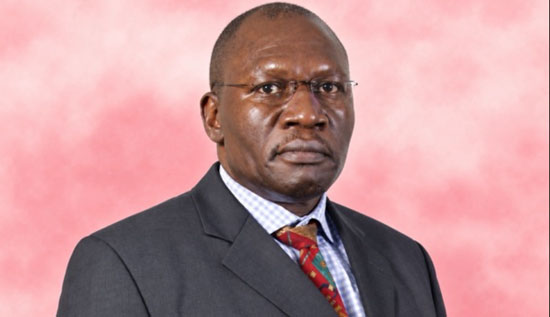
A pioneer of Uganda’s securities market and a champion of financial sector reform, Obel leaves a legacy on the country’s financial institutions and economic thought
OBITUARY | IAN KATUSIIME | Geoffrey Onegi Obel leaves behind a lasting legacy in Uganda’s financial sector, where he helped lay the foundations of the country’s capital markets, chaired the board of the National Social Security Fund (NSSF) and championed reforms that shaped the industry.
He died on October 18, aged 60, after receiving cancer treatment at a hospital in Nairobi, Kenya, according to reports.
Beyond his work in finance, Obel also served on the board of The Independent, Uganda’s leading current affairs magazine. Those who paid tribute to him remembered a brilliant mind, an astute financial manager and a man whose contributions to Uganda’s institutions will endure beyond his lifetime.
Norbert Mao, the Minister of Justice and Constitutional Affairs, described Obel as “an outstanding and towering figure in the world of finance.”
Mao recalled that Obel introduced him to the writings of Robert J. Samuelson, the Newsweek columnist renowned for making complex economic issues accessible to ordinary readers.
Winnie Byanyima, executive director of UNAIDS and a prominent activist, recalled Obel as one of her first friends when she joined Makerere University decades ago. She also paid tribute to his contributions to Uganda’s financial sector.
Obel spent more than four decades in East Africa’s financial sector and was the publisher of the Uganda Financial Times. The publication was meant to prepare the market for the establishment of the exchange.
At the time of his death, he was chairman of the board of Global Capital & Infrastructure Fund Partners, established in 2017 to develop products for the capital markets industry.
He led research and development on a pipeline of products at various stages of completion, targeting domestic, regional and global markets.
Obel’s most enduring contribution was founding the Uganda Securities Exchange (USE), which he chaired from 1997 to 2007. According to his LinkedIn profile, he established the country’s first stock exchange with the support of then Bank of Uganda Governor Emeritus Leo Kibirango.
The exchange ushered in Uganda’s first bond and equity listings, enabled cross-listings with the Nairobi Securities Exchange and helped deepen the country’s financial services sector.
Obel also established the BERI Forum—Bonds, Equities and Related Instruments—to bring together stakeholders committed to developing capital-market products and deepening Uganda’s financial sector.
Kenneth Kitariko, a U.S.E. director and CEO of African Alliance, recalled in a tribute how deeply Obel identified with the institution he founded.
“Geoffrey was adamant that the Exchange had started in his office, and therefore, as far as he was concerned, he owned it!” Kitariko wrote.
He recounted their disagreements over ownership of the Uganda Securities Exchange while he chaired its Listings and Business Conduct Committee. The dispute was eventually resolved through the exchange’s demutualisation, which changed its ownership structure.
While steering the securities market, Obel took on another career-defining role: chairing the board of the National Social Security Fund (NSSF), which he led from 2002 to 2005.
Obel’s tenure at NSSF reflected his ambition to mobilise domestic savings and channel them into investments that could support Uganda’s economic development.
But his push to venture into housing finance through the proposed Nsimbe housing project became one of the most difficult episodes of his career, triggering a prolonged legal battle over an alleged loss of Shs8 billion to the Fund.
Obel denied wrongdoing and was eventually acquitted in 2014, with the Anti-Corruption Court finding that the prosecution had failed to present incriminating evidence against him.
Despite the controversy and the strain it brought, his years at NSSF formed part of a wider career devoted to expanding Uganda’s financial markets and finding ways to put domestic capital to work.
Charles Kankya, general manager of The Independent, remembered Obel as a formidable financial mind whose influence extended beyond boardroom deliberations to the people he mentored.
As chairperson of the company’s audit committee, Obel worked closely with Kankya on financial management, budgets, accountability and corporate governance. Kankya, who prepared board papers on these matters, said their extensive consultations helped him develop a sharper strategic mind and present proposals backed by what he described as watertight data.
Beyond his technical expertise, Obel was a generous mentor and a close friend who regularly called Kankya to discuss Uganda’s economy, the private sector and his personal welfare.
Early career
Obel’s vision for Uganda’s capital markets took shape early in his career. Between 1988 and 1989, he spent a year at Princeton University researching the establishment of a stock exchange in Uganda, laying the intellectual groundwork for what would become the Uganda Securities Exchange.
He deepened his expertise in international finance in 1995, completing a programme in Banking, International Corporate Finance and Bond Markets at the New York Institute of Finance, where he was awarded a certificate.
These formative experiences helped prepare him for the task of building institutions and expanding Uganda’s participation in modern capital markets.
Obel’s path into finance may have been shaped, in part, by his family background. His father, Angelo Onegi Obel, served as Governor of the Bank of Uganda from 1973 to 1978, placing him at the heart of the country’s monetary and financial affairs.
For Geoffrey, that proximity to the world of finance may have offered an early glimpse into the institutions and decisions that shape an economy.