The Independent Uganda: You get the Truth we Pay the Price


Kampala, Uganda | URN | Facing worsening air pollution driven by rapid urbanisation, traffic congestion and industrial growth, Kampala Capital City Authority (KCCA) says it is expanding air quality monitoring, promoting cleaner transport and involving communities in efforts to cut harmful emissions by half before 2030.
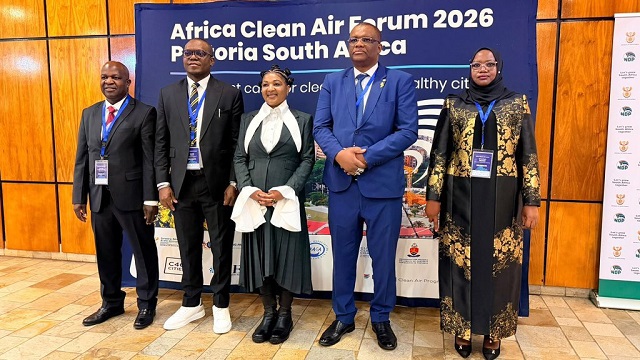
As African cities grapple with deteriorating air quality, Kampala is positioning itself as a model for urban pollution management, showcasing investments in monitoring technology, cleaner transport and public awareness at the Africa Clean Air Forum 2026 in Pretoria, South Africa.
Addressing delegates at the forum, KCCA Executive Director Hajat Sharifah Buzeki said Kampala has made significant progress in understanding and managing air pollution, expanding from limited monitoring capacity in 2018 to a network of 134 air quality monitoring stations across the city.
The stations, including hyperlocal sensors, now provide real-time information on pollution levels, enabling city authorities to identify pollution hotspots and guide interventions under the Kampala Clean Air Action Plan (2025–2030).
“Our goal is to reduce average particulate pollution by 50 percent by 2030 because clean air is not simply an environmental concern but a public health and development priority,” Buzeki said.
Air pollution has become one of Kampala’s most pressing environmental challenges.
Rapid urbanisation, increasing vehicle numbers, dust from unpaved roads, industrial emissions, open waste burning and widespread dependence on biomass fuels continue to expose residents to unhealthy air, contributing to respiratory and cardiovascular diseases.
Buzeki said KCCA’s response extends beyond monitoring. The authority is promoting cleaner mobility through expanded pedestrian walkways and cycling lanes, introducing electric buses and encouraging the adoption of electric vehicles and motorcycles to reduce transport emissions, one of the city’s largest pollution sources.
She added that the planned Kampala Traffic Control Centre is expected to ease congestion by coordinating traffic signals across the city, reducing vehicle idling and emissions.
Beyond infrastructure, KCCA has adopted a community-based approach by training journalists as clean air champions, engaging Village Health Teams in public education and encouraging neighbourhood clean-up campaigns.
“Kampala’s clean air journey is built on partnerships between government, communities, the private sector and citizens,” Buzeki said.
She noted that the city’s efforts are supported by the Kampala Clean Air Action Plan, existing environmental legislation and the proposed Kampala Air Quality Management Bill, which seeks to strengthen regulation and enforcement.
The city has recently received international recognition for its environmental initiatives.
In June, Kampala won the National Environment Sustainability Award and was shortlisted among 15 finalists for the Guangzhou International Award for Urban Innovation from more than 265 cities worldwide.
Kampala has also become the first African city to join the International Network of Tree Cities, with approximately 5,700 trees per square kilometre contributing to urban greening and climate resilience.
Buzeki urged African governments to invest in real-time air quality monitoring, integrated urban planning and stronger community participation, noting that air pollution remains a shared challenge across the continent.
The Africa Clean Air Forum 2026 has brought together policymakers, scientists, city authorities and environmental experts to exchange practical solutions for improving air quality and protecting public health in rapidly growing African cities.
Air pollution is one of the leading environmental health risks globally, contributing to millions of premature deaths each year.
Kampala’s air quality is affected mainly by transport emissions, industrial activity, dust from unpaved roads, open burning of waste, and the widespread use of charcoal and firewood for cooking.
As Kampala Capital City continues to expand, environmental experts say sustained investment in cleaner transport, stronger regulation and reliable air quality monitoring will be essential to protecting public health and building a more resilient city.