The Independent Uganda: You get the Truth we Pay the Price


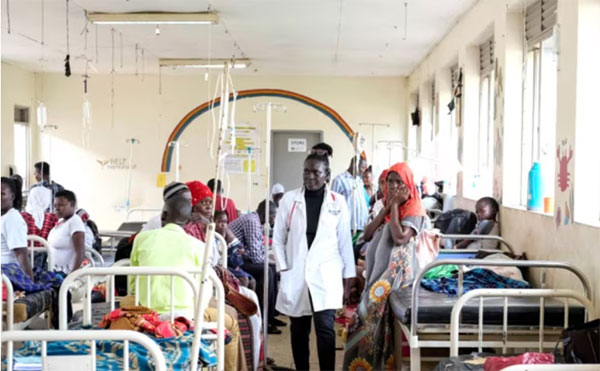
The country-specific data remains limited, but the scale of sickle cell disease suggests the implications are considerable
Kampala, Uganda | PATRICIA AKANKWATSA | For two weeks, a 16-year-old girl living with sickle cell disease was treated for what appeared to be a stubborn chest infection. She had a persistent dry cough, chest pain and shortness of breath. Antibiotics failed to help. A chest X-ray showed no abnormalities. Routine blood tests did not point to infection.
It was only after a spirometry test—a non-invasive lung function assessment measuring how much air a person can breathe in and out, and how quickly they can empty their lungs—that doctors identified the underlying condition: asthma.
The case, presented on 22 April during the Day of Lung Science webinar hosted by the Makerere Lung Institute, has drawn attention to what specialists describe as a frequently missed diagnostic overlap in Uganda, with potentially serious consequences for patients.
A condition hiding in plain sight
According to Dr Joanita Nampijja, a paediatrician at Uganda Martyrs Hospital, Lubaga and member of the Lung Institute paediatric research group, the teenager had been living with sickle cell disease since the age of six and was stable on hydroxyurea therapy, a medication used to reduce complications of the disease.
“When she presented with respiratory symptoms, the working diagnosis followed a familiar path: infection, possibly early complications of sickle cell disease”, Dr Nampijja said.
“She was admitted and treated with intravenous ceftriaxone, morphine, paracetamol and supportive care. Within three days, her general condition improved. But the cough did not resolve”.
That persistent symptom prompted further investigation. Spirometry revealed bronchodilator responsiveness—lung function improved after inhaled medication—confirming asthma. Once treatment with a formoterol inhaler was started, the patient stabilised. Over four months of follow-up, she had no further admissions and her symptoms resolved.
Clinicians say the case reflects a wider problem: asthma in patients with sickle cell disease is often missed because its symptoms can resemble more common complications, particularly infections.
When two diseases overlap
The overlap is not only clinical but also biological. Dr Deogratias Munube, a paediatric haematologist and oncologist at Mulago National Referral Hospital, who also presented at the webinar, explained that both conditions are linked through disruptions in nitric oxide pathways.
He said that in sickle cell disease, the breakdown of red blood cells reduces nitric oxide availability, leading to narrowed blood vessels and reduced oxygen delivery. In asthma, airway inflammation triggers bronchoconstriction and airway sensitivity, affecting similar pathways.
“The two conditions operate through different mechanisms but converge on similar outcomes,” he said.
“Patients with both conditions are more likely to experience severe respiratory distress and complications than those with either condition alone”.
Higher risk, limited data
Evidence presented at the session suggests that the combination of asthma and sickle cell disease significantly increases health risks.
A long-term cohort study cited during the webinar followed 300 children over 11 years. It found that those with both conditions had a 16-fold higher risk of death compared to patients without asthma. They also experienced more frequent episodes of acute chest syndrome and painful crises.
Uganda-specific data remains limited, but the scale of sickle cell disease suggests the implications are considerable.
The Ministry of Health estimates that around 20,000 children are born with sickle cell disease each year in Uganda. Globally, asthma affects an estimated 262 million people, according to the World Health Organization.
Despite the risks, clinicians say asthma remains underdiagnosed in patients with sickle cell disease, largely due to limited access to diagnostic tools.
Spirometry—the test that confirmed the diagnosis in the case presented—is not widely available in lower-level health facilities. As a result, diagnosis often relies on clinical judgement and basic investigations, increasing the risk of misclassification.
There is also a tendency to prioritise infectious causes of respiratory illness, reflecting Uganda’s broader disease burden where infections remain common.
The result, clinicians say, is a cycle in which patients are repeatedly treated for infections while asthma goes unrecognised and untreated.
Standard treatment for asthma is well established and includes inhaled bronchodilators and corticosteroids.
Dr Munube said routine respiratory monitoring should be integrated into sickle cell care.
“Annual pulmonary function testing should be standard for patients from about six years of age,” he said.
Calls for integrated care
The Ministry of Health has introduced chronic care clinics for non-communicable diseases, including asthma. Inhalers are available at Health Centre IV facilities and above, and trained staff are in place to support management.
However, many patients first seek care at lower-level facilities where such services are limited.
The World Health Organization has repeatedly called for integrated care models, particularly in settings where patients often present with multiple overlapping conditions.
For sickle cell disease, clinicians argue this means moving beyond a purely haematological focus to include routine assessment of respiratory health.
At the webinar, specialists called for routine asthma screening in patients with sickle cell disease, particularly those with recurring respiratory symptoms. They also urged improved access to spirometry, stronger training for health workers, and better coordination between levels of the health system.
For the 16-year-old patient, the correct diagnosis brought relief after weeks of uncertainty. For clinicians, it raised a broader question: how many others are being treated for the wrong condition.