The Independent Uganda: You get the Truth we Pay the Price


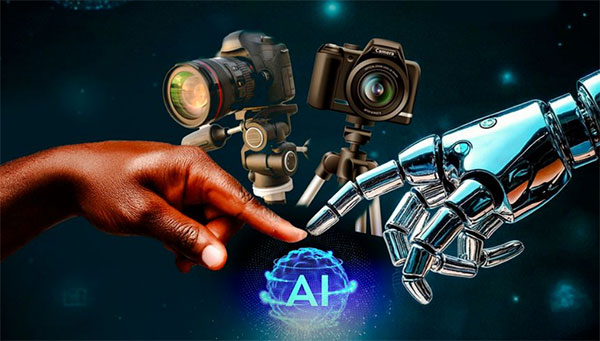
New investments from technology companies suggest AI is becoming as important to Africa’s creative economy as affordable cameras and smartphones were a decade ago. Rather than focusing solely on discovering talent, companies are increasingly investing in the tools, financing and infrastructure that allow African creators to produce world-class content despite limited budgets.
SPECIAL REPORT | BIRD AGENCY | For decades, African creatives have proved they can capture the world’s imagination with compelling stories, chart-topping music and award-winning films. Yet behind many of those successes lies the same challenge: producing globally competitive content with limited access to production technology, financing and distribution.
That investment model is beginning to change.
A new partnership between Google and British actor and entrepreneur Idris Elba, unveiled at Google’s inaugural Africa Cloud Summit in Johannesburg in July 2026, will provide artificial intelligence tools, training and technical support to nearly 100,000 creators in Nigeria, South Africa, Ghana, Kenya and Sierra Leone. The US$1 million programme is being delivered through Elba’s Elba Hope Foundation and Akuna Group.
“The bottleneck isn’t a lack of vision, it’s a lack of access. Talent is everywhere, but opportunity is not,” Elba said in a video message during the launch.
For many African filmmakers, designers, musicians and digital storytellers, the cost of production remains one of the industry’s biggest barriers. Professional editing software, visual effects, script development and post-production often require budgets that independent creators simply do not have.
The new programme seeks to narrow that gap by giving participants access to Google’s Gemini AI platform and training on how artificial intelligence can support every stage of the creative process, from developing ideas and refining scripts to editing video, improving audio quality and accelerating production workflows.
James Manyika, Google’s Senior Vice President of Research, Technology and Society, said the technology is intended to expand creative possibilities rather than replace human talent.
“We are thinking about all those creatives who don’t have access to massive studio budgets,” he said. “AI is potentially the tool that will allow them to produce work they wouldn’t otherwise be able to realise.”
The initiative reflects a broader shift taking place across Africa’s creative economy, where investment is increasingly moving beyond talent discovery towards strengthening the systems that enable creators to compete globally.
Earlier this month, the African Export-Import Bank’s Fund for Export Development in Africa appointed One Street Studios as co-general partner of the Pan-African Film Fund, an investment platform designed to mobilise up to US$1 billion for film, television and immersive media across production, distribution and studio infrastructure. Unlike traditional grant programmes, the fund is structured to finance commercially viable projects capable of reaching regional and international audiences.
The growing focus on production capacity comes as Africa’s creative economy gathers momentum. The sector generates an estimated US$58 billion annually across sub-Saharan Africa while employing millions of people. African creators continue to attract global audiences on platforms such as YouTube and TikTok, yet many still contend with limited access to finance, unreliable electricity, high internet costs and expensive production tools.
Organisations working to strengthen African storytelling argue that expanding access to artificial intelligence could help narrow some of those long-standing gaps.
“AI is becoming one of the world’s most powerful storytelling tools. Ensuring African creators have access to it isn’t just about technology, it’s about ensuring Africa has greater agency over how it is represented in the world. The future of AI should be built with African content,” said Moky Makura, Executive Director of Africa No Filter.
Her remarks reflect a broader effort to ensure African creators are not only consumers of emerging technologies but also contributors whose languages, cultures and perspectives help shape the datasets and narratives powering the next generation of artificial intelligence.
Google’s programme also forms part of the company’s expanding investment across the continent. Having exceeded its five-year commitment to invest US$1 billion in Africa, the company is establishing its first Applied AI Lab in Accra while expanding cloud infrastructure and digital innovation hubs to support African developers, entrepreneurs and creators.
Elba’s ambitions extend beyond artificial intelligence. Through Akuna Group, he is also investing in financial technology designed to simplify cross-border payments for artists while supporting plans for a creative village in Ghana and environmentally sustainable film studios in Zanzibar.
****
SOURCE: Andrino AKUDA, bird story agency