The Independent Uganda: You get the Truth we Pay the Price


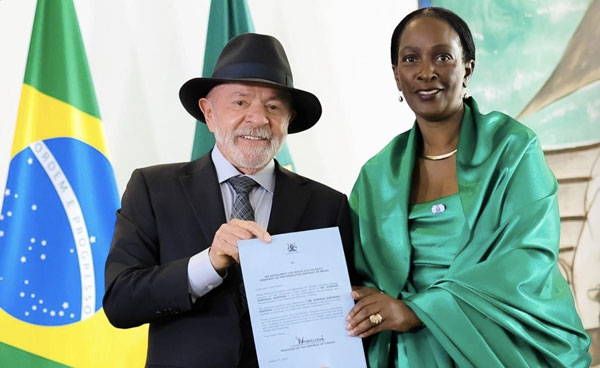
Brazil is Latin America’s largest economy and a global powerhouse in agriculture, trade and technology—sectors that align with Uganda’s ambitions.
Kampala, Uganda | IAN KATUSIIME | Uganda has renewed its diplomatic engagement with Brazil, appointing Ambassador Robie Kakonge as non-resident envoy to Latin America’s largest economy in a move that signals Kampala’s growing interest in strengthening ties with one of the world’s leading emerging powers.
The accreditation comes as Uganda seeks to broaden its diplomatic and economic partnerships beyond its traditional allies, reflecting a foreign policy increasingly orientated towards the Global South and new centres of geopolitical and economic influence.
For Kakonge, Uganda’s ambassador to the United States, the appointment marks an expansion of an already significant diplomatic portfolio. Announcing the development on X on July 8, she described it as “an honour” to present her credentials to Brazilian President Luiz Inácio Lula da Silva, adding that she looked forward to “strengthening the bonds of friendship and cooperation between Uganda and Brazil.”
Her appointment positions one of Uganda’s most experienced diplomats at the centre of efforts to reinvigorate a bilateral relationship with considerable untapped potential in trade, agriculture, technology, aviation and South-South cooperation.
Kakonge’s accreditation to Brazil adds another layer to a diplomatic career that has increasingly placed her at the centre of Uganda’s international outreach.
Since taking up her posting as Uganda’s ambassador to the U.S, Kakonge has emerged as one of Kampala’s most visible envoys, balancing traditional diplomacy with a more expansive approach that combines political engagement, investment promotion, diaspora outreach and digital communication.
In Washington, she has cultivated relationships across the American political and business landscape while using social media as a tool of public diplomacy, regularly highlighting Uganda’s investment opportunities, technological ambitions and cultural ties.
Kakonge’s tenure in Washington has also seen her manage engagements that extend beyond traditional diplomacy into political and security networks. Kakonge was involved in the diplomatic engagements surrounding the visit of retired U.S. General Michael Flynn, a former White House National Security Advisor, to Uganda, where he met President Yoweri Museveni and his son Gen. Muhoozi Kainerugaba, the Chief of Defence Forces. The visit highlighted the breadth of relationships Ugandan diplomats are increasingly expected to cultivate, spanning government, security and policy circles.
Uganda and Brazil established diplomatic relations in 1969, but for much of the past five decades the relationship has remained cordial rather than intensive.
Unlike Brazil’s engagement with Portuguese-speaking African countries such as Angola and Mozambique, ties with Uganda have been limited, with no resident embassies in either capital and diplomatic relations largely managed through non-resident accreditation.
A few years ago, responding to a question from this reporter about Uganda’s absence of embassies in Latin America, a senior Ministry of Foreign Affairs official said the region had not been considered a strategic priority.
Why Brazil matters
Bilateral cooperation has centred on multilateral forums, South-South cooperation and occasional exchanges in agriculture, trade and technical cooperation, but neither country has emerged as a major strategic partner for the other. Kakonge’s posting therefore indicates a renewed effort to inject momentum into a relationship that has long existed but has remained relatively underdeveloped.
Brazil’s significance extends far beyond Latin America. Home to more than 210 million people and the world’s ninth-largest economy by nominal GDP, it is a founding member of the BRICS grouping and an increasingly influential voice of the Global South.
Brazil is an agricultural colossus, ranking as the world’s leading producer of beef, coffee, sugar, poultry, and soybeans. It is also a global leader in biofuels, mining, aerospace and renewable energy, while Brazilian companies have developed expertise in sectors that align closely with Uganda’s development priorities, including commercial agriculture, aviation, pharmaceuticals and food processing.
Coffee presents both a point of competition and an opportunity for cooperation between Uganda and Brazil. While Brazil is the world’s largest coffee producer and Uganda Africa’s second-largest, Brazil’s decades of investment in research, mechanisation, irrigation and climate-resilient farming have transformed it into a global leader in coffee production and value addition.
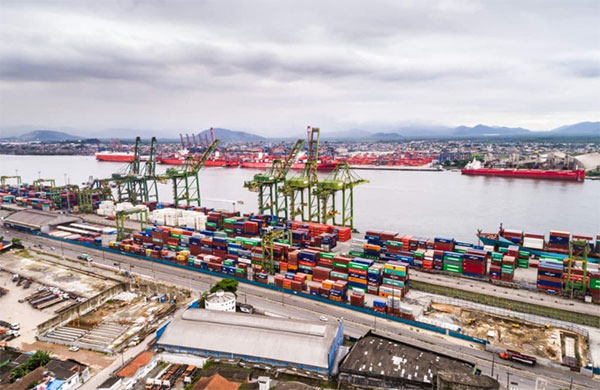
global trade and underscores the country’s importance as an economic partner for
Uganda.
As Uganda seeks to increase coffee exports and move further up the value chain, trade economists argue that Brazil’s experience offers valuable lessons in agricultural innovation, productivity and agro-processing that could benefit one of Uganda’s most important export sectors.
Brazil’s importance to Uganda extends into aviation. It is home to Embraer, the world’s third-largest commercial aircraft manufacturer after Airbus and Boeing, whose regional jets operate in more than 100 countries. Beyond commercial aviation, Embraer has built a global reputation in defence, executive aviation and aerospace engineering, making it one of Brazil’s foremost technology champions.
For Uganda, whose national carrier is embarking on an ambitious expansion after placing an order for ten Boeing aircraft, Brazil presents opportunities that extend beyond aircraft procurement.
While Uganda Airlines has committed to Boeing for its fleet renewal, Brazil’s strengths in aerospace manufacturing, aircraft maintenance, pilot training and aviation technology offer potential areas for future collaboration as Uganda seeks to develop a competitive aviation ecosystem around its fast-growing airline and the expansion of Entebbe International Airport.
As Uganda seeks to diversify its diplomatic and economic partnerships, Brazil offers not only access to one of the world’s largest emerging markets but also a model of development in areas where Uganda hopes to accelerate growth.
Vincent Bagiire, Permanent Secretary of the Ministry of Foreign Affairs, declined to comment on the strategic considerations that informed the renewed diplomatic focus on Brazil.
Uganda’s engagement with Brazil comes amid a broader recalibration of its foreign policy as Kampala seeks to diversify its diplomatic and economic partnerships in an increasingly multipolar world.
Strategic cooperation
The development reflects a broader shift in international relations, where foreign policy is increasingly driven by economic pragmatism rather than ideological alignment. In a recent essay for Foreign Affairs, Yale University global affairs scholar Michael Brenes argues that “the post-World War II order is dead” and that countries are increasingly adopting “a values-neutral, transactional approach toward foreign policy.”
Uganda’s engagement with Brazil, alongside deepening ties with the United Arab Emirates, Saudi Arabia, India, Türkiye and China, illustrates that evolution. Rather than anchoring its diplomacy to a single bloc, Uganda is increasingly pursuing partnerships that promise investment, technology transfer, access to new markets and strategic cooperation. These are countries that have become increasingly influential players in Africa through investment, infrastructure, energy, defence cooperation and trade.
The UAE has emerged as one of Uganda’s largest sources of foreign investment, with interests spanning logistics, agriculture, aviation, energy and financial services. The UAE has become one of Uganda’s biggest export destinations. In 2024, the UAE was Uganda’s largest export market, importing about $2.2 billion worth of Ugandan goods, according to Uganda trade data.
Saudi Arabia, meanwhile, has expanded engagement with Africa through investment, energy and development initiatives, while Uganda has sought to deepen cooperation in areas including agriculture, tourism and labour mobility.
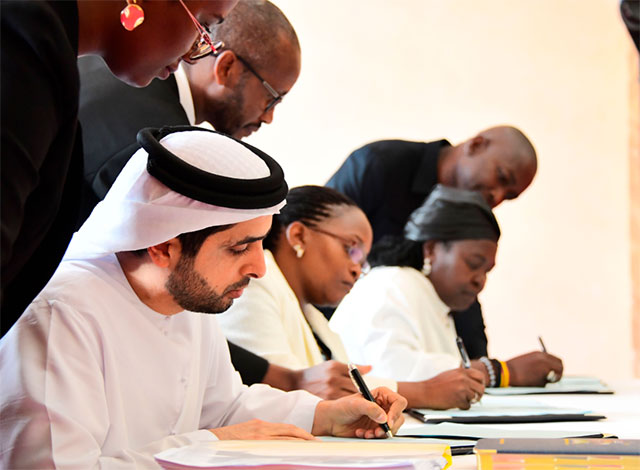
India’s relationship with Uganda has historically been anchored in trade, investment, pharmaceuticals, education and a longstanding Indian diaspora presence. New Delhi has also positioned itself as a partner in areas such as digital technology, health and capacity building.
Türkiye has similarly increased its footprint across Africa, with Ankara expanding political, commercial and defence ties with Uganda alongside broader engagement through Turkish companies and institutions.
The approach reflects a pragmatic foreign policy that seeks to attract investment, open new export markets, enhance technology transfer and broaden strategic partnerships without becoming overly dependent on any single country.
Brazil fits naturally into that strategy. As Latin America’s largest economy and a leading voice of the Global South, it offers expertise in sectors that closely mirror Uganda’s development ambitions, including commercial agriculture, aviation, renewable energy, pharmaceuticals and food processing.
BRICS
The renewed outreach also reflects a broader international shift towards a more multipolar order. Speaking at the 2023 BRICS Summit, Brazilian President Lula da Silva argued that “the expansion of the BRICS [is] a milestone on the road towards a multipolar world,“ a vision that resonates with countries such as Uganda seeking to broaden their diplomatic and economic options beyond traditional partnerships.
Beyond economics, Brazil’s growing influence within BRICS and other multilateral platforms provides Kampala with another avenue for strengthening South-South cooperation at a time when developing countries are seeking greater influence in global governance.
One of President Museveni’s consistent themes is, “We are friends to all and enemies to none.”
Uganda officially became a BRICS Partner State during Brazil’s chairmanship of the bloc leading to increased political and economic cooperation between the two nations. Vice president Jessica Alupo made an official diplomatic visit to Rio de Janeiro, Brazil, in July 2025.
Alupo traveled to South America to represent President Museveni at the 17th BRICS Summit. This marked Uganda’s first official summit appearance after being admitted as a BRICS partner state.
Analysts say the renewed diplomatic outreach underscores a broader shift in international relations, where middle powers are becoming increasingly important partners for countries seeking to diversify their external relations.
Rather than viewing diplomacy through the traditional prism of East versus West, governments are increasingly pursuing flexible partnerships based on mutual economic interests, technology, trade and development. Uganda’s decision to strengthen ties with Brazil reflects that changing calculus.
Whether the outreach translates into deeper trade, investment and political cooperation will become clearer in the years ahead. But Kakonge’s accreditation signals that Kampala is looking beyond its traditional diplomatic horizons at a time when the global balance of economic and political influence is shifting.
In Brazil, Uganda is engaging a country whose strengths in agriculture, aviation, technology and South-South cooperation closely align with its own development aspirations.
As emerging powers assume a greater role in shaping the international order, Kampala is increasingly casting a wider diplomatic net—from Beijing and New Delhi to Abu Dhabi, Ankara and now Brasília—in pursuit of new markets, investment, technology and strategic partnerships. The question is no longer whether Uganda should engage these new centres of influence, but how effectively it can translate diplomatic goodwill into tangible benefits at home.