The Independent Uganda: You get the Truth we Pay the Price


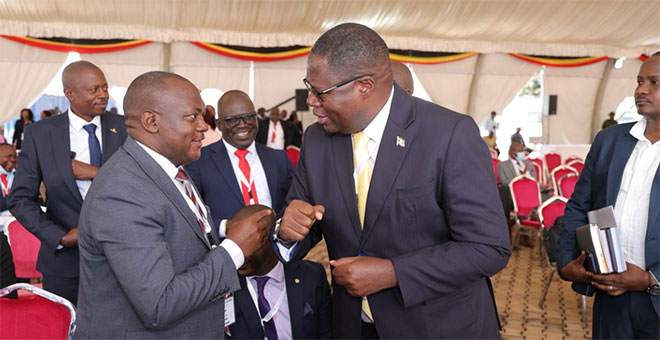
Kampala, Uganda | URN | Voting is underway for the Speaker of Uganda’s 12th Parliament during a special sitting at Kololo Ceremonial Grounds, where Members of Parliament are choosing the leader of the country’s legislature for the next five years.
Three candidates are in the race: Jacob Marksons Oboth-Oboth, the National Resistance Movement (NRM) flag bearer; Paul Mwiru of the National Unity Platform (NUP), presented as the joint opposition candidate; and Democratic Party (DP) President General Norbert Mao.
Oboth-Oboth was nominated by Vice President Jessica Alupo, who told the House that his extensive experience in Parliament, government and public service had equipped him to lead the institution effectively. She also pointed to his endorsement by the ruling NRM and President Yoweri Museveni as a sign of confidence in his leadership credentials.
Katikamu South MP Hassan Kirumira Lukalidde nominated Jinja South East MP Paul Mwiru. He was seconded by Jinja City Woman MP Sarah Lwansasula.
Lukalidde described Mwiru as a reform-minded candidate committed to restoring public confidence in Parliament through tighter budget discipline, stronger accountability measures and equitable treatment of legislators.
He said Mwiru would work to eliminate wasteful expenditure, channel more resources to parliamentary committees where oversight work is undertaken, and introduce regular public disclosure of Parliament’s activities and expenditure. “Mwiru’s candidature is premised on treating all Members of Parliament fairly and equally,” Lukalidde said.
Former Justice Minister and Democratic Party President General Norbert Mao was nominated by Tochi County MP Peter Okot and seconded by Aswa County MP Patrick Okello Onguti. In his presentation, Okot traced Mao’s rise from a humble upbringing in northern Uganda to becoming a student leader at Makerere University, a lawyer, legislator, district chairman, cabinet minister and national political leader.
He argued that Mao’s experience in governance, conflict resolution and inter-party dialogue made him a strong candidate capable of rebuilding confidence in Parliament. Okot also cited Mao’s leadership of the Democratic Party and his role in the cooperation agreement between the NRM and DP as evidence of his commitment to consensus-building and managing political differences through dialogue. “The issue is not why Mao, but why not Mao,” Okot told legislators, urging them to rise above partisan considerations.
The election is being presided over by Chief Justice Flavian Zeija, with 370 Members of Parliament present and eligible to vote when the ballot process commenced. Before voting began, Kyoga North MP Geoffrey Ocen sought to suspend parts of Parliament’s Rules of Procedure to allow each candidate 15 minutes to address the House before the vote.
Ocen argued that Parliament had recently faced allegations of corruption and declining public trust, making it necessary for MPs to hear directly from the candidates before casting their ballot. He invoked Rule 17 and requested the suspension of provisions barring campaigning during the election process.
However, Chief Justice Zeija rejected the proposal. “Let me first of all begin by overruling you,” Zeija said, explaining that the rules expressly prohibit nominated candidates from campaigning during the election. When Ocen attempted to revisit the matter, the Chief Justice declined and directed the House to proceed with the vote.
Following the closure of nominations, Zeija outlined procedures intended to ensure transparency, including verification of the ballot box by agents appointed by the candidates, counting of ballot papers in the presence of agents, and open observation of the voting process.
Voting is being conducted by secret ballot, with MPs required to write the name of their preferred candidate on blank ballot papers before depositing them into the ballot box.