The Independent Uganda: You get the Truth we Pay the Price


COMMENT | JAN-WERNER MUELLER | Here in the Albanian capital Tirana, the hotel receptionists go out of their way to stress that the ongoing protests outside are entirely peaceful. Apparently, there have been quite a few room cancellations since mass demonstrations began in the spring. But ask them directly, and they might furtively hint that they welcome tourists taking part. Every night, people of all ages gather in front of Prime Minister Edi Rama’s office to complain about corruption and demand his resignation.
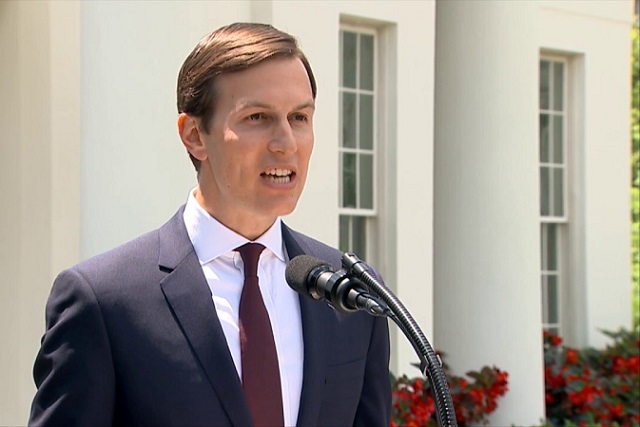
The Flamingo Revolution, as it has been dubbed, was triggered by what many consider an unsavory deal between the Albanian government and Jared Kushner, US President Donald Trump’s son-in-law. Thus, we are witnessing an unexpected global effect of Trumpism: A government that gets into bed with the most corrupt administration in American history risks opening itself up to domestic challengers.
Much can change in a year. Recall that, throughout 2025, commentators around the world were rightly decrying the wanton destruction of the United States Agency for International Development (USAID) and lamenting what the second Trump presidency augured for democracy and human rights worldwide. The message for autocrats almost everywhere was that they would not face any pushback. Given Trump’s well-known soft spot for strongmen, they might even be applauded.
And so, Serbian President Aleksandar Vučić ordered police raids of various NGOs supported by USAID, gleefully justifying such brazen attacks on civil society by pointing to Elon Musk’s designation of the agency as a “criminal organization.” By some estimates, Musk’s dismantling of USAID will lead to millions of deaths; but the world’s autocrats viewed ending it as a purely positive development.
Perhaps members of “Autocracy, Inc.” should have realized that receiving support from Trump for their nefarious activities would prove to be a mixed blessing. After all, the political logic that so many observers were lamenting in 2025 could flip, with ties to Trump’s regime seen as proof of your own corruption.
And so it has. Not only is Trump deeply unpopular in much of the world, but those who oppose incumbent Trump-aligned governments can make points about corruption much more easily. After all, even those not particularly well-informed about the finer details of US politics will have heard about scandals like Qatar gifting Trump a “flying bribery palace.”
Popular backlash against Trumpian corruption would appear to describe the situation in Albania. In their own telling, Kushner and Ivanka Trump “discovered” a beautiful island off the Albanian coast (Sazan was hardly undiscovered, having long served as an Albanian military base). Moreover, they alighted upon this gem and its beautiful shorelines while vacationing on the superyacht of their billionaire friend Nathaniel Rothschild, where they were joined by none other than Rama.
Soon thereafter, Kushner and Ivanka Trump started exploring the possibility of turning an officially designated nature reserve for flamingos into a luxury resort, and when local protesters challenged the scheme, they were roughly dispatched by private security thugs. But this was caught on tape, and the protests soon spread from the south of the country to Tirana. Now, mass demonstrations have been staged every evening, prominently featuring flamingoes in all shapes and forms—from cutouts to large pink inflatables.
Interestingly, amid the many Albanian flags held by the demonstrators are the US Stars and Stripes. In this traditionally pro-American country, citizens clearly want to signal that their message is not anti-American but anti-corruption. What they oppose is the complete lack of transparency.
Trump is the perfect catalyst for such a movement because he is more brazenly corrupt than most authoritarian leaders today. He boastfully accepts lavish gifts—from diamonds to crypto payments—and then, it appears, “coincidentally” lifts tariffs or issues pardons as a result. The evidence of rampant insider trading and stock manipulation was overwhelming even before Trump’s social-media platform began explicitly selling early access to the president’s market-moving statements.
The Trump White House’s official message to the rest of the world could not be clearer. In 2025, it “paused” enforcement of the Foreign Corrupt Practices Act, an important weapon against bribery beyond US shores. Then, this summer, it gutted the Corporate Transparency Act—once hailed by Trump’s secretary of state, Marco Rubio, as the “most significant anti-corruption and money laundering law in decades”—making it easier for domestic and foreign criminals to hide behind shell companies.
Yet given this messaging, it is hardly surprising that those doing conspicuous business with Trump’s incipient mafia state would end up looking suspect. Although Trump’s talk of “fake news” has helped autocrats everywhere justify attacks on the press, his blatant corruption has also called attention to their own self-dealing.
In Albania’s case, the demonstrators are criticizing both Rama and the opposition leader Sali Berisha, a former president and prime minister. The protesters’ moral indictment falls on the country’s entire political class, which has long paid lip service to the prospect of joining the European Union even as it might make that outcome less likely by catering to the Kushners of the world. EU parliamentarians have already warned Rama that deals ignoring EU regulations could put accession at risk.
Rama gripes that “If it were not Jared Kushner … nobody would give a shit about flamingos, about Albania, about nothing. It’s the whole hate against Trump that creates all this scrutiny.” He is right, though not in the way he intended. Few could have imagined just a year ago that Trump’s return to the White House would end up fueling a mass pro-democracy movement and demands for transparency globally. Yet the world’s autocrats have a new nemesis: their best friend.
*****