 The Independent Uganda: You get the Truth we Pay the Price


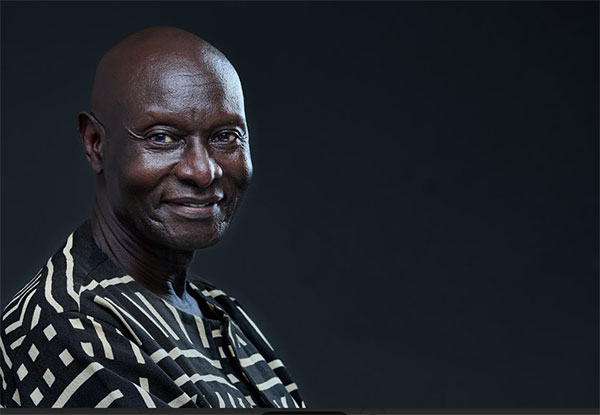
After three decades of waiting, Uganda has finally put its weight behind the man it once might have backed when his moment was at its brightest
COVERY STORY | RONALD MUSOKE | On Saturday, Aug. 8, Olara Otunnu boarded a plane to the United States, headed for New York and the corridors of power he has known for nearly half a century. The journey itself carried a touch of irony.
Uganda’s candidate for United Nations Secretary-General was arriving late to a race already well underway and days after the first Security Council straw poll in which the other candidates had already spent months introducing themselves to the diplomats who will ultimately determine their fate.
Now, at 76, Otunnu was finally heading to New York to do what his rivals have been doing for much of the past year: make the rounds, knock on diplomatic doors, explain his vision and persuade governments that the veteran Ugandan diplomat who once helped shape the machinery of the UN is still the man to lead it.
Uganda’s Permanent Representative to the UN, Amb. Adonia Ayebare, announced on Aug. 8 via his X handle that Otunnu, accompanied by former Prime Minister Ruhakana Rugunda, was en route to New York for meetings with delegations and planned engagements with the General Assembly and Security Council on Aug. 19-20. The journey followed days of uncertainty over the campaign team’s ability to travel to the United States.
It is an unlikely second act for a man who has already spent much of his professional life at the centre of international diplomacy. And perhaps nowhere is the irony greater than in the machinery that will now judge his candidature.
In December 1981, when Otunnu was Uganda’s Permanent Representative to the United Nations and president of the Security Council, he introduced an informal straw-balloting procedure for selecting the Secretary-General. The procedure later became known as the “Otunnu Formula” and has since been used in successive Secretary-General selections. Four-and-a-half decades later, the Ugandan diplomat is entering that same machinery as a candidate and trying to persuade it not to dismiss him as too late.
That is the paradox of Uganda’s gamble. Is Kampala finally coming to the rescue of a diplomat whose moment arrived three decades ago? Or has it calculated that precisely because the UN is confronting a world of wars, geopolitical rivalry, institutional paralysis and technological disruption, the experience accumulated by an old hand may now be more valuable than the freshness of a younger candidate? The answer may determine whether Otunnu’s candidature becomes one of Uganda’s most audacious diplomatic campaigns — or an extraordinary exercise in political nostalgia.
The race Otunnu joined late
Uganda formally nominated Otunnu on July 24, 2026. By then, the field was already crowded with heavyweight names: Rafael Grossi of Argentina, the Director-General of the International Atomic Energy Agency; former Chilean President Michelle Bachelet; Costa Rica’s former vice president Rebeca Grynspan; former Ecuadorian foreign and defence minister María Fernanda Espinosa; former Guyanese foreign minister Carolyn Rodrigues-Birkett; and former Senegalese President Macky Sall. Otunnu became the seventh candidate.
Several of those candidates had been campaigning and engaging UN member states for months. The procedural disadvantage was immediately obvious. Except for Otunnu, the candidates had already participated in interactive dialogues with the General Assembly and informal dialogues with Security Council members. Otunnu’s nomination arrived just before the first straw poll, and he was included in that poll even though he had not yet gone through the same engagement process as the other contenders.
The President of the General Assembly, Annalena Baerbock, had warned that timely nominations mattered because member states needed an opportunity to hear the candidates before the Security Council began its selection process. She later reiterated that candidates should ideally be heard by the General Assembly before being considered in the Council’s straw polls.
That controversy matters because it makes the word “late” more than a newspaper description. Otunnu really was late to this particular process. His defenders, however, insist that late does not necessarily mean doomed. At the Uganda Media Centre on Aug. 5, Otunnu argued that his poor showing in the first straw poll was largely a consequence of having had no time to canvass support. “We have not been able to engage the electors,” he said, contrasting his campaign with rivals who had been campaigning “for a year and a half”.
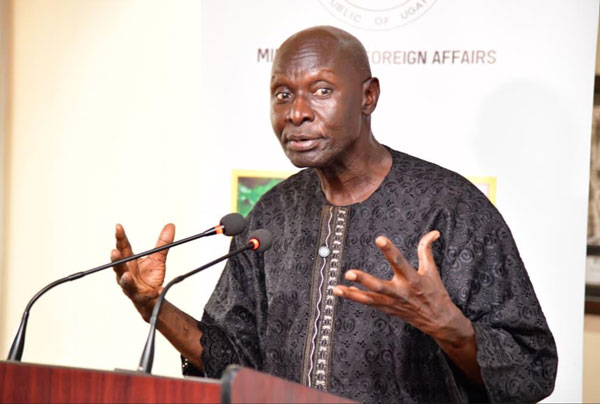
Amb. Ayebare made the same argument, pointing to outgoing UN Secretary General, António Guterres, as a precedent for a late entrant. “It’s actually not late,” he said, noting that Guterres had been the last candidate to enter the previous race. There is therefore a genuine strategic argument behind Uganda’s decision: the first straw poll may not be a verdict on Otunnu’s prospects because he had barely begun campaigning.
But the numbers still matter. A candidate who arrives late has less time to recover from a weak first impression. And the first poll gave Otunnu only two votes. His campaign now has to convert the diplomatic goodwill attached to his résumé into something much harder: votes.
A 30-year-old missed opportunity
This is where the Ugandan story becomes more complicated than the UN race itself. Otunnu’s candidature carries a history that stretches back far beyond July 2026. In the early 1980s he was already operating at the highest levels of international diplomacy. He served as Uganda’s Permanent Representative to the UN from 1980 to 1985 and became president of the Security Council in December 1981. He later served as Uganda’s Foreign Affairs Minister and went on to become president of the International Peace Academy, now the International Peace Institute.
Then came his defining international assignment. On August 19, 1997, UN Secretary-General, Kofi Annan, appointed Otunnu as the UN’s first Special Representative for Children and Armed Conflict. From 1997 to 2005, he served as a UN Under-Secretary-General, campaigning internationally for children affected by war.
His work helped transform what had been a relatively peripheral concern into an established international peace-and-security agenda. Child protection was placed on the Security Council’s agenda. A system was developed for identifying and monitoring grave violations against children. Parties that recruited and used child soldiers could be publicly listed. And in 2005, Security Council Resolution 1612 established a comprehensive monitoring and reporting mechanism.
Uganda’s nomination letter argues that Otunnu helped design the compliance and monitoring regime that remains in operation today. This is not merely an impressive résumé. It is a claim to having left institutional footprints inside the UN. And yet, according to the material surrounding his current campaign, there was another moment when Otunnu’s international stature could have been converted into a bid for the UN’s top office. That moment was around 1996.
Kenyan public intellectual and law professor PLO Lumumba has been particularly blunt about it. He argues that Otunnu should have been Uganda’s candidate when former UN Secretary General Boutros Boutros-Ghali’s tenure was truncated. Lumumba describes Otunnu as intelligent and highly accomplished but believes the nomination has come at the wrong time. At 76, he asks why Uganda should not be putting forward younger leaders.
This is the background to the “30-year-late” argument. It is not simply that Otunnu is old. It is that Uganda may have possessed a younger, highly influential diplomat at precisely the moment when his international capital was at its strongest — and did not turn that capital into a serious national bid for the world’s top diplomatic job. Thirty years later, Uganda is trying again. But this time its candidate is 76.
The man who once opposed the man now backing him
If the timing of the nomination is remarkable, the politics behind it may be even more so. For years, Otunnu was one of President Yoweri Museveni’s most prominent political critics. He returned to Uganda after his international career, became president of the Uganda People’s Congress in 2010 and contested the presidency in 2011. His campaign emphasised constitutionalism, reconciliation, good governance and economic transformation.
The relationship with Museveni became deeply antagonistic. The Ugandan government once refused to renew his passport, leaving him stateless for several years. In a recent interview, he said he eventually became a citizen of Côte d’Ivoire in 2005. And yet, in 2026, the same government that he says mistreated him is campaigning for him.
Otunnu says he has forgiven those responsible. “For many, many years, I was stateless, not by my choice,” he said, but added that the matter was now history and that he did not dwell on it. But forgiveness has not erased disagreement. On Aug. 5, Otunnu acknowledged that his differences with Museveni remain. “We have areas of divergent views that he knows well; I know well,” he said. “We have discussed it; we have discussed it even recently.” That makes the current alliance unusually interesting.
This is not a story of two men suddenly discovering that they agree on everything. It is a story of two political adversaries deciding that they can disagree about Uganda while agreeing that Otunnu’s UN candidature is a national project. Museveni himself presented the reconciliation in practical rather than sentimental terms.
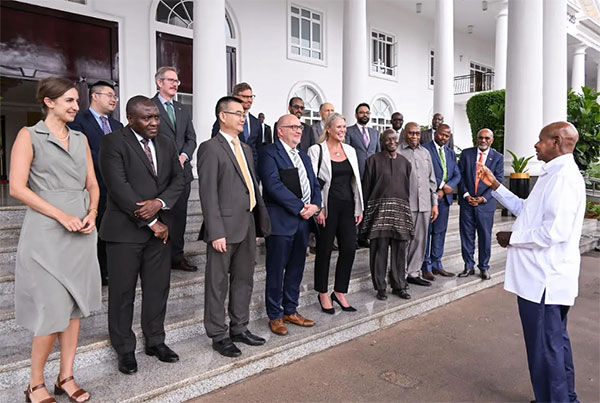
On Aug. 3, at State House in Entebbe, he introduced Otunnu to representatives of Security Council member states and told them, “I therefore hand over Olara Otunnu to you.” He said he had known Otunnu since their days at Makerere University, where Otunnu was Guild President. Rugunda, who is leading Uganda’s broader diplomatic campaign, put the historical dimension even more explicitly. “I think now is the time to actualize this long-postponed aspiration,” he said.
Long-postponed. That may be the most revealing description yet of Otunnu’s candidature because Uganda is not presenting Otunnu as an unknown candidate who has suddenly emerged. It is presenting him as a man whose moment, in its telling, has been waiting to be realised. What exactly is Uganda betting on? The answer from Kampala is experience.
The government’s nomination letter points to more than four decades of Otunnu’s leadership in the UN system and international affairs. His résumé crosses diplomacy, human rights, peace and security, development and humanitarian work. Museveni emphasises his fluency in English and French and his long experience inside the UN system. Otunnu himself emphasises something more important: his understanding of how international institutions work from the inside.
His blueprint for the UN, which The Independent has read, is built around a secretary-general who can exercise moral authority, build consensus and mediate between states at a time when conventional power is increasingly fragmented. He wants institutional reform, stronger development financing, action on climate change and international cooperation on artificial intelligence. He argues that the UN needs to become more effective, transparent and connected to ordinary communities. There is a certain consistency here.
The issues may have changed since his first period at the UN, but the underlying philosophy has not. When Otunnu was working for the organisation in the late 1990s and early 2000s, the UN was wrestling with the consequences of Rwanda and Srebrenica during the Bosnia conflict, civil wars, civilian protection and the question of whether international institutions could do more than simply document atrocities.
The UN was simultaneously confronting Kosovo, Sierra Leone, East Timor, the Congo, the aftermath of September 11, the Iraq war, the emergence of the International Criminal Court and the Millennium Development Agenda. Otunnu’s contribution came during that period of institutional experimentation. That is why the strongest case for his age may not actually be nostalgia. It may be continuity.
The man who helped put children affected by war onto the Security Council agenda is now proposing a UN that puts conflict prevention, peacebuilding and protection of vulnerable populations back at the centre of its mission.
His 5-page campaign document, which he says is inspired by St Francis of Assisi, describes a world facing wars in Ukraine, Gaza, Sudan, the Democratic Republic of Congo and elsewhere, while simultaneously confronting climate change, AI and economic inequality. He wants the secretary-general to use the office’s convening power to push for diplomatic solutions and development finance. The question, then, is not whether Otunnu understands the old UN. It is whether understanding the old UN equips him to lead the new one.
The age problem
This is where his candidature faces its most obvious vulnerability. At 76, Otunnu is asking governments to choose him to lead an organisation whose central challenge is to prepare for a radically different future. His critics can therefore make a compelling argument: the UN needs generational renewal, not simply the return of a distinguished veteran. Prof. Lumumba makes precisely that case. His criticism is notable because it is not based on an attack on Otunnu’s competence. He repeatedly acknowledges that Otunnu was intelligent and performed very well in the UN system. His objection is timing. That distinction matters.
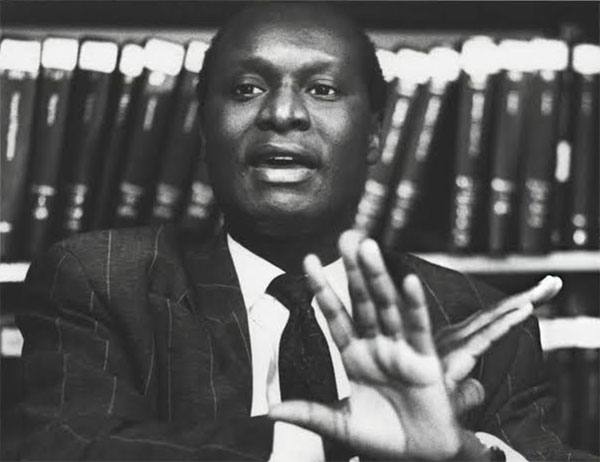
The question is not whether Otunnu was good enough. The question is whether he is still the right person now. But there is another way of viewing the same age. The UN Secretary-General is not a technology entrepreneur or a political newcomer. The job requires someone who can navigate presidents, prime ministers, diplomats, bureaucracies and the permanent members of the Security Council – someone who understands what the UN can do, what it cannot do and where diplomatic space can sometimes be found between apparently irreconcilable positions.
Otunnu believes his long experience is precisely what the moment demands. His answer to wars in Ukraine, Gaza, Sudan and the Congo is not a grand ideological confrontation. It is sustained engagement with major powers, listening, probing and looking for proposals that governments can accept without believing their interests have been undermined. It is an old diplomatic instinct. Whether it is the right one for the present age is one of the questions the New York campaign will have to answer.
One job, two African candidates
But there is another complication for Uganda. Otunnu is not the only African in the race. Macky Sall, the former president of Senegal, is also a candidate. That creates an uncomfortable question for a continent that has long argued for greater representation in the world’s institutions: what happens when Africa has more than one plausible candidate for the same prize?
Prof. Lumumba warns that the contest could expose familiar divisions, including Anglophone-Francophone fault lines. He argues that Africa should have worked toward a single continental candidate rather than allowing competing bids. Uganda, however, is betting that its candidate can stand on his own international record. Amb. Ayebare has also rejected the notion that the job is automatically owed to Latin America and argues that the usual regional formula has been disrupted. The field itself reflects the complexity.
Latin America has several candidates. There is an argument that the region should have its turn. There is also an argument that the UN has never had a woman secretary-general, and several candidates would make history on that front. Against those currents, Uganda is asking diplomats to look at a different credential: a veteran African international civil servant with direct experience inside the UN system. It is an uphill argument. But it is not an unintelligible one.
What happens in New York now?
This is where the campaign becomes real. The first straw poll gave Otunnu only two votes. But he had not yet had the opportunity to do what he is now travelling to New York to do: meet the diplomats. The distinction between campaigning and governing may be especially important in this contest because the secretary-general is not elected through a conventional popular vote. The Security Council recommends a candidate to the General Assembly, which then appoints the Secretary-General. The informal straw polls are therefore not the final election, but they are important tests of viability.
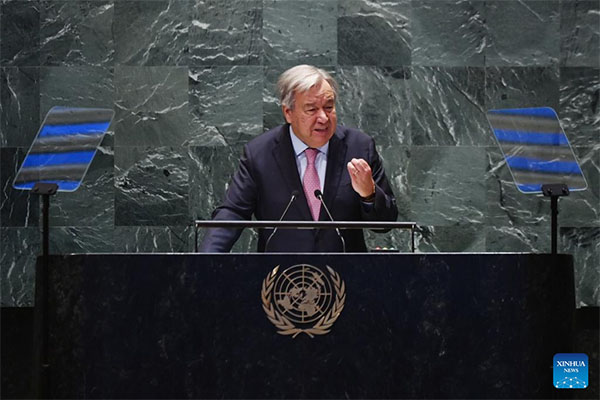
The campaign now being mounted by Uganda will attempt to change the perception created by that first poll. Rugunda has been tasked with taking the campaign to capitals. Otunnu will engage directly in New York. On Aug. 19 he is expected to engage the General Assembly and on Aug. 20 the Security Council.
It is an extraordinary amount of ground to make up in a short period. But the race is not yet settled. The first straw poll is an indication, not a coronation. That leaves Uganda with a narrow but real opening: persuade diplomats that the first ballot measured exposure rather than potential. And there is perhaps no better place to attempt that than New York. Otunnu knows the buildings around the UN headquarters. He knows the language. He knows the diplomats.
More importantly, he understands the peculiar psychology of the UN system: the importance of consensus, the value of quiet diplomacy and the reality that even powerful states sometimes need a proposal that allows them to compromise without appearing to surrender.
A gamble about Uganda itself
There is a final dimension to the candidature that may ultimately matter as much at home as abroad. Uganda is not merely campaigning for a man. It is campaigning for a version of itself. Museveni told Security Council diplomats that Uganda’s strongest UN credentials are its contribution to regional security and its refugee policy. Otunnu, meanwhile, has spent much of his public life talking about human rights, constitutionalism, reconciliation and international law. That creates an obvious tension.
Can Uganda sell an international diplomat on the strength of his personal record when questions may inevitably be asked about the record of the government nominating him? At the Uganda Media Centre, Otunnu confronted that question by pointing back to his own record. He cited his human-rights work and his role in supporting the creation of the International Criminal Court.
“I’ve been a fighter for human rights all my adult life,” he said. It is a revealing answer. Otunnu is asking the world to distinguish between the candidate and the country behind him. But a secretary-general is chosen by states. The contradiction cannot be completely escaped.
The campaign therefore asks diplomats to believe simultaneously in Otunnu’s independence, Uganda’s national commitment to his candidature and the ability of a former political opponent of Museveni to carry Uganda’s banner without being defined by Kampala’s politics. That may be one of the most fascinating parts of the gamble.
The man returning to the corridors
And so Otunnu arrives in New York. Not as the young diplomat who once presided over the Security Council. Not as the UN insider who helped establish an international system for monitoring violations against children. Not as the Ugandan opposition politician who spent years fighting Museveni. But as a 76-year-old candidate attempting something that has eluded him — and Uganda — for decades.
His campaign has begun late. His first straw poll was weak. He faces six formidable competitors, including another African former head of state. There are arguments that Latin America has a strong claim to the job. There is a powerful case for electing the UN’s first woman Secretary-General. And there is an equally powerful argument that the organisation needs younger leadership. Yet none of those arguments makes Otunnu’s candidature irrelevant because the gamble Uganda is making is ultimately a wager on whether diplomatic experience has a shelf life.
For Uganda, the answer appears to be no. For Otunnu, it is a more personal proposition. He has already said that his candidacy is not simply about himself. It is a national project, an opportunity to bring together Ugandans who may disagree profoundly on politics but can still support one of their own for a global position. But the question is whether the corridors he once knew so well still remember him. And whether, after three decades of waiting, Otunnu has arrived in New York just in time or thirty years too late.

What evidence from Ambassador Olara Otunnu’s executive record as Uganda’s Minister of Foreign Affairs demonstrates the judgement, conflict-resolution ability and protection of civilians expected of a United Nations Secretary-General?
Why This Matters
Ambassador Otunnu’s principal period of executive responsibility coincided with one of the most violent and consequential periods in Uganda’s post-independence history.
During his tenure:
• The Nairobi peace process failed to produce a durable settlement.
• The Tito Okello government collapsed.
• Civilian suffering continued.
• Uganda entered another prolonged phase of armed conflict whose consequences extended well beyond its borders.
🚨 THE OTUNNU MYTH: Judge Him by His Local Wreckage 🚨
Before we look to Olara Otunnu to “save” Uganda or the world, we must judge him by the blood and chaos he left behind right here at home.
International titles cannot wash away historical truths:
1. The 1985–1986 Military Junta Record
As Foreign Minister and the civilian face of the brutal Tito Okello regime, Otunnu defended a government that:
• Targeted Children: Implemented a horrific “shoot to kill” policy against innocent children playing in groups in Luwero.
• Massacred Civilians: Slaughtered unarmed, innocent civilians across the Luwero Triangle and assassinated community leaders in Busoga.
• Fled and Ignited War: When the regime collapsed, Otunnu and his military uncles abandoned power and fled, plunging Northern Uganda into a catastrophic civil war.
2. The 2010–2015 UPC Leadership Record
When he returned from luxury exile promising to lead, he completely broke Uganda’s oldest political party:
• Humiliated the Party: Crashed the UPC’s national footprint to a miserable 1.58% of the vote in the 2011 presidential election
The NRA signed a peace deal with the Okello Junta which Otunnu negotiated. The agreement collapsed in a matter of days. Those backing Otunnu owe it to the word to answer the questions:
What evidence from Ambassador Olara Otunnu’s executive record as Uganda’s Minister of Foreign Affairs demonstrates the judgement, conflict-resolution ability and protection of civilians expected of a United Nations Secretary-General?
….answer the question here and now so Ugandans can be clear before the answer goes to the UN.
In the 1970’s:
Before Paul Etyang entered the race, Idi Amin’s original nominee for the post of Organisation of African Unity (OAU) Assistant Secretary-General was Ambassador Matiya Lubega.
Despite his high credidentials, Idi Amin had withdraw him and replce him with Etyang.
I Nyombi Obadiah say that, Olara Otunnu has what it takes to lead UN into a new age of providing more practical solutions to the worlds problems. his political back ground reveals this to the highest degree. people are going to talk saying, “he is too old for this”, but they should know that “the old broom knows all the corners”. it will not make my Master happy when i say that he is the best candidate considering the fact that i do not know his heart but in my view he is a better candidate them all of them.
FOR GOD AND MY COUNTRY
His “political background” ….indeed. Let’s look at his record as Uganda’s Foreign Minister. He negotiated peace, signed an agreement ….but withing days his govt collapsed and the civil war escalated. It moved from Luwero to Northern and Eastern Uganda.
He negotiated with the very peoplebacking him for UN SEC General. His govt – Okello govt killed Ugandans including children found playing or walking in groups in Luwero. The Civil War moved to Northern Uganda. What if anything did Uganda learn out of it?
Rwanda sufferred during the genocide. President Kagame, decided….never again. The country learned from its failings. President Kagame has rebuilt the country from the ground up….starting by fostering a sense of common destiny and national identity.
In Uganda’s case …oh the civil war happenned in the past, his record does not matter he speaks eloquent english ….really!