 The Independent Uganda: You get the Truth we Pay the Price


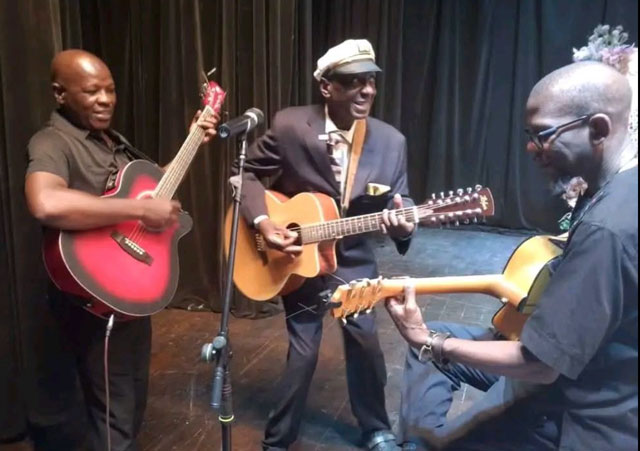
OBITUARY | HENRY MUTEBE | When news of Alex Mukulu’s death came on August 15th, many Ugandans remembered the tough judge they had watched on Yolesa Ekitone on Bukedde Television. They remembered the blunt man who rarely massaged words, the judge who could stop a performance midway and tell a contestant, without ceremony, that what they were doing was not art.
Some thought he was arrogant. Others found him unnecessarily harsh. To a generation that encountered him only on television, Alex Mukulu was simply that uncompromising old man seated behind the judges’ table. But that was only a tiny fragment of the man.
The Alex Mukulu whom many people in theatre knew was a teacher, philosopher, composer, director, actor, playwright and father of Ugandan theatre. His toughness came from somewhere. He had spent a lifetime studying the anatomy of performance. He knew the difference between making noise and making music, between moving one’s body and communicating through movement, and between standing on a stage and inhabiting it.
For those who never encountered the real Alex Mukulu, allow me to tell you about just one of his plays: Akattambwa. I choose Akattambwa because it reveals the extraordinary mind behind the man people casually met on television. It shows how Mukulu could take politics, religion, disease, sexuality, poverty, madness, history and human hypocrisy, compress them into a single theatrical experience, and leave everyone in the audience feeling implicated.
You did not leave an Alex Mukulu play merely saying, “That actor performed well.” You left thinking about yourself. You left wondering whether the mad person you had laughed at was, in fact, saner than you.
The word ‘Akattambwa’ refers to a black spot on the road—a dangerous place where accidents repeatedly occur. It is that deadly corner motorists are warned about, where many people have perished but where new travellers continue speeding as though the previous accidents taught them nothing. That is the central metaphor of the play.
Uganda travelling on a dangerous road
In that play, Mukulu is saying that Uganda is travelling on a dangerous road. He says Africa is travelling on a dangerous road. The warning signs are everywhere. He highlights that we have seen leaders rise with great promises and fall after losing the ability to hear their people. We have witnessed violence, betrayal, corruption, disease, poverty, religious hypocrisy and moral collapse. We have buried the victims. We have mourned. We have promised “never again”.
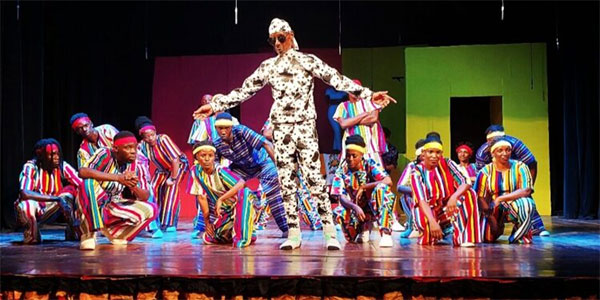
Then we have returned to the same road, at the same speed, towards the same corner. Akattambwa is not an ordinary play with one hero, one villain and one simple storyline. It is a large, multilingual musical production performed in English, Luganda and Kiswahili, with a huge cast of political leaders, religious figures, ordinary citizens, singers, dancers and wounded human beings.
Alex powerfully takes us on a dramatic journey through Uganda’s political and social history. Mukulu revisits the country’s leaders from independence onwards, exposing the tragic weaknesses by which one ruler after another loses touch with the people and eventually falls. But Uganda is only the immediate stage. The presence of African flags expands the story beyond our borders. Mukulu is examining the larger post-independence African condition.
The play asks an uncomfortable question: Why does Africa repeatedly arrive at the same dangerous corner? Why do leaders who once spoke the language of liberation eventually become the very danger from which the people need liberation? Why do citizens celebrate rulers, fear them, suffer under them and then welcome another in almost the same way? Why do churches condemn broken people without examining what broke them? Why does society punish the evidence of its sins while protecting the people and systems that created them?
To explore these questions, Mukulu gives us one of the most fascinating characters I have ever encountered on the Ugandan stage: a madman. In that play, he (Mukulu) acts as the ‘mad man’. The mad man does something interesting. He moves around the town collecting discarded things, including used condoms, dirty knickers, used diapers, all sorts of dirt and filth. He would then hang them on his wire for others to see. Among the things he picks from the ground are used condoms. This particularly irks the residents of the area. Why is this man doing this?
People wonder why this man picks condoms and other used stuff. Imagine that man entering a public place carrying used condoms. Imagine the disgust. People move away from him. They point at him. They conclude that he is filthy, perverted and insane.
Who, in their right mind, collects used condoms? The audience is invited to judge him. Indeed, we judge him very quickly. We are the normal people; he is the madman. We are clean; he is dirty. We are morally upright; he is contaminated.
Mukulu asks, Who is the mad person?
But Mukulu slowly turns the mirror around. The madman did not use those condoms. He did not bring them into existence. He merely found them where respectable society had thrown them.
The people who used the condoms have disappeared into their homes, offices, churches and positions of influence. They have washed their hands, dressed properly and returned to society as respectable citizens. The only person left holding the evidence is the madman.
And so society condemns the man carrying its rubbish while refusing to confront the people who produced it. That is where Mukulu catches everybody. The condom is no longer merely a condom. In the hands of a great playwright, it becomes evidence. It becomes a record of hidden conduct. It becomes a symbol of our private actions and public pretence. It represents everything society does in darkness and abandons by the roadside for somebody else to handle.
The act is private; the consequences become public. The pleasure belongs to individuals; the burden is left to society. The people who participated return to respectability; the man who encounters the evidence is called mad.
And then you begin to wonder: Who is truly insane? Is it the man collecting the used condoms, or the society producing them, discarding them and then condemning the person who exposes their existence?
Mukulu uses the madman in the old and powerful literary tradition of the fool who speaks the truth. In many great works of literature, the person considered foolish or insane is given the clearest vision. Because he stands outside respectable society, he can say what respectable people are too frightened, compromised or hypocritical to say.

Mukulu’s madman is therefore not merely comic relief. He is a philosopher. He is a witness. He is an archivist collecting the evidence society has discarded. He carries upon himself the things we do not want associated with our names. His supposed madness gives him freedom. He can ask questions that a politician, priest, academic or civil servant may not dare to ask.
At some point, the villagers complain to their leaders that they want to banish this man from the village. They do think he is up to something evil. They all gather and walk to the ‘madman’s’ home. The religious leaders question him on why he is doing crazy things. The mad man confronts religious leaders.
Mukulu powerfully shows how society contains broken, sexually exploited, morally confused and psychologically wounded people. The religious leaders call them sinners and condemn them. But the madman asks a deeper question: What have you done to understand them? What have you done to reach them? What have you done to help them live differently?
If people are lost, where were their shepherds?
It is easy to identify a fallen human being. It is much harder to enter the circumstances of their fall. In this play, Mukulu is not excusing destructive behaviour. He is challenging a form of religion that is more interested in announcing guilt than in healing the guilty. If people are lost, where were their shepherds? If society is morally sick, why are its religious institutions standing at a distance, issuing judgements instead of administering medicine?
Suddenly, the madman is no longer the accused. He becomes the prosecutor. The religious leaders are in the dock. The politicians are in the dock. Society is in the dock. Even the audience is in the dock. That is the genius of the scene. For those of who love literature, at this point, you see the genius of the guy in this piece of work.
Mukulu first makes you comfortable in your judgement and then uses your judgement as evidence against you. He allows you to laugh at the madman before revealing that the joke may be on you. This was Alex Mukulu’s remarkable power. He did not give the audience a safe villain to hate while allowing everyone else to go home innocent. The leader has sinned through greed, violence and the refusal to listen. The religious institution has sinned through indifference and condemnation without compassion.
The citizen has sinned through silence, opportunism and the worship of power. The respectable person has sinned privately and discarded the evidence publicly. The audience has sinned by judging the wounded person before asking what wounded him. Even the victim is asked what pain, anger and revenge may have produced within them.
The play moves through love, hurt, anger, revenge, destruction and depression. Eventually, it arrives at confession, inner conviction, restitution and repentance. That journey is important. Mukulu is not simply announcing that society is evil. He is asking whether society can face itself honestly enough to change.
The imagery associated with Akattambwa was itself a complete political statement. The production’s poster showed people packed together inside a pot. Beneath them was a raging fire. Their mouths were sealed with adhesive tape. The people could feel the heat. They could gesture their distress. But they could not speak. Uganda was the pot. Political violence was the fire. The people were being cooked alive, but their mouths had been closed. This is what Mukulu understood about theatre: a single image can sometimes say more than a two-hour political speech.
He understood allegory. He understood satire. He understood mimicry. He understood music, movement, symbolism, irony, caricature and the theatre of the absurd. He could use darkness on the stage to reveal darkness in society. He could use laughter to introduce fear. He could use a discarded condom to discuss religion, sexuality, disease, social responsibility and hypocrisy. He could use a madman to place an entire nation on trial. This was not entertainment in the ordinary sense. This was knowledge being created on stage.
Akattambwa also helped introduce Herbert “Mendo” Ssegujja’s famous impersonation of President Yoweri Museveni. Mukulu recognised the young performer’s ability and placed him in the role. Mimicry allowed the audience to recognise familiar speech patterns, pauses, gestures and political habits. People laughed because they knew the character. But underneath the laughter was serious political examination, including the contested question of extending presidential tenure.
Mukulu knew how to say dangerous things without reducing theatre to a political rally. He did not simply shout his conclusions. He dramatized them. He made the audience arrive at the truth themselves. That is the difference between propaganda and art. Propaganda tells you what to think. Great theatre rearranges the room inside your mind and leaves you unable to think in quite the same way again.
Now, my friend, I have told you about only one Alex Mukulu play. There was Wounds of Africa. There was The Guest of Honour. There was Journey to Self-Realisation. There was The People’s President. There were numerous other productions through which he examined Africa, politics, identity and the human condition.
And then there was 30 Years of Bananas. I confess that I may not possess the literary competence to describe fully what Mukulu accomplished in that work. First staged in 1992, when Uganda marked 30 years of independence, 30 Years of Bananas takes us through the country’s post-independence regimes using the life of Kaleekeezi, an ordinary survivor who adapts himself to every government.
Museveni attends show
It was satire at its most daring. It showed Uganda’s fallen rulers in a museum, suggesting that leaders first begin to fall when they lose their ears—when they can no longer hear the people.
President Museveni watched the play in 1992. At the time, the production generated considerable nervousness and political debate because of the sharpness with which it examined power. Some feared the effect such a brutally honest work might have on the public. The President’s attendance helped calm some of those anxieties.
Imagine creating a play so politically alive that people fear it might move the country. That was Alex Mukulu. Like Ngũgĩ wa Thiong’o, he understood that art is not separate from society. The stage is not simply a platform on which actors pretend. It is an extension of the street, the village, the church, Parliament and the nation. Theatre can preserve memory, expose power, challenge official history and give ordinary people a language through which to understand their suffering.
So, when you remember the blunt judge from Bukedde Television, understand that you were looking at a man who had spent decades inside the furnace of artistic creation.
His impatience was sometimes uncomfortable. His words could certainly wound. But behind that severity was a craftsman who knew what excellence demanded. Many people in theatre did not simply regard him as a performer. They regarded him as a teacher, philosopher and father.
ALEX MUKULU HAS EXITED THE STAGE. BUT, THE BALL REMAINS ON THE PENALTY SPOT – UNKICKED! https://t.co/vKC9PmxxVi #Uganda #Theatre #UgandanLegends pic.twitter.com/9dvWopK79z
— Patrick Oyulu (@patrickoyulu) August 17, 2026
He had gone to the depths of his discipline. He had learned how to break society down to its smallest particles, split the atom and place its contents before an audience. He did not apologise for being misunderstood because he was often speaking beyond the immediate moment. He spoke to the present, but he also spoke to the future. Some of the questions he placed on stage decades ago remain unanswered today.
Alex Mukulu did not ask audiences merely to clap. He asked them to think. He did not permit us to sit comfortably in judgement of others. He invited us to suspend judgement long enough to recognise ourselves in the accused. He could take the person everybody called mad and make him the sanest person in the theatre.
He could make the condemned man carry the evidence of society’s crime. He could make every person in the audience discover their own wrong—their silence, hypocrisy, cowardice, indifference or sin. There may not be many people in Ugandan theatre who have possessed that combination of courage, intellectual depth, musical ability, dramatic instinct and philosophical imagination.
That is the Alex Mukulu many television viewers never knew. The judge has now left his chair. The playwright has exited the stage. But the questions he planted in our minds have not left with him. Somewhere on the road, Akattambwa—the dangerous corner—still lies ahead of us. He asks us to learn. That is Alex Mukulu for you.
Rest in Power ALEX MUKULU.
****
 Henry Mutebe is a Technical Advisor for the Uganda Country Coordinating Mechanism for the Global Fund (UCCM) and a content creator based in Kampala, Uganda. This piece is adapted from Facebook

What an entertainer he was this guy..