 The Independent Uganda: You get the Truth we Pay the Price


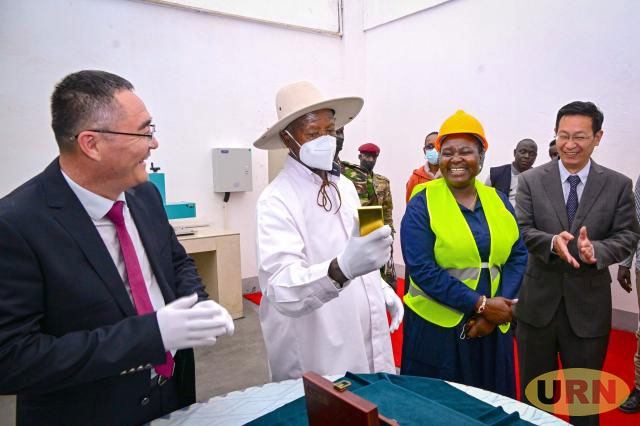
President Yoweri Museveni has issued a forceful response to a recent opinion piece by journalist Andrew Mwenda titled “When Old Age Strikes a Leader” (Issue No. 915, April 17–23, 2026), rejecting claims about his leadership capacity and defending his government’s economic and industrialisation agenda. In the unusually direct statement, Museveni pushes back against criticism of his age and governance record, while accusing sections of the commentariat of undermining Uganda’s development efforts and promoting what he describes as “neo-colonial” economic thinking. Elison Karuhanga (@elisonk), “a learner and follower”, took to X and supported Museveni’s rebuttal and line of thinking.
X-ARTICLES | ELISON KARUHANGA | Most African intellectual debates about development suffer from the same flaw: they judge history like auditors instead of nation builders.
That is the deeper meaning of President Museveni’s clash with Andrew Mwenda.
Mwenda looks at Uganda’s industrial push and sees politically connected businessmen, inflated contracts, weak guardrails and the possibility of waste. President Museveni is asking a different question altogether: how exactly does a poor country industrialise?
History’s answer is uncomfortable. No country has industrialised through procedural purity alone.
Britain did not conduct the Industrial Revolution through tidy procurement manuals and endless elite caution. It used imperial power, protected industries, politically connected financiers and aggressive state-backed expansion. The railways that transformed Britain were built amid speculation, bubbles and scandal. Yet they transformed the economy.
America did not become an industrial giant through pure free markets either. Washington handed vast tracts of land to railroad barons, protected American manufacturers with tariffs and poured military money into technology and infrastructure. Silicon Valley itself owes part of its existence to Pentagon spending.
South Korea is perhaps the clearest example. In the 1960s it was poorer than many African countries. The state picked industrial champions like Samsung and Hyundai, protected them, financed them, tolerated mistakes and forced them to grow. Critics complained about cronyism and state distortion. Today Samsung alone is larger than the GDP of several African countries combined.
That is President Museveni’s point.
Industrialisation is not born from perfection. It is born from strategic stubbornness.
And this is why the sectors President Museveni highlights are deliberate. Dairy. Coffee. Gold refining. Palm oil. Manufacturing. These are sectors where he intervened aggressively and where Uganda’s intelligentsia repeatedly warned he was reckless, irrational or senile.
When President Museveni pushed commercial dairy production in the cattle corridor, some elite opinion scoffed. When he practically gave away the dairy corporation for one dollar to revive the industry, intellectual Kampala declared it madness. Today Uganda produces over five billion litres of milk annually and exports dairy products across the region.
When President Museveni used state mobilisation structures, including the army, to distribute coffee seedlings, the intelligentsia sneered at what it considered primitive state activism. Yet coffee exports exploded from roughly three million bags to nearly nine million bags, generating billions in export earnings and transforming rural incomes.
When President Museveni offered tax concessions to gold refiners and banned the export of unprocessed minerals, critics saw giveaways and smuggling risks. Yet Uganda now hosts multiple refineries, exports billions of dollars in refined gold and, perhaps most importantly, has stimulated a major expansion in gold exploration itself as investors increasingly see Uganda not merely as a transit point for minerals but as a jurisdiction capable of supporting an entire refining and value-addition ecosystem.
When industrial parks, tax holidays and investor incentives were rolled out to manufacturers, some elite complained about crony capitalism, market distortion and politically connected industrialisation. Yet thousands of factories now stand across Uganda, from Namanve to Mbale to Mbarara.
And then there was Bujagali.
— Elison Karuhanga (@elisonk) May 24, 2026
At the time, sections of Uganda’s intellectual class, including Andrew Mwenda himself, became intensely critical of the AES-Bujagali arrangement. The financing structures, contractual terms and political economy of the deal came under ferocious attack. Some concerns were legitimate. But over time even Mwenda himself came to reflect more soberly on the developmental consequences of derailing major infrastructure projects in a capital-starved country.
That experience sits at the heart of President Museveni’s response today.
The President is effectively saying: you made this mistake before.
His frustration is therefore not merely political. It is historical. He believes Uganda’s educated class repeatedly becomes so consumed by the defects within transformational projects that it loses sight of the transformation itself. It sees inflated contracts but misses electrification. It sees politically connected industrialists but misses industrial capacity. It sees tax concessions but misses manufacturing growth. It sees imperfect investors but misses structural change.
That is why this line matters so much:
“Mr Mwenda, thank you for declaring me senile and incapable of judging right.”
It is not simply irritation. It is historical memory.
Because President Museveni has heard this before. He heard it over dairy. Over coffee. Over gold refining. Over Bujagali. Over Kiira Motors. Over industrial parks. And each time some of Uganda’s elite warned that he was reckless, irrational or trapped in outdated thinking.
Yet President Museveni kept building anyway.
History suggests that countries rarely industrialise through caution alone. They industrialise because somebody decides to build anyway, despite the sceptics, despite the mockery and despite the risk of failure.
And perhaps that is why President Museveni still unsettles his critics after all these years. Because he still speaks and acts like a man convinced that nations are not transformed by cynics observing history from a safe distance, but by stubborn men willing to seize it, shape it and drag it forward.
You may disagree with him. Many do. But one cannot help but admire that old guerrilla who still walks through history armed with the same three instruments that shaped his political life: the Bible, whose scriptures promise rebirth and salvation; the gun, which Frantz Fanon saw as the instrument through which the colonised reclaimed dignity and agency; and the pen, not merely because it is mightier than the sword, but because it is the instrument of expression itself, the proof of lucidity, the record of original thought, the power of the pen itself and the vessel through which ancient wisdom is carried across generations.
And perhaps that is the final lesson of President Museveni’s stubbornness. Nations are not transformed by clever spectators standing safely outside history. They are transformed by stubborn men who believe deeply enough to fight for an idea.
And what, after all, do such men need?
A Bible, a gun and a pen.
****
RELATED STORY
Mr Mwenda, thank you for declaring me incapable of judging right



we are unfair once we assess learners during the duration of the exam, we allow them take the attempt, submit and carefully go through the process of marking, grading and recommend.
Does this mean we ignore those copying, dozing or disturbing colleagues in the exam room, no we take progressive action that does not break the examination room .