The Independent Uganda: You get the Truth we Pay the Price


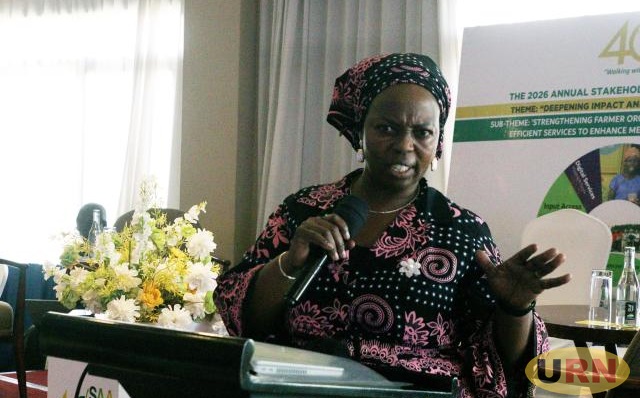
Kampala, Uganda | URN | Uganda’s agricultural transformation will not be driven by policy statements alone, but by whether farmers can access knowledge, markets, insurance, and organization to turn farming into a viable business. That reality framed the 2026 Annual Stakeholders Workshop organized by the Sasakawa Africa Association not just as a meeting of policymakers, but as a convergence of farmers, cooperatives, insurers, and development partners shaping a new agricultural direction.
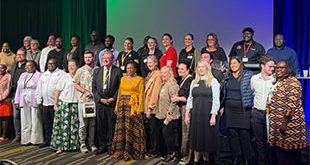
Held at the Golden Tulip Hotel Kampala, the workshop marked 40 years of impact. More importantly, it elevated voices from the ground into the national conversation. Karamoja: From Perception to Possibility State Minister for Karamoja Affairs, Florence Nambozo Wamala, set the tone with a bold declaration: “Once Karamoja is fully developed, the whole of Uganda will have broken free; your breakthrough is in Karamoja.”
Her message challenged long-held stereotypes, positioning Karamoja as a region rich in agricultural potential, investment opportunities, and untapped markets. But beyond the speeches, it was farmers’ voices that gave substance to this vision.
From Hairdresser to Agribusiness Link:
Thriety Namuganza, a Commercial Community-Based Facilitator (CCBF) in Kamuli district, represents a new generation of agricultural change-makers. Once a hairdresser with no interest in farming, her journey began through grassroots mobilization and training under the Sasakawa Africa Association. Today, she links over 620 cooperative members to essential services, including access to quality fertilizers and organic pesticides, mechanization tools like job planters, and reliable markets for crops such as cocoa and coffee. “I was not even interested in farming before,” she explains.
“But now, I train farmers, connect them to markets, and help them improve production.” Her work reflects a broader shift where farmers are moving from unstructured cocoa growing to market-oriented production, improved inputs are increasing yields, and demonstration farms are enabling learning through practice. This is where agriculture begins to look less like subsistence and more like enterprise.
Cooperatives Driving Change in Karamoja.
From Karamoja, Reverend Julius Edwany, Chairperson of Abim West Farmers Cooperative Society, shared another transformation story: “When Sasakawa came, we were just a network. By 2023, we had become a registered cooperative.”Today, the cooperative is expanding production of maize, simsim, soya beans, fruits, and emerging crops. But one intervention stands out: agricultural insurance.
Insurance: Turning Risk into Opportunity.
Through partnerships introduced by the Sasakawa Africa Association, farmers in Abim adopted insurance through Agro Consortium and other partners. The impact has been significant. In 2022, 20 farmers insured 60 acres and earned UGX 28 million in payouts. In the following seasons, 721 acres earned UGX 54 million in compensation, while 3,337 acres earned UGX 119 million. Farmers are now enrolling voluntarily.“They now understand the risk of not insuring,” Reverend Edwany said. “When drought or too much rain comes, they know they are protected.” He added, “It is our responsibility as leaders to follow up. That is why our farmers are paid.” Breaking the Myths about Karamoja Farmers
Reverend Edwany addressed a persistent misconception: “People fear Karamoja. Some think the Karamojong are not farmers. But I want to tell you they are farmers like any others.” The workshop helped create critical linkages, including access to banks and financial services, partnerships with agro-input suppliers, and connections to markets and fellow farmers.
For Karamoja, this signals not just inclusion but integration into Uganda’s national agricultural economy. The Role of Insurance in Modern Agriculture. From the insurance sector, Juliet Kasanya, Agricultural Insurance Specialist at MUA Insurance, emphasized risk management: “Agricultural insurance is a tool that protects farmers from financial losses due to drought, excessive rainfall, pests, and diseases.”
She clarified: “Insurance is not meant to make farmers profit it puts them back to where they were before the loss.” Key insights from the sector show that over 6 million farmers are covered under agricultural insurance in Uganda, 70 percent of losses are linked to drought, and adoption is rising as farmers embrace commercial agriculture.
“If you are farming as a business, then insurance becomes essential.” Farmers, Technology, and the Future: A clear pattern emerged that transformation depends on integration. Farmers need knowledge and organization, cooperatives provide structure and bargaining power, technology delivers real-time services, insurance reduces risk, and markets and finance unlock growth. Through digital platforms and partnerships, farmers now access weather updates, input suppliers, market linkages, and insurance services.
What is changing most is the mindset.
Farmers are no longer just surviving; they are planning, investing, insuring, and scaling. From Namuganza’s farmer networks in Kamuli to cooperative-led insurance success in Karamoja, the transformation is already underway.
A Defining Moment for Uganda’s Agriculture
As the Sasakawa Africa Association marks 40 years, the workshop signaled more than a milestone; it pointed to a new direction where farmers are empowered with tools and knowledge, risks are managed through insurance, and regions like Karamoja are repositioned as growth frontiers.
And as Minister Florence Nambozo Wamala reminded stakeholders: “Let us translate these discussions into action.” Because Uganda’s agricultural breakthrough will ultimately come from farmers in the field, cooperatives on the ground, and systems that enable them to thrive, not from policy rooms alone.