The Independent Uganda: You get the Truth we Pay the Price


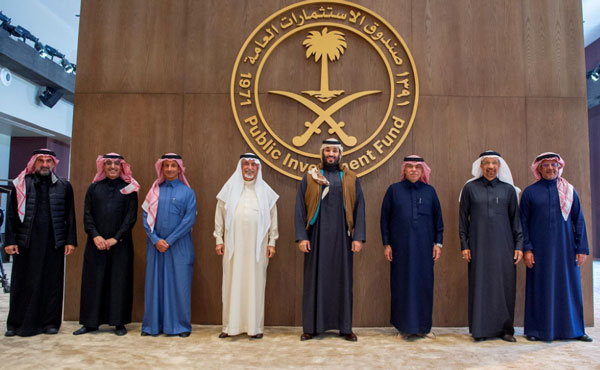
Riyadh wants ports, minerals, food and influence. East African governments want the capital
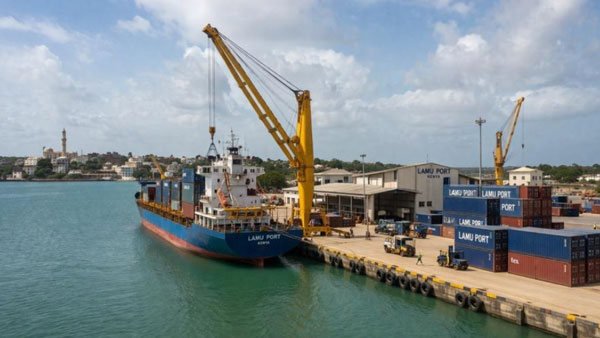
NEWS ANALYSIS | IAN KATUSIIME | In late January, a delegation of Saudi Arabian investors and officials arrived in Port Lamu, Kenya, with an eye on one of East Africa’s most ambitious infrastructure projects.
Led by Saudi Arabian Ambassador, Khalid Alzahrani, and Saudi Chambers chairman Sheikh Mubarak Aldorari, the delegation was received by Lamu Deputy Governor Mbarak Bahjaj, exploring investment opportunities along the Lamu Port South Sudan Ethiopia (LAPSSET) corridor.
A separate Saudi business delegation was hosted days later. For Lamu, the visits were another attempt to breathe life into a port conceived as a gateway to East Africa’s interior. For Saudi Arabia, however, the interest raises a bigger question: what does the Gulf state see in this stretch of Kenya’s coast—and what might it want in return?
But the question is bigger than a Saudi investment in a Kenyan port. It goes to the heart of how Riyadh is deploying its growing financial muscle and diplomatic influence abroad as it seeks new markets, supply chains and strategic partnerships beyond the Gulf.
The Public Investment Fund (PIF), Saudi Arabia’s sovereign wealth fund, is one of the vehicles through which the kingdom is pursuing its international investment ambitions under Vision 2030.
With more than $900 billion in assets under management, PIF has investments spanning urban development, advanced manufacturing, tourism, sports, renewable energy and aerospace as Saudi Arabia seeks to diversify its economy beyond oil.
But PIF is only one part of the Saudi push abroad. Riyadh is also using state-to-state diplomacy, bilateral economic agreements and private capital to deepen commercial ties with global markets.
The Africa Center for Strategic Studies estimates that Saudi Arabia has about $15.6 billion invested across 11 East African countries, with the Saudi Development Fund accounting for much of the country’s regional investment.
In East Africa, those interests are converging around ports, agriculture, energy, minerals and logistics.
East Africa’s appeal begins with geography. The region sits at the intersection of the Arabian Peninsula, the Indian Ocean and the Red Sea, placing its ports and trade routes close to the maritime links connecting Africa with Asia and the Middle East.
For Saudi Arabia, that geography offers access not only to East African markets but also to the resources and agricultural production of the continent’s interior.
Saudi Arabia’s interest in East African agriculture is partly rooted in food security. Saudi Agricultural and Livestock Investment Company (SALIC) is a PIF subsidiary. The company’s investment strategy explicitly seeks to diversify food supplies and strengthen Saudi food security through overseas agricultural investment.
According to African Business, SALIC is sourcing food supplies from as far as Nigeria, Ghana and Ivory Coast.
East Africa offers a combination of fertile land, water, livestock, horticulture and grain production, as well as proximity to Saudi markets.
That combination is raising a bigger question: is Saudi Arabia beginning to assemble its own economic and logistics network in East Africa, following a model already pioneered by its Gulf rival, the United Arab Emirates?
Jeddah Islamic Port on the Red Sea is a natural maritime bridge between Saudi Arabia and East Africa, with shipping routes linking the kingdom to major ports along the African coast. Operated by the Saudi Ports Authority (MAWANI), the port sits within a wider logistics network connecting the Red Sea to East African markets.
Djibouti is one of the most important nodes in that network. Located roughly two days by sea from Jeddah, the country sits at the entrance to the Red Sea and provides a logistical link between the Saudi state and the Horn of Africa.
Saudi-linked companies have also shown growing interest in Djibouti’s ports, logistics and food-supply infrastructure, reflecting Saudi Arabia’s broader push to secure commercial links with East Africa.
Critical Minerals
Saudi Arabia is positioning itself for a larger role in the global critical-minerals race. The country needs minerals such as copper, lithium and nickel to support ambitions in electric vehicles, batteries and renewable energy, while using the energy transition to diversify its economy beyond oil and build new industrial capacity.
That ambition is reflected in the strategy of the Public Investment Fund. PIF and Saudi mining company Ma’aden established Manara Minerals in 2023 to invest in mining assets overseas, targeting minerals including iron ore, copper, nickel and lithium.
PIF Governor Yasir Al-Rumayyan has said Saudi Arabia does not possess all the minerals it needs for its future industries, making overseas investments an important part of the nation’s strategy to secure supplies.
Africa is increasingly part of that calculation. The Democratic Republic of Congo dominates global cobalt production and holds vast copper resources, while the wider region offers deposits of lithium, tin, tungsten and other minerals considered important to the energy transition.
Saudi Arabia has explored mining cooperation with the DRC and other African countries, while Manara has been established specifically to acquire strategic mineral assets beyond the nation.
For the Saudis, the opportunity extends beyond securing minerals at the mine mouth. The ambition is to connect resources to processing, logistics and industrial capacity—potentially linking Africa’s mineral belt to Saudi Arabia’s emerging manufacturing and energy industries.
Infrastructure such as the Tanzania-Zambia Railway, which connects Zambia’s mineral-producing interior to the Indian Ocean, adds another dimension to that calculation.
The scale of the opportunity is significant enough that Al-Rumayyan has described Saudi Arabia’s position as part of a broader “super region” spanning Africa, Central Asia and South Asia, as the country seeks to position itself at the centre of emerging global mineral supply chains.
Energy is another potential avenue for Saudi Arabia’s expanding role in the region. The country remains an oil giant, but it is also investing heavily in renewable energy and has ambitions to become a major producer and exporter of green hydrogen.
East Africa could offer part of that opportunity. The International Renewable Energy Agency (IRENA) says Uganda’s strong solar and wind resources, combined with its expanding hydropower capacity, could enable the country to produce green hydrogen at relatively competitive costs.
Across the region, abundant renewable resources could provide the electricity needed to produce hydrogen while supporting the decarbonisation of energy-intensive industries.
Arno van den Bos, an analyst in green hydrogen at IRENA’s Innovation and Technology Centre in Germany, told The Independent that Eastern African countries could harness their renewable-energy resources to decarbonise industry using green hydrogen.
For Saudi Arabia, the attraction could extend beyond producing renewable energy itself. As the Saudi government builds an industrial economy around new energy technologies, East Africa’s renewable resources could eventually create opportunities for investment, technology partnerships and new supply chains linking the region to global energy markets.
Tourism and aviation offer another channel through which Saudi Arabia’s Vision 2030 ambitions intersect with East Africa. Saudi Arabia is investing heavily in the transformation of its cities and Red Sea destinations, with aviation and hospitality at the centre of its push to build a global tourism industry. The launch of Riyadh Air in 2025 is part of that broader strategy.
East African countries, meanwhile, are positioning themselves to capture a share of the growing flow of Saudi and other luxury travellers. Uganda’s expanding hospitality sector is targeting high-spending international visitors, with the new Kampala Marriott Hotel adding a global premium brand to the country’s tourism offering.
Uganda Airlines has also operated seasonal charter services to Jeddah and Medina for religious festivals. The relationship therefore runs in both directions: Saudi Arabia is building a global tourism and aviation industry, while East African economies are seeking to plug into the resulting flows of passengers, capital and business.
Geopolitical competition
Saudi Arabia is not investing in East Africa in a vacuum. Its economic ambitions are unfolding alongside those of the UAE, Qatar, China, India, Turkey, Europe and the United States, all of which are competing for access to the region’s markets, resources and strategic infrastructure.
For Saudi Arabia, however, the geography carries an additional security dimension. Its interests extend across the Red Sea and into the Horn of Africa, Sudan, Yemen, Djibouti, Somalia, Somaliland and Ethiopia.
At the centre of those interests is the Red Sea through which about 12% of global trade passes. Saudi Arabia has sought to strengthen cooperation among Red Sea states and has participated in regional maritime-security arrangements aimed at protecting shipping from threats including Houthi attacks according to Reuters.
Analysts say the security of the waterway is inseparable from the kingdom’s economic ambitions: disruptions to shipping directly affect the trade routes connecting Saudi Arabia with Africa, Asia and Europe.
The same strategic calculations extend into Sudan, where the war has complicated Saudi Arabia’s relationship with the Horn of Africa. The country has sought to position itself as a mediator in the conflict while maintaining relationships with Sudan’s army chief, Gen. Abdel Fattah al-Burhan, and other actors.
Saudi Arabia’s role has nevertheless attracted scrutiny over its relationship with the Sudanese Armed Forces and allegations of support for one side of the conflict, highlighting the difficult intersection between Riyadh’s diplomatic, security and economic interests in the region.
The contrast with the UAE is becoming clearer. Emirati influence in East Africa has been built around ports, logistics and industrial zones, with DP World providing the commercial anchor for a network stretching from terminals and economic zones to inland trade corridors.
Saudi Arabia’s emerging model is different. Rather than relying primarily on a port operator to build its regional footprint, Saudi Arabia is deploying sovereign capital and state-backed investment vehicles across the sectors it needs most: agricultural production for food security, critical minerals for industrialisation, renewable energy and infrastructure.
PIF’s own investment strategy is built around such interconnected “ecosystems”, linking capital, infrastructure, supply chains and private-sector participation.
The debate, however, has been on whether Saudi Arabia can build a different form of economic influence—one that connects African resources and markets to Saudi Arabia’s own industrial, energy and food-security ambitions.
The Africa Center for Strategic Studies describes the Gulf’s growing engagement in East Africa as both an economic opportunity and a competition for influence.
Its mapping shows how differently the two leading Gulf investors have approached the region: the UAE has built a particularly strong position in ports and logistics, while Saudi investment has relied more heavily on development finance and infrastructure.
East Africa’s interests
East African governments need the capital. They are seeking infrastructure finance, foreign exchange, agricultural investment, energy projects, jobs and access to export markets.
With the UAE and China already deeply embedded in the region, governments are positioning themselves to attract new pools of foreign capital rather than rely on a single source.
Uganda’s President Yoweri Museveni has long made foreign investment a central feature of his economic diplomacy, while Kenya has aggressively positioned itself as a destination for large international investments.
The competition is increasingly producing projects of regional scale. At the Africa Forward Summit in Nairobi in April, Nigerian industrialist Aliko Dangote announced plans for a $17 billion, 700,000-barrel-per-day refinery at Lamu, a project that could transform Kenya’s position in East Africa’s energy and logistics network.
For East African governments, the attraction is obvious: foreign capital can finance infrastructure and industrial capacity that domestic budgets cannot easily provide. But the growing competition among investors also gives governments a choice and raises a harder question about what they are willing to offer in exchange for that capital.
There is, however, a harder question behind the competition for Saudi capital: what are investors seeking in return? The answer can include long-term leases, concessions, equity stakes, offtake agreements and long-term supply contracts, as well as access to strategic markets and infrastructure.
The terms matter because the more strategic the asset, the greater the potential consequences when control passes to a foreign investor.
Across East Africa, governments are already navigating questions over how much control to retain over land, ports, energy infrastructure, minerals and other strategic assets.
Geopolitical analysts say for Saudi Arabia, the test will be whether its growing presence creates value beyond securing the kingdom’s own food, mineral and energy interests.
For East African governments, they say the challenge is to use competition among investors to negotiate better terms while retaining sufficient control over the assets and resources on which their economies depend.
The question is already playing out at Lamu. The Saudi delegation that arrived in Lamu in January may have been looking at a port. But what is taking shape along Kenya’s northern coast is potentially much larger: a Saudi foothold in an East African trade corridor at a moment when Riyadh is expanding its economic and strategic reach beyond the Arab Peninsula.
Lamu therefore offers a glimpse of the bargain taking shape across East Africa. Kenya wants the capital, Saudi Arabia wants access to markets, resources and trade routes, and both sides see an opportunity in the port and the corridor around it.