The Independent Uganda: You get the Truth we Pay the Price


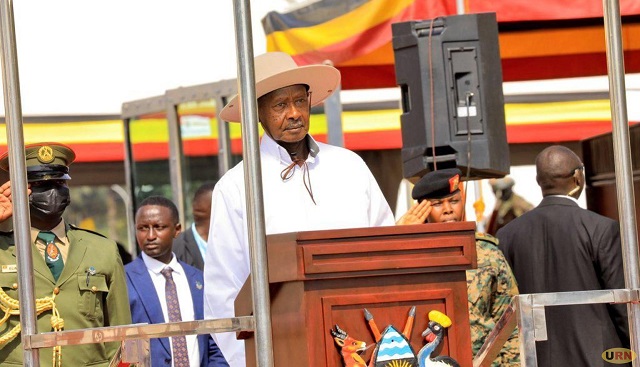
Luwero, Uganda | THE INDEPENDENT | On 26th January, the country marked 40 years since National Resistance Army (NRA) fighters, led by President Yoweri Kaguta Museveni, captured power following a protracted guerrilla war in Luwero. The 40th NRA/NRM Liberation Day celebrations took place at Kololo Ceremonial Grounds and were presided over by President Museveni.
In Luwero District, however, the celebrations attracted limited attention, with residents expressing mixed reactions about the National Resistance Movement’s contribution to the area. Luwero—then comprising Nakaseke, Nakasongola, and present-day Luwero—was the epicentre of the NRA liberation war.
In 1981, residents of Luwero welcomed Museveni and offered support, including manpower, to fight the then government of Milton Obote, a conflict that left hundreds of people dead. The area continued to support Museveni even after he captured power and in subsequent elections until 2021, when voters shifted allegiance to opposition candidates.
Between the 2021 and 2026 general elections, the NRM government has struggled—without success—to regain political support in Luwero District. In the 2026 presidential election, National Unity Platform (NUP) candidate Robert Kyagulanyi maintained his lead in the district after garnering 78,939 votes (60.2 percent), while President Museveni obtained 48,452 votes (36.8 percent).
NUP also retained all four opposition Members of Parliament and the LC5 chairperson seat, securing 17 councillor positions out of the 32 available seats. The incumbent LC5 Chairperson, Erastus Kibirango, said the election results sent a clear message that residents had lost trust in the NRM government due to its failure to deliver services to the district.
Kibirango explained that although President Museveni made several pledges aimed at transforming Luwero, many remain unfulfilled. He noted that despite the district’s significant contribution to the NRA war, it continues to lag in development. He added that while some pledges have been partially fulfilled in the past four years—such as the ongoing construction of Luwero Hospital and the district headquarters—they remain insufficient compared to the sacrifices made by the area during the liberation struggle.
Kibirango further observed that the Luwero–Rwenzori Triangle Ministry failed to bring about meaningful change after its mandate was expanded to cover 42 districts, including areas that were not as severely affected by the war as Luwero. He said the district is still waiting for the fulfillment of key pledges, including the establishment of a fruit processing plant, the upgrading of major roads, and the introduction of another special programme to improve residents’ livelihoods.
Hajji Musa Kakande, a resident of Kasoma Zone in Luwero Town, noted that President Museveni’s support increased from 27.94 percent in 2021 to 36.8 percent in the 2026 general elections following the fulfillment of some pledges. However, Kakande said the NRM government must urgently address key issues such as rampant youth unemployment and widespread corruption, which continue to undermine service delivery both in Luwero and nationally.
Another resident, Elvis Musoke from Luwero Sub-county, said that despite the area’s contribution to the NRA fighters, Luwero is grappling with rampant land grabbing allegedly backed by state institutions such as the police and courts. Musoke said that even after raising the issue with President Museveni during the campaigns, no lasting solution was provided, leaving residents with little incentive to vote for him.
“We voted for Kyagulanyi because he promised to return the grabbed land and jail the grabbers, which the NRM government has failed to do. Instead, some NRM government officials are implicated in grabbing our land,” Musoke said. However, the NRM Publicity Secretary for Luwero District, Denis Kibirige, said President Museveni did not wage war to liberate a single district or region, but the entire country.
Kibirige noted that the peace currently enjoyed across Uganda is a result of the sacrifices made by the people of Luwero. He added that, like other districts, Luwero has seen an increase in the number of government schools and health centres over the past 40 years. He attributed the NRM’s failure to reclaim Luwero in the 2026 elections to internal divisions among party supporters and leaders, rather than a lack of tangible achievements.
NRM Deputy Secretary General Rosemary Namayanja said that although the district may not be where residents expect it to be, there have been notable gains across several sectors, including health, education, and production. Namayanja added that the Greater Luwero sub-region has evolved into an industrial hub, attracting over 500 small- and large-scale industries, largely due to the peace ushered in by the NRM government.
“The problem in Luwero has been residents voting for leaders who cannot lobby for services. In Nakaseke District, people have learnt this lesson, and we managed to regain Nakaseke Central and Nakaseke South constituencies, which were previously under opposition MPs. You will see change in the next five years in those areas,” Namayanja said. NRM won all four parliamentary seats in Nakaseke District and two others in Nakasongola. President Museveni also maintained his lead in both districts.
While campaigning in Luwero District in September 2025, President Museveni attributed persistent service delivery gaps to the election of opposition leaders. Museveni accused residents of “committing political suicide” by electing opposition figures such as Woman MP Brenda Nabukenya and the LC5 chairperson, whom he said lacked the capacity to lobby for services or address rising criminality, including rampant land grabbing. It remains to be seen whether President Museveni will address the key demands of Luwero residents, following their decision to once again reject NRM candidates and vote for the opposition.
****
URN