The Independent Uganda: You get the Truth we Pay the Price



National Water and Sewerage Corporation is trying to turn climate shocks, rapid urbanisation and financial strain into a platform for expansion and efficiency gains
Kampala, Uganda | JULIUS BUSINGE | Uganda’s state water utility is under mounting pressure from all sides: a fast-growing urban population, erratic weather patterns, ageing infrastructure and persistent financial constraints.
But rather than buckle under the weight of these challenges, the National Water and Sewerage Corporation (NWSC) is attempting something more ambitious – to turn systemic stress into a driver of expansion and reform.
The utility sits at the centre of one of Uganda’s most politically and economically sensitive public services. Reliable water access is increasingly tied to urban growth, industrial development and public health outcomes.
But the system is being stretched by rapid city expansion, informal settlement growth and rising industrial demand, particularly around Kampala and secondary towns.
NWSC now serves about 20 million people across 287 towns for water and 18 for sewerage services. Over the past five years, it has significantly expanded its footprint: villages served have risen from just over 7,000 to more than 11,000, while customer connections have crossed the one million mark.
That expansion has been accompanied by a near 20 per cent increase in pipeline network length, now approaching 24,000 kilometres. It is, on paper, a story of scale. In practice, it is also a story of systems under strain.
A utility forced to grow up fast
Uganda’s urbanisation trajectory has left NWSC constantly catching up with demand rather than planning ahead of it. New industrial parks, expanding municipalities and informal settlements have created surges in consumption that often outpace infrastructure development.
To its leadership, however, the pressure is also a forcing mechanism for change.
The corporation’s new 2025–2030 strategy frames its mandate in explicitly expansionary terms: raise coverage to about 26 million people, grow connections to 1.3 million, and lift annual revenues from Shs 649bn to Shs 768bn. The asset base is projected to rise from Shs 4.8tn to Shs 6.8tn over the same period.
Behind those targets is a broader shift in thinking: from a traditional utility model focused on engineering and maintenance, to what management describes as a customer-centred infrastructure provider.
That shift is being pushed by Managing Director Silver Mugisha, who has argued that water utilities must increasingly behave like responsive service organisations rather than static public monopolies.

Big infrastructure, bigger expectations
Over the past five years, NWSC has invested heavily in large-scale infrastructure intended to reset supply constraints.
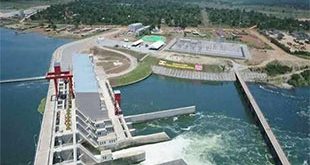
Among the most significant projects is the Katosi water treatment system, which delivers up to 160 million litres per day into the Kampala metropolitan network — one of the largest single injections of capacity into the system in decades. It is complemented by transmission upgrades linking supply corridors into the capital.
Other projects, including wastewater treatment facilities in Kampala and new systems in regional towns such as Gulu, Hoima and Bushenyi, are intended to extend both water supply and sanitation coverage beyond traditional urban cores.
But infrastructure expansion brings its own complications. New assets require power, chemicals, maintenance and skilled operators; all of which add to operating costs at a time when revenue collection remains uneven.
Climate stress is no longer cyclical
For NWSC, climate change is no longer a periodic disruption but a structural constraint. Unpredictable rainfall patterns are altering river flows and reservoir levels, while flooding events are increasing treatment costs due to higher levels of contamination. Prolonged dry spells in some regions are also tightening supply.
The corporation has responded by expanding catchment protection programmes in areas such as Mbale, Arua and Gulu. These include reforestation, riverbank stabilisation and wetland restoration initiatives designed to protect upstream water sources.
The shift marks a recognition that water security is no longer just an engineering problem, but an environmental one. In practice, it is pushing the utility into areas traditionally managed by environmental agencies and local governments.
Despite infrastructure gains, NWSC continues to lose significant volumes of treated water through illegal connections, leakages and metering inefficiencies.

Non-revenue water remains one of its most persistent operational challenges, particularly in fast-growing urban peripheries where enforcement capacity is weak and networks are expanding rapidly.
The response has combined enforcement with technology. The utility has partnered with security agencies to crack down on illegal connections while also testing digital monitoring systems designed to detect leaks and abnormal consumption patterns.
Yet enforcement alone cannot solve the problem. In areas such as Greater Masaka, where informal connections are widespread, the issue is as much social as technical — reflecting affordability constraints and uneven access to formal infrastructure.
The fiscal squeeze
Beneath the operational challenges lies a more fundamental constraint: cash flow. Outstanding payments from government ministries, departments and agencies have accumulated into significant arrears, reported in previous parliamentary disclosures at more than Shs 116bn. These delays affect the utility’s ability to pay contractors, finance expansions and service debt.
To bridge the gap, NWSC has increasingly turned to a mix of commercial borrowing, public-private partnerships and discussions around infrastructure bond financing. The approach reflects a broader shift in Uganda’s public utilities towards market-based funding models for long-term capital investment.
A utility in transition
International financiers, including the World Bank and the French Development Agency, continue to play a major role in funding water and sanitation infrastructure. But NWSC’s leadership is increasingly positioning the utility as an institution expected to operate with greater financial autonomy and commercial discipline.
The result is a hybrid model: a state-owned utility operating large-scale infrastructure, while gradually adopting the financial and operational logic of a commercial enterprise.
For consumers, the experience remains uneven — marked by improvements in coverage in many areas, but also periodic shortages and service interruptions in others.
Still, the broader trajectory is clear. NWSC is no longer simply expanding pipes and treatment plants. It is attempting to redesign how a national utility responds to the combined pressures of urbanisation, climate change and fiscal constraint.
Whether it succeeds will depend less on the scale of its infrastructure than on its ability to sustain efficiency in a system where demand is rising faster than almost anything else.