The Independent Uganda: You get the Truth we Pay the Price


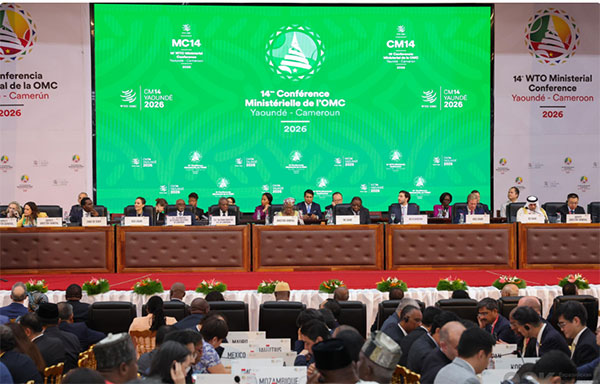
Kampala, Uganda | URN | Uganda and the least developed countries have expressed frustration about the failure to reform the World Trade Organization’s rules to ensure they benefit from the global trading system.
Their concern stems from the just-concluded 14th Ministerial Conference of the World Trade Organization, at which Ugandan and generally African civil society were demanding a change in global trade rules.
The civil society in the trade sector had expected that the Conference held in Yaoundé, Cameroon, would come out with recommendations, among others, to ensure fairness in trade, or what was known as the WTO Reform Agenda.
Uganda’s civil society and its counterparts from other developing countries have been backing reforms that reaffirm the core principles of fairness, inclusivity, and development.
They have particularly noted that market access issues, including non-tariff barriers and subsidies, continue to create an uneven playing field.
It has been noted that developing nations are pressured by the combined weight of protectionism by stronger states, with limited policy space and weak integration of development priorities.
But as the conference came to an end, there was a feeling that the conference had not adequately addressed those and other issues, yet evidence shows countries like Uganda are being negatively impacted by the emerging regional and global events.
The WTO system of rules is facing growing pressures, from the immediate shock of recent U.S. tariff policy to impacts from long-term forces such as climate change, technological advances, and intensifying power competition.
There is concern that protectionist actions, especially unilateral tariffs, export restrictions for strategic goods, and industrial subsidies, can lead to a disruption in trade flows and impose costs on relatively weaker trading partners.
Georgina Mugerwa Nampeera, Assistant Commissioner, Multilateral Trade, at the Ministry of Trade, Industry and Cooperatives, says Uganda and Africa left the conference disappointed because their expectations were not met.
Uganda went to the conference backing the WTO reform agenda.
She adds that Uganda expected the development dimensions long recognised in the Doha Development Agenda to remain central in WTO discussions and outcomes.
Nampeera also showed concern about the lack of conclusions on the Industrial policy and development balance, especially on how countries graduating to higher income statuses would be treated.
Uganda is in the pipeline of being declared a middle-income economy, meaning it would have to lose some preferential trade considerations under the WTO framework.
Nampeera, however, says Uganda will continue rallying developing countries for consensus and a united voice, not to lose track of their demands for reforms.
Herbert Kafeero, the Deputy Executive Director of the Southern and Eastern Africa Trade Information and Negotiations Institute (SEATINI Uganda), expressed concern at the low negotiation pace, yet global trade restructuring is moving fast.
He cites the shift to plurilateral agreement systems, where a country prefers negotiating with a few countries instead of with a trading bloc, which has left trading blocs disintegrating.
“The multilateral trading system remains under strain after MC14. The global trading system is shifting toward plurilateral approaches,’ Kafeero says, adding that expansion of initiatives in e-commerce and investment facilitation signals movement away from consensus-based decision-making, creating risks of exclusion for East African countries.
“Alignment across national, regional, and continental frameworks is essential. East African and African positions under the AfCFTA must guide WTO negotiations to ensure coherence and avoid fragmented trade strategies,” he says.
Vahini Naidu, Programme Coordinator of the Trade for Development Programme, South Centre, Geneva, says that agriculture remains the largest unresolved issue after MC14.
She says that public stockholding for food security, the special safeguard mechanism, cotton, and domestic support reform still lack focused negotiating tracks despite their importance to developing countries.
She warns that Special and Differential Treatment is being redefined in ways that developing countries must watch closely.
East Africa should engage actively, not defensively, in Geneva, she says ahead of the General Council meeting in Geneva later this week, calling for an EAC coordinated position on WTO reform, agriculture, e-commerce, and emerging plurilateral arrangements.
A similar view is also held by Jane Nalunga, Executive Director, SEATIN Uganda, also a member of the negotiations t said developing countries expect solutions to long-standing trade challenges. Nalunga noted that while some issues were discussed, important ones to EAC and Africa, like Agriculture, electronic trade, among others, were avoided, according to her.
She hopes that the next round of talks at the May 2026 WTO General Council Meeting in Geneva will address some of the issues.
“East Africa must strategically position itself for effective engagement. As a region predominantly made up of Least Developed Countries, East Africa needs to understand the implications of MC14 outcomes and strengthen its voice in upcoming WTO negotiations”.