The Independent Uganda: You get the Truth we Pay the Price


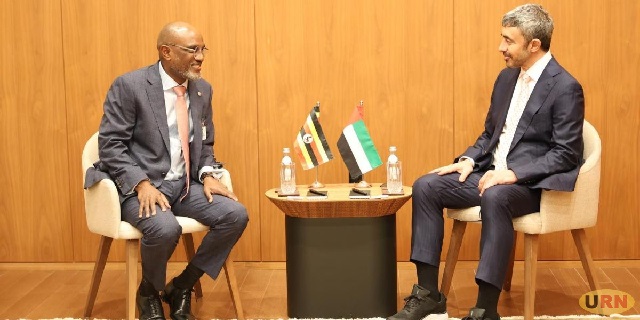
Kampala, Uganda | URN | The United Arab Emirates has eased precautionary entry measures imposed on Ugandan nationals during the Ebola outbreak, paving the way for the restoration of normal travel and labour links between the two countries.
The decision was announced by the UAE’s National Emergency Crisis and Disaster Management Authority (NCEMA), in coordination with the Ministry of Health and Prevention (MoHAP) and the Federal Authority for Identity, Citizenship, Customs and Port Security (ICP).
Multiple publications from the UAE confirm the latest development.The authorities said the decision followed continued assessment of the epidemiological situation and Uganda’s completion of the internationally established monitoring period after the end of its Ebola outbreak.
The precautionary measures against the Democratic Republic of Congo and South Sudan will remain in effect because of the ongoing epidemiological situation in those countries.
The UAE introduced the measures on June 6, 2026, suspending new visa issuance for nationals of Uganda, the Democratic Republic of Congo and South Sudan as part of measures to strengthen preparedness against Ebola.
The latest decision removes Uganda from the countries still subject to the precautionary entry measures.
Uganda’s Foreign Affairs Minister Adonia Ayebare also posted on his X account confirming the development, saying it followed discussions with his UAE counterpart, Sheikh Abdullah bin Zayed Al Nahyan, on the margins of the 81st Session of the United Nations General Assembly in New York.
Ayebare said the UAE had agreed to lift the restrictions following Uganda’s containment of Ebola.
“His Highness informed me of the decision to lift travel restrictions on Uganda, subject to a delegation of UAE visiting the Uganda Civil Aviation Authority and other entities to assess preparedness,” Ayebare said.
The UAE authorities said they would continue monitoring regional and international developments relating to Ebola and that precautionary measures would be reviewed and adjusted according to changing risk assessments and public health standards.
The easing of the restrictions is significant for Uganda’s labour export industry, which relies heavily on the UAE market.
The UAE is a major destination for Ugandan migrant workers employed in domestic work, hospitality, private security, construction, retail and business services. The Ministry of Gender, Labour and Social Development estimates that between 100,000 and 160,000 Ugandans live and work in the UAE, mainly in Dubai, Sharjah and Abu Dhabi.
The workers are estimated to send between 260 million and 350 million US dollars in direct remittances to Uganda each year, equivalent to about one trillion to 1.3 trillion shillings.
The June restrictions had also affected licensed external labour recruitment agencies in Uganda, which reported slowdowns as prospective workers waited for visa processing and travel arrangements to resume.For Ugandans affected by the restrictions, the UAE announcement has generated cautious optimism.
Moses Bwambale, a migrant worker affected by the measures, described the decision as significant for Uganda’s economy and labour export sector.“Securing the decision to lift travel restrictions on Uganda is a huge win for our economy, labour export sector, trade, and bilateral cooperation,” Bwambale said.
Tom Araali, another affected Ugandan, said workers were eager to resume their activities.“We can’t wait to reopen and get business running again. We are currently stuck, and we sincerely hope the restrictions will be lifted soon,” Araali said.
Ahmed Mugabe, who operates an external recruitment firm, welcomed the development but said uncertainty over air travel remained.
The UAE authorities said the easing of Uganda’s measures reflects the latest public health developments and that future precautionary measures will remain subject to the assessed level of risk.
For Uganda, the decision removes a major health-related barrier to movement to the UAE, although the practical restoration of flights, visa processing and recruitment operations will determine how quickly travel and labour activity return to normal.