The Independent Uganda: You get the Truth we Pay the Price


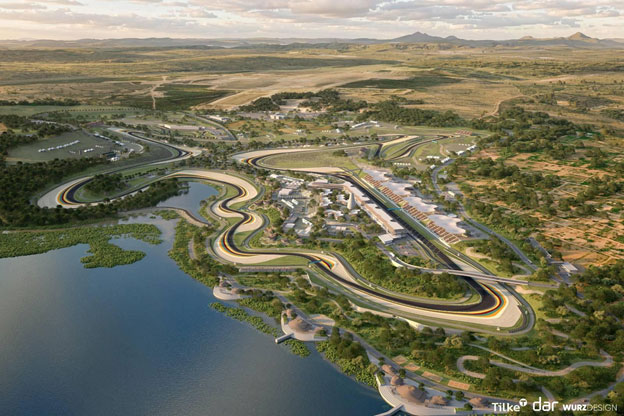
Rwanda’s plan to bring a Grand Prix to Bugesera in the 2030s reflects its ambition to become a global destination for sport, tourism and investment
NEWS ANALYSIS | IAN KATUSIIME | Rwanda has secured a place on Formula 1’s future calendar, ending the sport’s 33-year absence from Africa. But before the engines roar in Bugesera, the country must turn a 10-year hosting agreement into a racing circuit, a commercial proposition and an economic investment whose returns extend beyond the Grand Prix weekend.
The proposed venue, about 40 kilometres south of the capital Kigali and adjacent to the new under-construction Bugesera International Airport, is central to Rwanda’s ambition to use global sporting events to attract tourists, investors and international business. The first race is expected in the early 2030s, once the purpose-built circuit is completed.
Rwanda’s successful bid to host Formula 1—dubbed the African Grand Prix—has generated widespread excitement and reignited debate over how the small, low-income country continues to punch above its weight on the global stage.
After more than a thirty-year absence, there has been a longing for the elite motor-racing event to return to the continent. The last F1 race was held in 1993 at the Kyalami circuit in South Africa.
Rwanda strengthened its bid to host a Formula 1 Grand Prix by staging the FIA Awards ceremony in December 2024, putting the country in the spotlight of international motorsport.
President Paul Kagame has been a driving force behind the ambition, attending Grand Prix races in Singapore and Azerbaijan in recent years as Rwanda pursued a place on the sport’s global calendar.
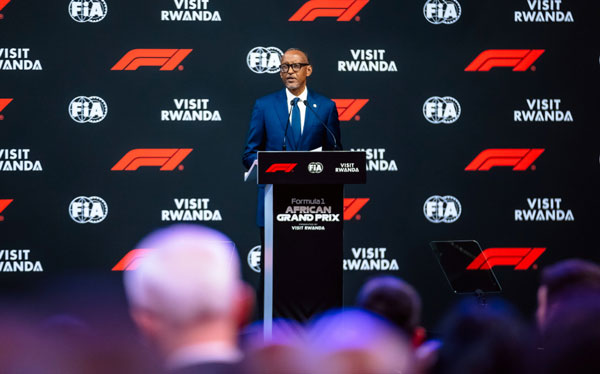
“For decades, African athletes have been a pillar of the global sports economy, adding significant commercial value to top leagues, with the continent receiving almost nothing in return,” said Kagame at the announcement in Kigali. “Partnerships like the one we are building help break this cycle.”
“Formula 1 is part of the big picture of what Rwanda has to build; there are many things that Rwanda has undertaken to do, and we have made progress as a country and as a people,” he said.
Plans are underway for a purpose-built circuit in Bugesera next to the new airport offering seamless international transport links for teams, freight, and global visitors. This was a deliberate decision to position the new circuit in an infrastructure ecosystem targeting tourists and investors.
The deal is contingent on Rwanda successfully building and completing a full-scale, permanent motorsport facility in Bugesera that meets strict international FIA Grade 1 standards.
Rwanda commissioned world-renowned track designers (Tilke Engineers and Architects alongside WurzDesign) to craft a 6 km (3.7-mile) anti-clockwise circuit utilizing Rwanda’s dramatic natural elevation changes (nearly 200 meters of elevation gain per lap).
“The circuit will be designed to work in harmony with the natural landscape, using the area’s elevation changes to create a unique and challenging racing experience while delivering exceptional viewing opportunities for fans,” a Formula 1 statement said.
The Rwanda Development Board is the project lead and positions the circuit within a broader sports, tourism and commercial development strategy.
The high-profile branding success of Visit Rwanda through partnerships with elite European football clubs Arsenal, PSG and most recently Aston Villa is said to have pushed the deal over the line.
The East African nation has hosted major sporting events; the UCI World Road championship in 2025, the first African country to pull off the event. It has also hosted the 2023 FIFA Congress; and the Basketball Africa League—creating a talent pipeline for basketball development on the continent.
“Today is a landmark moment for Formula 1,” said Stefano Domenicali, President and CEO of F1 at the event.
The costs of hosting F1
Hosting a Formula 1 Grand Prix is among the most capital-intensive undertakings in sports management. Industry estimates put the cost of building a circuit at between $200 million and $1 billion, depending on its design, location and supporting infrastructure.
Beyond the track itself, a circuit requires grandstands, paddock facilities and garages that serve as operational hubs for teams, as well as safety systems, utilities, access roads, parking and other supporting infrastructure.
The financial commitment extends past construction. Estimates suggest that hosting a Grand Prix can cost between $70 million and $150 million annually, although the actual figure varies depending on the event and how costs are accounted for.
VIDEO – A first look at Rwanda’s F1 track due for construction in Bugesera district to host the race in early 2030s. https://t.co/yQ9PY0SwgQ
— The Chronicles (@ChroniclesRW) October 13, 2026
These recurring expenses are separate from the annual hosting fee paid to Formula 1, which is a distinct contractual obligation.
Reports indicate that the Rwandan government and international partners will be involved in financing the project, but the precise funding structure, division of financial responsibilities and extent of the government’s exposure remain key questions.
Beyond the cost of constructing the circuit, Rwanda faces potentially substantial financial obligations, including an annual Formula 1 hosting fee that could rise over the 10-year agreement, regardless of how much revenue the race generates.
Analysts say the government must also clarify who will absorb the costs of security, transport, logistics, staffing and other event operations, and whether taxpayers will be exposed to additional spending if attendance, sponsorship or tourism revenues fall short of projections.
If construction overruns, the race is delayed or commercial returns disappoint, Rwanda could face mounting costs without the expected economic benefits. The key question is whether revenue from tourism, hotels, restaurants, hospitality and year-round use of the circuit will be sufficient to cover these commitments, who will capture those revenues, and whether the government has guarantees or safeguards to limit public losses.
Wealthy Gulf states such as Saudi Arabia, Qatar and Bahrain have been able to finance Formula 1 circuits and absorb the recurring costs of hosting races with greater financial flexibility, underpinned by substantial hydrocarbon revenues and sovereign wealth.
For Rwanda, which lacks comparable oil and gas revenues, the financial burden of building a circuit and staging a Grand Prix could be considerably greater, making the project’s financing structure, expected returns and exposure to public losses critical questions.
Rwandan sports minister Nelly Mukazayire says preparations to host the Formula 1 African Grand Prix will focus on three key areas: competition, entertainment and business.
Return on investment
The Rwandan government has said that the circuit will be used beyond race weekends for motorsport, conferences, entertainment and other international events. Aside from the spectacle of hosting Formula 1, analysts have said that Rwanda will need to demonstrate that the proposed Bugesera circuit can deliver sustained economic benefits. This comes down to how many events the venue could realistically host each year, on top of being responsible for their operation, maintenance and long-term commercial viability.
The government’s projections should also clarify expected visitor numbers, hotel demand, tourism spending and job creation, including how much of that spending is likely to reach Rwandan workers and businesses rather than international event operators and specialist suppliers.
The experts point to credible estimates of tax revenues and foreign-exchange earnings which would help establish the investment’s potential contribution to the wider economy.
Equally important is how the project’s financial risks will be managed if attendance, sponsorship or other commercial revenues fall below expectations.
The experience of other Formula 1 host countries suggests that Rwanda’s success will depend on how much economic value the race generates locally and whether that value justifies the public investment.
Singapore, which has hosted the night race since 2008, reported in February 2026 that organising the Grand Prix cost an estimated US$109 million annually in 2022–2025, while the event had generated more than US$1.7 billion in incremental tourism receipts cumulatively through 2024.
The Singapore government has also reported that race-related work is subcontracted to local firms, illustrating the importance of domestic businesses capturing a share of the spending.
However, sports economists Robert Baade and Victor Matheson have cautioned in their research on mega-events that projected economic gains can overstate the benefits actually retained by host economies.
Their analysis means that the test for Rwanda is in Bugesera holding enough year-round events to sustain hotels, restaurants, transport operators and local suppliers further than race weekend—and whether projected tax revenues, jobs and foreign-exchange earnings can be independently verified against the full costs of building, operating and maintaining the venue.
Rwanda has used international sporting partnerships and high-profile events to promote its tourism brand and attract investment. Rwanda’s Formula 1 ambition is about more than bringing the world’s fastest cars to Bugesera. Proponents argue that it is a bet that one of the world’s most commercially powerful sporting spectacles can help transform the area around the new international airport into a destination for tourism, business and investment.
The circuit could reinforce demand for hotels, transport, hospitality and other services, while giving Rwanda another platform to market itself internationally. But the success of that strategy will depend on whether these investments generate economic activity long after the grandstands and paddocks have been closed and whether local businesses capture a meaningful share of the benefits.
Bugesera sits on a high-altitude plateau within the Great Rift Valley. The specific track location is defined by two massive hills. Nestled right below the hills is one of Bugesera’s lakes.
Bugesera belongs to Rwanda’s Eastern Province, which features a slightly hotter and more semi-arid savanna climate compared to the lush, mountainous west.
F1 enthusiasts say the remaining work is to build the facility, secure the necessary approvals and infrastructure, and establish a commercially viable event operation.