The Independent Uganda: You get the Truth we Pay the Price


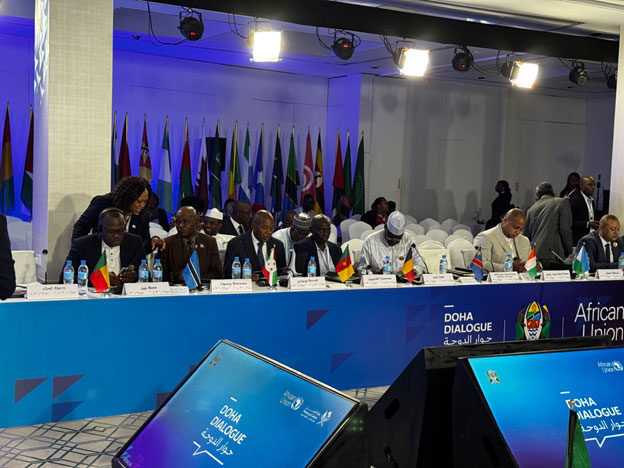
Second Doha Dialogue on labour mobility held in Dar-es-Salaam showed how worker protections are hard to achieve
NEWS ANALYSIS | IAN KATUSIIME | For two days in early October, hundreds of delegates from African countries and the Gulf Cooperation Council (GCC) gathered at the Indian Ocean-facing Hyatt Regency Hotel in Dar-es-Salaam, Tanzania, for the second Doha Dialogue on Labour Mobility organised by the African Union, the State of Qatar, and the United Republic of Tanzania.
The central question was straightforward: how do we move from the principles agreed at the inaugural 2024 dialogue in Doha to concrete protections for African migrant workers?
Discussions focused on recruitment transparency, wage protection, recognition of skills and the establishment of safer labour migration corridors between Africa and the Gulf.
But beneath the diplomatic language, tensions were unmistakable. African delegates pushed for stronger safeguards for migrant workers, while disagreements emerged over the extent of those protections and the wording of the conference declaration.
Qatari delegates were among those at the centre of the discussions, as delegates wrestled with language that could have significant implications for accountability.
There are several reports of worker mistreatment, opaque employment contracts and exploitative recruitment practices — sometimes involving collusion between employers and recruitment agencies in countries of origin — continue to raise difficult questions about who protects workers once they leave home.
The declaration itself became a battleground over wording, structure and accountability. Some delegates accused Tanzania of undermining the African Union’s position by pursuing agreements with Qatar to facilitate the recruitment of more workers, potentially at the expense of stronger protections.
They pointed to reports of more than 60 memoranda of understanding signed between the two countries. One delegate delivered a particularly stark verdict: “The Doha Dialogue is dead.”
That was one delegate’s assessment, but it captured the frustration in the room.
The deeper dilemma is this: African countries want access to Gulf labour markets, jobs and remittances. Gulf economies need workers. Yet the bargaining power is rarely equal, and the pursuit of employment opportunities can leave workers exposed to abuse, exploitation and, in the most tragic cases, death.
Sabelo Mbokazi, Head of Labour Employment and Migration at the African Union Commission expressed the body’s commitment to the 2024 dialogue.
Zuhura Yunus, deputy permanent secretary, in the ministry of labour of Tanzania said it was important for technical experts to take significant and practical steps to protect migrant workers. She urged African governments to promote skills development for workers going to the Gulf.
Human trafficking
An official from Tanzania’s Ministry of Home Affairs identified human trafficking, particularly involving women, as one of the biggest challenges facing labour migration. He said the trafficking corridor stretches from Ethiopia through Kenya to Tanzania, requiring closer coordination among government agencies to combat the vice.
The official said the ministry works with the police and the Ministry of Labour to develop guidelines aimed at curbing trafficking. Tanzania also has migration attachés stationed at its embassies in destination countries to support and monitor migration-related issues, he added.
He said Tanzania’s labour migration ties are particularly concentrated along the Oman–Zanzibar corridor, reflecting the historical connections between the two sides. “Actually, most of the people attending this conference are from Zanzibar,” he said.
Meanwhile, a Tanzanian recruitment agent said his company recruited 1,000 truck drivers for employment in Qatar in September. He attributed the availability of qualified drivers to a driver-training college, which he said has trained and supplied skilled operators of various types of motor vehicles in recent years.
The recruiter maintained that workers recruited through his company have valid employment contracts by the time they arrive in destination countries such as Qatar but verifying such a claim is always hard.
Labour mobility is expanding amid demographic, economic and technological shifts and changing labour-market demands. The GCC states are among the world’s major destinations for migrant workers. Across the wider Arab States region, about 24.1 million migrant workers are employed, representing approximately 14 per cent of the global total. Migrant workers also account for a higher proportion of the labour force in the region than in any other part of the world.
4.7m migrants in the Gulf
The Africa–Gulf labour corridor is a significant part of this movement. About 4.7 million migrants from Africa were living in GCC countries in 2024, amid sustained demand for workers in domestic and care services, construction, hospitality, transport, agriculture and other sectors.
Against this backdrop, the African Union and the GCC established the Doha Dialogue on Labour Mobility as a platform for structured engagement and cooperation on labour migration governance.
The dialogue was formalised through the Doha Declaration on Labour Mobility, issued on May 22, 2024, by GCC+ labour ministers and ministers responsible for labour and employment from 22 African Union member states. The declaration established the dialogue as a voluntary, non-binding, state-led consultative process.
The second dialogue in Dar es Salaam brought together officials from Qatar’s Ministry of Labour, the International Labour Organization (ILO) and the International Organization for Migration (IOM), among other participants, to discuss cooperation on labour mobility and the protection of migrant workers.
Bilateral labour agreements between African countries and the Gulf states featured prominently in discussions, with delegates calling for the agreements to establish safer migration pathways and incorporate stronger human rights protections in line with international labour standards.
One delegate said African labour mobility was also being driven by worsening climate pressures, including drought and famine, as well as conflict and insecurity across the continent.
“It gets worse progressively,” she said on October 5, the first day of the conference.
She cited conflicts in Sudan and South Sudan, alongside persistent terrorist threats in parts of the region, as factors pushing people to seek opportunities elsewhere.
She also highlighted the limited capacity of African diplomatic missions in destination countries, noting that many embassies are understaffed and too few to adequately support migrant workers.
Uganda’s Minister of State for Labour, Simon Mulongo, said African countries risked being disadvantaged when negotiating with powerful states such as Qatar because they often approached the negotiating table while divided.
He called for greater unity among African governments to strengthen their bargaining power and secure better outcomes in dealings with more powerful partners.
That imbalance was evident in the negotiations over the 2026 Doha Dialogue Declaration, where disagreements involving Tanzanian and Qatari officials fuelled tensions over the conference’s final commitments. Reports of memoranda of understanding allegedly concluded behind the scenes and recruitment contracts already secured added to delegates’ concerns, although the details require verification.
African Union officials faced the challenge of reconciling competing national interests with the bloc’s broader agenda for protecting migrant workers.
The tensions cast a shadow over expectations that the dialogue would produce renewed commitments to decent working conditions and the protection of migrant workers in line with national legislation and international labour standards.
Delegates had also hoped to advance access to social protection and healthcare, as well as the portability of social security benefits across the migration cycle. Other priorities included renewed ministerial commitments to rights-based, gender-responsive and development-oriented labour agreements between African Union member states and GCC+ countries, including Jordan and Lebanon.
These commitments were intended to advance the dialogue’s three strategic themes: skills development, access to justice and social protection. Yet stronger institutional cooperation, improved diplomatic and consular representation, and wider use of common reference tools including the African Union’s Guidelines on Developing Bilateral Labour Agreements remained key challenges.
The disagreements in Dar es Salaam exposed a broader difficulty in international cooperation: securing agreement on shared principles is one thing; translating them into enforceable protections across borders is another. For African countries seeking jobs, investment and infrastructure partnerships from wealthier international partners, the challenge is compounded by unequal bargaining power and competing national interests.
The unresolved question is whether African governments can overcome those divisions to negotiate agreements that deliver economic opportunities without sacrificing the rights and welfare of their citizens.
By the time Amma A. Twum-Amoah, the African Union Commissioner for Health, Humanitarian Affairs and Social Development, took the podium to deliver the closing remarks, frustration and disappointment were palpable among the more than 300 delegates in the room.
Despite the tensions surrounding the negotiations, Twum-Amoah sought to refocus the dialogue on its central purpose: building labour-mobility systems that benefit both African countries and Gulf destinations while safeguarding migrant workers’ rights.
“Our objective must remain clear: to build labour-mobility systems that create genuine opportunities; respond to labour-market needs; strengthen skills and productivity; protect the dignity and rights of migrant workers; and deliver mutual benefit to countries of origin and destination,” she said.