The Independent Uganda: You get the Truth we Pay the Price


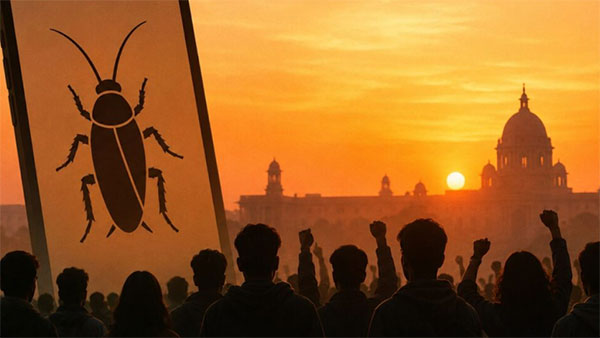
It started with an insult. In mid-May, during an open court hearing, Supreme Court Chief Justice Surya Kant referred to some unemployed young people as “cockroaches” and “parasites.”
COMMENT | SHASHI THAROOR | For those accustomed to viewing Indian democracy through the prism of grand electoral contests or warnings about institutional erosion, recent weeks have provided a refreshing demonstration of democracy’s resilience. What began as provocative online satire exploded into one of the most remarkable—and successful—youth-led political movements in modern Indian history.
It started with an insult. In mid-May, during an open court hearing, Supreme Court Chief Justice Surya Kant referred to some unemployed young people as “cockroaches” and “parasites.” Though Kant insists that he was referring only to those who use fake degrees to enter the legal profession, his comment struck a nerve in a country where tens of millions of educated young people have found themselves navigating an economic landscape marred by jobless growth.
Rather than succumbing to despair or quiet indignation, young people offered a satirical response to Kant’s comments. Within 24 hours, the “Cockroach Janta Party”—a play on the name of the ruling Bharatiya Janata Party—was born, with “Voice of the Lazy & Unemployed” as its ironic tagline. Within a few days, the CJP emerged as a social-media juggernaut, amassing over 20 million followers—more than the official accounts of the established political machines, including the BJP.
The joke’s impact lay in the genuine grievances it captured. Despite high unemployment among university graduates, young Indians still view higher education as their only hope for upward social mobility, spending years preparing for hyper-competitive national entrance examinations.
But this year, exam leaks, grading irregularities, and the sudden cancellation of results blighted the process. Some 2.2 million students were forced to retake the grueling medical entrance exam, the National Eligibility cum Entrance Test, owing to leak allegations. Upon learning that their May 3 attempt had been voided, some of these students committed suicide. Such tragedies transformed economic anxiety into moral outrage.
The “cockroach” movement provided an ideal outlet for this fury. Unaffiliated with traditional party structures and supported across ideologically diverse segments of civil society, the movement defied conventional political categorization. By June, it migrated from smartphone screens to the heat of Indian city streets, with tens of thousands of students, civil-service aspirants, and concerned citizens gathering in the capital and across major urban centers to demand education reform.
Once the BJP government realized that it could not simply ignore the “cockroaches,” it decided to quash them. While some BJP figures blamed the movement on malicious foreign actors, the authorities blocked CJP-linked social-media accounts, tasked security agencies with monitoring the movement’s coordinators, banned public gatherings, established a heavy police presence in Delhi, and shut down the internet in the city center.
But the movement’s decentralized nature, combined with the moral clarity of its demands for educational integrity and institutional accountability, rendered these authoritarian tactics futile. Protesters gathered at Delhi’s Jantar Mantar, reaching larger numbers than the area could contain, and called for a march to parliament, barely a ten-minute walk away from the locus of the demonstrations.
Having yet to learn its lesson, the government turned to brutality, with police charging the protesters, assaulting many on the streets, and even using water cannons and pellet guns. Nearly 180 people were injured, according to Delhi police. But far from quelling the movement, the government’s tactics heightened popular outrage, with protests spreading to many cities and towns.
Eventually, the government recognized its mistake. Unlike past protests—including the demonstrations against the 2019 Citizenship Amendment Act, which affected Indian Muslims, and the 2020–21 protests by farmers—the student protests could not be framed as being narrowly focused on minority rights or sectoral interests. The demographic the “cockroaches” represent constitutes nearly half the electorate, and the majority come from middle-class households, including families that have traditionally voted for the BJP. For the ruling party, alienating this cohort would court electoral disaster.
In a dramatic retreat, the central government opened direct talks with student representatives and pledged to establish expedited judicial mechanisms to punish those involved in exam leaks. It also accepted the resignation of Union Education Minister Dharmendra Pradhan—a step that it had previously insisted was “off the table.” For an administration that has spent the last decade cultivating an image of unyielding strength and muscular executive control, the capitulation was notable.
By turning a judge’s slur into a badge of honor, India’s youth have reminded their leaders that the political establishment, no matter how powerful it becomes, cannot ignore the collective will of the public indefinitely. They have also demonstrated that, while autocratic tactics can undermine institutions and intimidate the political opposition, they are ill-equipped to quell the decentralized, irreverent, and chaotic energy that animates successful youth protest movements.
The message is clear. Democracy is not built only on the institutions that are said to have been hollowed out under BJP rule. It does not reside solely in legislative chambers, courts, or election commissions. Rather, it also depends on the habits of citizens. And India’s citizens have shown that their democratic spirit remains irrepressible.
The concessions secured by the cockroach movement amount to more than a triumph for prospective medical students or a brief political headache for the BJP. They reaffirm the bargain that underpins Indian democracy, proving that even after years of centralization and executive dominance, power remains with the people. They are not going away, and nor is Indian democracy.
*****
 Shashi Tharoor, a former UN under-secretary-general and former Indian Minister of State for External Affairs and Minister of State for Human Resource Development, is a fourth-term elected member of Parliament for the opposition Indian National Congress.
Copyright: Project Syndicate, 2026.
www.project-syndicate.org