The Independent Uganda: You get the Truth we Pay the Price



Reflections on King Oyo’s Death and Tooro’s Lowest Life Expectancy
COMMENT | NNANDA KIZITO SSERUWAGI | On the night of August 27, 2026, social media broke news of the death of Omukama Oyo Nyimba Kabamba Iguru Rukidi IV, the King of Tooro, at a hospital in the United States. The Kingdom’s Prime Minister, who had earlier disregarded the reports, eventually confirmed the death of the 34-year-old personable monarch. Days later, President Yoweri Museveni would also condole with the Kingdom and the entire country, revealing in a message shared on his social media handles that the Queen Mother, Best Kemigisa, first told him of the King’s illness in November 2025, while he was in the middle of campaign activities, and that the government had provided financial support to the family to help with his treatment, first in Germany and later in the United States. Whereas the royal family had largely kept details of the King’s health private for nearly a year, with the public told only that he had gone abroad for further studies and was doing well, the President revealed that he had been battling an aggressive cancer.
A deeply saddened Museveni, a solemn crowd of royals, dignitaries, and a grieving nation received Oyo’s body at Entebbe International Airport on September 4, and burial arrangements are still ongoing as the Kingdom observes traditional customs in mourning the death of a King.
Museveni’s grief and sorrow for the death of Oyo, captured in his famous expression, “How unfair life can be!” was shared by most Ugandans who could not reconcile how a youthful monarch, in fact the youngest reigning in the whole world, who had lost his own father as a toddler of three years, could have his own life cut short in what should have been its prime.
Oyo was a happy king. He loved life. He loved nature. He promoted environmental conservation. He supported tourism. He championed health initiatives. Championed education. Championed sports. Oyo led a low-key leadership style. He was a king but did not carry kingship around himself. He was a pronounced Christian. Oyo loved his God. His death has shocked the world and excruciated every sensitive nerve that got to know of him.
Oyo’s death was tragic, and yet there is even a deeper tragedy in Tooro. A tragedy beyond its palace walls. A tragedy in its community. A tragedy of having the lowest life expectancy in the whole country. In 2024, the Uganda Bureau of Statistics released the National Population and Housing Census, which revealed that Tooro sub-region has the lowest life expectancy of any region in Uganda, at just 66 years. This is lower than the national average life expectancy of 68.5 years. In other words, the average number of years at birth that a person born in Tooro is expected to live, based on statistical averages and assuming that the current death rates across all age groups stay the same for their entire life, is only 66 years.
The region with the highest life expectancy in Uganda is Teso, with an estimated 77.1 years. Whereas UBOS and socio-economic researchers find Teso’s high longevity paradoxical given its challenges with climate change and food insecurity, societal and dietary research conducted in the region suggests that the local population’s heavy reliance on nutrient-dense, drought-resistant traditional crops such as millet, sorghum, cassava, and sweet potatoes, as well as their regular consumption of locally sourced, vitamin-rich wild green vegetables (like boo and eboo) alongside traditional fermented milk and porridge aids in long-term digestive and immune health, explaining their high performance in living longer than the rest of the country. West Nile as a sub-region performs significantly better than the national average, with life expectancy at birth there estimated at 75 years.
Buganda almost sits at the national average, with life expectancy at 68.3 years. Then come Bunyoro and Ankole, which still perform better than Tooro at 67.0 and 66.7 years, respectively. Ironically, although Kigezi struggles intensely with early-to-mid-life health crises, placing its average life expectancy even below Tooro’s at around 63 to 64 years, it remains in the lead as one of the sub-regions with one of the highest concentrations of elderly people (over 60) in the entire country. This leaves Tooro broadly ranked in national census tracking as the lowest standard regional tier.
I have therefore decided to take the opportunity, with the death of such a beloved, youthful king, to add a voice to the national crisis in Tooro that the government should confront more urgently. How do we address the public health tragedy of Tooro?
First, we need to understand what brings it about.
Tooro is blessed with one of the highest concentrations of volcanic crater lakes anywhere in the entire world. Kabarole District is home to more than 50 of them. These lakes replenish Tooro with abundant natural streams and springs. Tourists love to visit Tooro, with its main town, Fort Portal, conspicuously known as Uganda’s “Tourism City”.
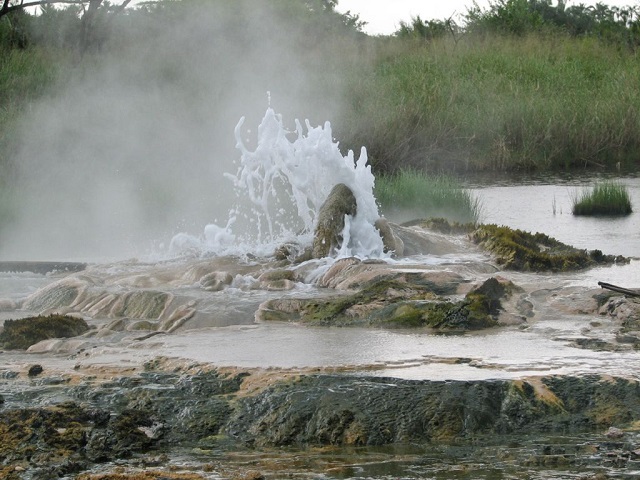
However, hidden in the natural beauty of Tooro lies its curse. While its topography made the region appear water-rich, the adverse effect of this was that, for decades, the presence of countless open water sources disincentivised rapid government investment in heavy-duty, piped water infrastructure in the region. Whereas many districts in Uganda still lack access to clean water, Kabarole district’s need for piped water was often pushed further down the national priority list because the district seemed to have water everywhere, obviously.
Unfortunately, the abundance of open water channels in Tooro became a death trap for its children. Over the years, population growth and agricultural runoff have heavily polluted these once-pristine water bodies. More than a dozen crater lakes in the region have been degraded almost to depletion. But the worst challenge is contamination.
Recent Demographic and Health Survey findings in the country show that 94.3 per cent of people in the Tooro sub-region drink water contaminated with E. coli, a dangerous bacterium that contaminates water originating from the intestines of humans and warm-blooded animals. This has plagued the region with chronic outbreaks of acute diarrhoea, typhoid, and dysentery.
Children are the most burdened by this health crisis. Their fragile immune system cannot survive these waterborne diseases. The result of this is that Tooro’s under-five mortality rate is one of the highest in the whole country, with roughly 60 deaths per 1,000 live births. Higher infant mortality rates subsequently lead to a lower lifespan for most of its people before they ever reach adulthood.
An even more precarious outcome of this predicament is what public health researchers call Environmental Enteric Dysfunction, whereby a child’s gut is essentially unable to absorb nutrients from food, no matter how much healthy food they eat, because they are carrying permanent, invisible damage from the diseases they survived in infancy. This explains why, despite having one of Uganda’s most fertile soils and being the country’s breadbasket, Tooro still suffers the country’s highest child stunting rate, estimated between 38 and 40.6 per cent! In a nutshell, chronic malnutrition weakens the chances of Tooro’s children surviving well into adulthood.
King Oyo’s death has, understandably, drawn the nation’s attention to Karuziika Palace. However, the most profound concern of Tooro may not be who will next wear the crown, which seems to be the biting concern of the Kingdom’s ruling class. The more urgent tragedy of Tooro is the quiet killer of children in Kabarole’s villages – the contaminated water shortening their lifespan. This is what the government should be more concerned to address. The people of Tooro can live as long as the people of Teso. This is something that would make the spirit of the late King Oyo very proud. May the soul of Omukama Oyo Nyimba Kabamba Iguru rest in peace.
***
 The writer is a Ugandan thinking about Uganda.