The Independent Uganda: You get the Truth we Pay the Price


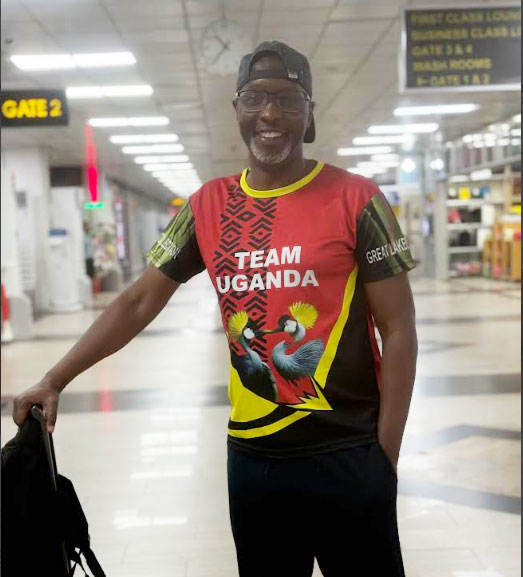
For years, tourism entrepreneur Amos Wekesa has traversed continents persuading the world that Uganda is one of Africa’s most rewarding tourist destinations. But as epidemic outbreaks, travel advisories and domestic political discontent converge, the country’s most vocal tourism ambassador finds himself defending not just Uganda’s image abroad, but also his decision to stay out of politics, reports Ronald Musoke.
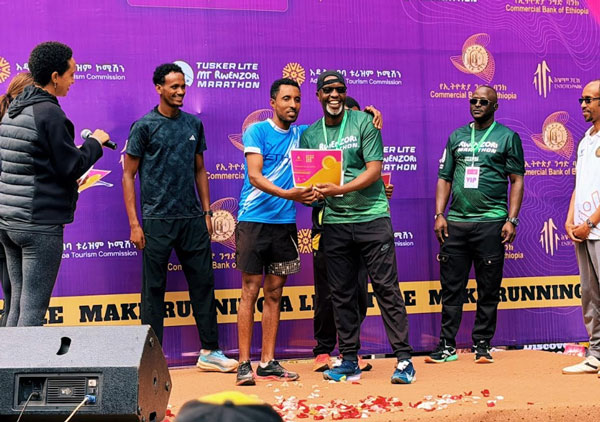
For many months this year, Amos Wekesa has been living out of suitcases. From Canada to the United Kingdom, South Africa to Kenya, Rwanda and Ethiopia, the veteran tourism entrepreneur has been crisscrossing continents selling a dream that stretches beneath the snow-capped Rwenzori Mountains and across the Equator in western Uganda. His latest passion project, the Rwenzori Marathon, has become more than just another sporting event. To Wekesa, it is an opportunity to reposition Uganda as a destination where endurance sport, breathtaking landscapes and community tourism converge.
The marathon, scheduled for August this year, in western Uganda’s Kasese District, is meant to bring thousands of runners to a region better known internationally for the fabled Mountains of the Moon than for mass sporting events. Hotels have prepared. Local businesses have stocked up. Tour operators have built itineraries around the race. For Kasese and the wider Rwenzori sub-region, it promises to become an economic lifeline.
Ebola inconvenience
Only that there is now a small inconvenience of Ebola. The outbreak declared in Uganda and neighbouring Democratic Republic of Congo on May 15 sent tremors through an industry that had only just begun recovering from years of COVID-19 disruption. Travel advisories resurfaced. Thousands of international travellers hesitated. Hotel reservations slowed. Months of painstaking destination marketing suddenly faced an obstacle that no amount of advertising could easily overcome.
For Wekesa, the setback was painfully familiar. In a series of posts on X over the past months, he has lamented what he believes has become Uganda’s recurring challenge: not simply epidemic outbreaks themselves, but how information about them is communicated to the outside world. He argued that within two days of the Ebola announcement, accommodation occupancy among some tourism operators dropped from about 70% to nearly 30% before continuing to decline, dealing another blow to businesses already struggling with loans and operating costs.
Wekesa says every cancelled booking represents far more than a lost hotel room. It affects tourist guides who escort visitors through national parks, boda boda or motorcycle taxi riders ferrying tourists, food vendors supplying lodges, farmers selling fresh produce, waiters, drivers and countless small enterprises whose livelihoods depend, often unknowingly, on a thriving visitor economy.
The Rwenzori Marathon
No event illustrates that interconnectedness more vividly than the Rwenzori Marathon, which was launched in 2022. On June 19, Members of Parliament from the Rwenzori sub-region convened a joint press conference to reassure both Ugandans and international visitors that Kasese remained Ebola-free. Led by Bunyaruguru County MP Benjamin Cadet, Kasese Woman MP Sarah Ithungu Masereka and Busongora South MP David Isimbwa Mulindwa, the legislators insisted that misinformation was inflicting severe economic damage on hotels, tour operators and businesses that had invested heavily in the event. They urged government not to suspend tourism activities but instead to strengthen public health measures while allowing the marathon to proceed safely. At the time, organizers said registrations had already attracted participants from more than 25 countries.
For Wekesa, whose career has been defined by persuading the world to look beyond Africa’s stereotypes, the episode reaffirmed a belief he has expressed repeatedly over the years: perception often matters as much as reality. It is a conviction that extends beyond epidemic outbreaks such as Ebola or Marburg.
Is Uganda her own enemy?
Earlier in June, after flying aboard Uganda Airlines between Entebbe, Mombasa and Kigali, Wekesa described on his X platform, unusually quiet terminals and sparsely occupied Uganda Airlines aircraft during what should have been one of tourism’s busiest seasons. Comparing Uganda with neighbouring Tanzania, Kenya and Rwanda, he marvelled at bustling airports, packed conference venues and international events that continued drawing visitors from across the continent.
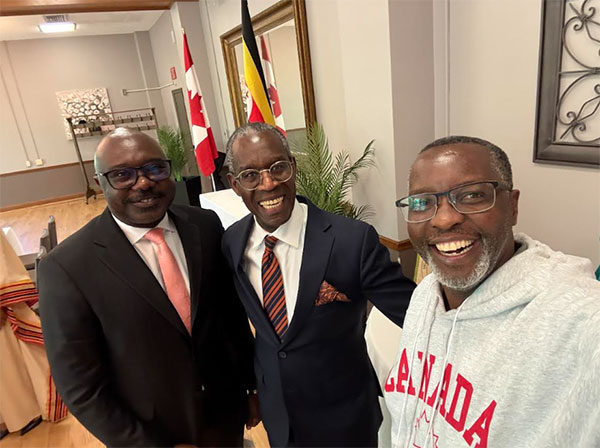
While in Kigali, he recalled hotel employees thanking him for promoting Rwanda online because, they said, every positive story about the country ultimately protected their jobs. Rwanda had recently hosted the Basketball Africa League, attracting visitors from across the continent. Kenya, he observed, was filling hotels with conferences. Tanzania’s multiple international airports were thriving.
Uganda, by contrast, seemed to him to be surrendering opportunities that should naturally belong to it. His frustration has increasingly centred on what he calls destination promotion. Writing on June 24 on his X page where he has a following of close to 175,000 followers, Wekesa argued that every country competes globally for visitors, investment, businesses and talent. Success, he wrote, depends on consistently cultivating a positive image and telling one’s story better than competitors. Destination marketing, in his view, is not merely about attracting tourists; it creates jobs, stimulates investment and improves residents’ quality of life.
To illustrate his point, he contrasted Uganda’s approximately 42,000 square kilometres of freshwater with Egypt’s roughly 6,000 square kilometres. Despite possessing vastly larger freshwater resources, Uganda earns only a fraction of what Egypt generates from fisheries and tourism linked to the River Nile. The difference, he suggested, lies not only in natural endowment but in vision, branding and sustained investment in national image.
Tourism flagged in Uganda’s NDP IV
It is difficult to dismiss Wekesa’s optimism. Uganda’s Fourth National Development Plan (NDP IV) identifies tourism as the country’s leading foreign exchange earner and sets an ambitious target of increasing annual tourism earnings from US$1 billion in the 2023/24 financial year to US$10 billion by 2029/30. The plan also seeks to double average visitor spending, extend tourists’ length of stay and significantly expand domestic tourism expenditure.
Yet the same document candidly acknowledges many of the weaknesses Wekesa has spent years highlighting. Existing tourist attractions remain underdeveloped. Marketing efforts are fragmented. Digital promotion is inconsistent. Negative news frequently overshadows positive messaging, undermining efforts to strengthen Uganda’s “Pearl of Africa” brand in key international markets.
If that sounds remarkably similar to Wekesa’s own social media campaigns, it is no coincidence. Few private citizens have dedicated as much time, or personal expense, to selling Uganda’s tourism story. Yet, even as many applaud his relentless advocacy, others have begun asking an entirely different question.
Wekesa’s political indifference
Why, they wonder, does the country’s most outspoken tourism evangelist remain noticeably restrained whenever Uganda’s politics dominate national conversation? On X, where disturbing images of arbitrary arrests, abductions and heated exchanges on shrinking civic space regularly ignite fierce debate, critics increasingly accuse Wekesa of celebrating Uganda’s scenery while avoiding its political realities.
He has often ignored those accusations. But, on June 30, he decided to answer. The June 30 response was vintage Wekesa; measured, unapologetic and deeply personal. He began by acknowledging the criticism head-on. Many people, he noted, struggle with the fact that he does not comment on every political issue trending online.
But that, he explained, is a deliberate choice. “I chose as an individual to work in the entrepreneurship space,” he wrote, arguing that while Uganda already has a critical mass of political activists, it has far fewer people consistently advocating for entrepreneurship and tourism. Entrepreneurs, he said, create economic freedom, which in turn underpins political freedom.
The explanation was more practical than ideological. The businesses he works for, he noted, operate across Uganda, Rwanda and Tanzania. Their customers hold different political beliefs. His business colleagues and partners equally possess differing opinions. Taking partisan positions, he argued, would risk turning workplaces into political battlegrounds while alienating the very clients who sustain the businesses.
Then came perhaps his strongest justification. He said organising the upcoming Rwenzori Marathon requires constant engagement with government institutions; from the police and the Uganda People’s Defence Forces to local governments, the ministries of Tourism, Health, Works and Transport, Education and Sports, and the Uganda Electricity Distribution Company.
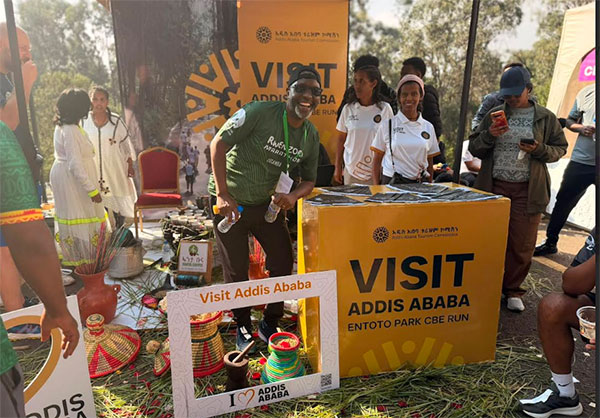
Building a globally recognised sporting event, he argued, demands cooperation rather than confrontation. For him, the marathon is not simply another race on the athletics calendar. It fills hotels across Kasese, the nearby towns of Fort Portal, Rubirizi and Ishaka during what has become one of western Uganda’s busiest tourism periods. Hundreds of businesses benefit directly and indirectly.
Unfollow me
If that contribution is unimportant to some of his critics, he wrote bluntly; they are free to stop following him. His argument reflects a philosophy that has become increasingly evident across his recent public commentary. When President Yoweri Museveni cancelled this year’s Martyrs Day celebrations because of Ebola concerns, Wekesa’s immediate reaction was not political but economic.
He worried about the pig farmer whose annual income depends almost entirely on supplying visitors during the June 3 commemorations. He thought about hotel owners around Namugongo Martyrs Shrines, restaurant operators, boda-boda riders, food vendors and entertainers who count on the pilgrimage for their livelihoods.
“Poverty kills more Ugandans than Ebola will ever attempt to kill,” he wrote, urging authorities to consider the wider economic consequences of cancelling one of the country’s largest annual gatherings. The same concern informed his appeal to Uganda’s Ministry of Foreign Affairs to engage the United States and Canada over travel advisories. “We need to be in the corridors of power,” he urged, arguing that prolonged Level Four advisories were costing Uganda valuable tourism revenue long after immediate health concerns had subsided.
Whether one agrees with Wekesa’s refusal to engage publicly in partisan politics is almost beside the point. His critics argue that entrepreneurs of his stature cannot separate business from governance, particularly when allegations of arbitrary arrests, abductions and restrictions on political freedoms dominate national discourse. They contend that promoting Uganda’s scenic beauty while remaining largely silent on its political challenges risks presenting an incomplete picture of the country.
But Wekesa sees the relationship differently. He believes his contribution lies in building businesses, creating jobs and expanding Uganda’s economic opportunities. Others, he argues, have chosen activism. He has chosen entrepreneurship. That distinction may never satisfy everyone. Yet it raises a larger question confronting countries whose economies increasingly depend on tourism. Can destination branding ever be divorced from politics? Evidence suggests the answer is complicated.
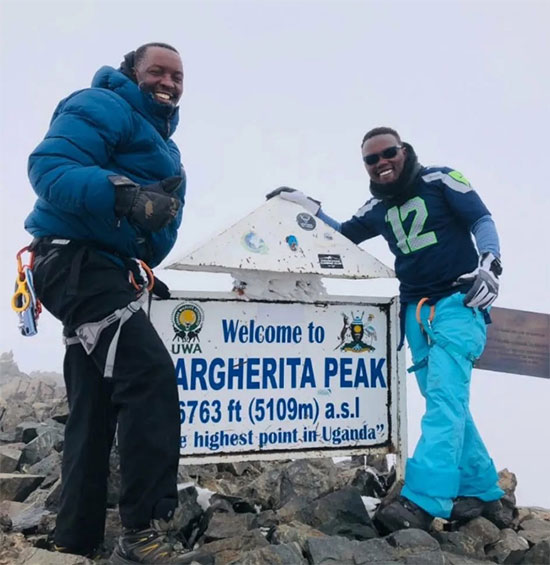
The Uganda government’s own Fourth National Development Plan acknowledges that tourism remains highly vulnerable to external shocks, including epidemics, regional conflicts and security perceptions. It also recognises that inconsistent communication and the amplification of negative news can undermine destination marketing, even as the government seeks to increase tourism earnings tenfold by the end of the decade. The strategy therefore calls for sustained investment in the “Pearl of Africa” brand, stronger communication campaigns and closer coordination among government agencies responsible for marketing Uganda abroad.
Those concerns are hardly unique to Uganda. Researchers Tafadzwa Matiza and Olabanji Oni of the University of Limpopo argued in their 2014 study, “Managing the Tourist Destination: The Case of Africa,” that destination image has become one of the most decisive factors influencing tourism competitiveness on the continent. Africa, they observed, continues to struggle against entrenched global stereotypes and perceptions that often outweigh realities on the ground.
The World Bank reached a similar conclusion more than a decade ago. Its 2012 report, “Uganda Tourism Sector Situational Assessment: Tourism Re-Awakening,” acknowledged Uganda’s extraordinary natural endowment but concluded that the country was still falling well short of its tourism potential despite possessing one of Africa’s richest collections of wildlife, landscapes and biodiversity.
Even travellers themselves consistently place destination image near the top of their priorities. A 2012 CNN survey of consumers in more than 70 countries found that safety, security and destination reputation ranked among the most important considerations when choosing leisure destinations. More than half of the respondents said recommendations from relatives, friends and colleagues remained their primary source of travel information, underscoring how quickly perceptions, positive or negative, can spread across borders.
It is against this backdrop that Wekesa’s frustration becomes easier to understand. For nearly three decades, he has been trying to convince the world that Uganda should be known not only for the Mountain gorillas, the Source of the Nile and the Rwenzori Mountains, but also for the warmth of its people, the resilience of its entrepreneurs and the opportunities that tourism creates far beyond hotels and national parks.
Yet, every travel advisory from western capitals has tended to complicate that mission. Every health emergency has tested it, and every political controversy has reframed it. Still, Wekesa keeps travelling. He keeps posting photographs of Uganda’s landscapes, celebrating new lodges, encouraging domestic travel, promoting conferences and persuading runners from around the world that Kasese deserves a place on the global marathon calendar.
Wekesa’s unwavering spirit
His critics may continue insisting that the country’s foremost tourism entrepreneur should also become one of its loudest political voices. He appears equally convinced that his greatest contribution lies elsewhere.
As Uganda pursues an ambitious vision of earning US$10 billion annually from tourism, the debate surrounding Amos Wekesa may ultimately say less about one entrepreneur than about the country itself. It is the debate over whether Uganda can tell a compelling story about its extraordinary natural gifts while simultaneously confronting the crises that repeatedly shape international perceptions of it every single day.
Somewhere beneath the mist-covered slopes of the Rwenzori Mountains, where runners are expected to gather in August under the shadow of Africa’s legendary Mountains of the Moon, that question remains unanswered. For Wekesa, however, there is little sign of retreat. Tomorrow, like yesterday, he will almost certainly wake up trying to persuade the world to visit Uganda.