The Independent Uganda: You get the Truth we Pay the Price


Kampala, Uganda | URN | The government needs to establish a comprehensive methane emissions management framework before commercial oil production begins, the Natural Resource Governance Institute (NRGI) has warned.
In a new briefing titled Strengthening Uganda’s Oil and Gas Sector Methane Emission Abatement, NRGI says Uganda is approaching oil production without adequate methane-specific regulations, reliable baseline emissions data and sufficiently strong systems for monitoring, reporting and verification.
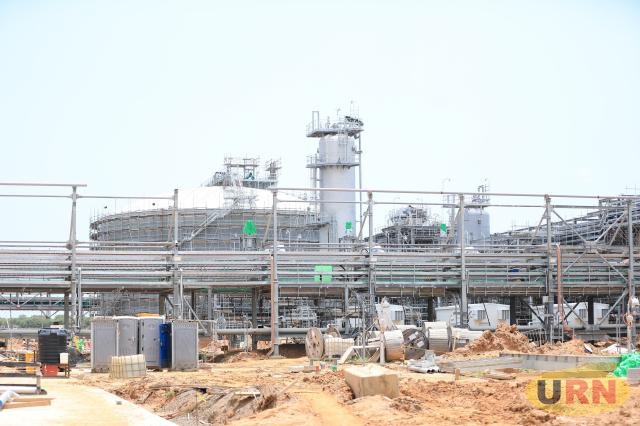
Commercial oil production, or First Oil, from the Lake Albert Project was expected to begin in September this year, but sources in the industry have indicated to URN that the timeline could be extended for two more months. It is expected that when production commences at TotalEnergies’ Tilenga project and CNOOC’s Kingfisher project, a substantial amount of methane gas will be emitted and has to be controlled.
NRGI says the delay in production presents an opportunity for Uganda to put methane controls in place before emissions from the petroleum sector increase.
“Although Uganda has made progress in establishing a legal and institutional framework for climate action, including the National Climate Change Act (2021) and updated Nationally Determined Contributions (NDCs), the current framework does not explicitly address methane emissions from the oil and gas sector,” the report says.
NRGI attributes the gap partly to the fact that Uganda has not yet started oil production and therefore lacks baseline data specific to methane emissions from the sector. The report says Uganda’s greenhouse gas inventory currently relies primarily on Tier 1 methodologies, which use default emission factors and provide less accurate emissions estimates than the more advanced Tier 2 and Tier 3 approaches.
The researchers in a report released at the end of July warn that the absence of detailed methane data could undermine Uganda’s ability to monitor, report, and verify emissions once petroleum production begins.
“Robust methane MRV procedures are required for governments and companies to understand the extent of their emissions profile, as a first step in efforts to reduce methane emissions in the oil and gas sector,” the report says.
NRGI urges the government to develop and publish a comprehensive methane action roadmap by 2027, covering the anticipated 25-year duration of oil and gas extraction in Uganda.
The roadmap, according to the report, should contain quantified methane reduction targets, a national monitoring, reporting and verification framework aligned with international standards, clear institutional responsibilities and measures such as leak detection and repair systems and vapour recovery.
The report further recommends that Uganda adopt internationally recognised measurement and reporting systems, including the Oil and Gas Methane Partnership 2.0, and strengthen enforcement of existing requirements on greenhouse gas emissions data collection and reporting.
The call comes as the Ministry of Energy and Mineral Development works on a draft Methane Emissions Abatement Roadmap and a National Action Plan for Short-Lived Climate Pollutants.
The draft framework proposes restrictions on routine flaring and gas venting, with releases requiring approval by the Petroleum Authority of Uganda in collaboration with the National Environment Management Authority. Oil companies would also be required to justify releases and reinject gas into oil fields.
The draft also proposes measures to control equipment leaks and fugitive emissions, including mandatory monitoring and reporting of leakages and production and operational data.
Caroline Aguti, Assistant Commissioner for Health, Safety and Environment at the Ministry of Energy and Mineral Development, said the proposed measures are intended to promote lower-emission petroleum production.
“We are positioning the energy and extractive sector towards responsible, low-emission production. There are provisions within our laws that address environmental protection and climate change. The discussion now is how those provisions translate into practical actions that reduce methane emissions,” Aguti said.
However, Aguti cautioned against treating methane as an oil-and-gas issue alone, arguing that emissions also come from agriculture, waste management and household energy.
“This conversation should not only focus on oil and gas. We need to think about methane across agriculture, waste management, household energy and petroleum because all these sectors contribute to emissions,” she said. NRGI, however, argues that Uganda’s petroleum sector requires more explicit methane controls.
The report notes that existing petroleum laws restrict flaring and venting, but says these provisions are not backed by detailed methane-specific regulations, measurement standards or enforcement mechanisms.
The Petroleum (Exploration, Development and Production) Act, 2013 prohibits flaring and venting except in emergency situations, while the Petroleum (Refining, Conversion, Transmission and Midstream Storage) Act, 2013 also prohibits the practices in oil and gas operations.
NRGI says the next step should be to translate these broad legal provisions into a functioning methane management system.
“Uganda requires an explicit methane abatement roadmap that specifies how the country plans to monitor, report and reduce methane emissions from various sectors, including oil and gas,” the report says.
The institute also wants oil and gas companies to collect methane data from their operations and submit it to the relevant government agencies, with verification by the Climate Change Department and, where feasible, the Extractive Industries Transparency Initiative Secretariat. It further recommends that Uganda’s third Nationally Determined Contribution, currently under formulation, should include emissions from the oil and gas sector and set clearer methane reduction targets.
“Uganda’s third Nationally Determined Contribution (NDC 3), now under formulation, should include emissions from the oil and gas sector, as exploitation of oil is expected to start in 2027,” the report says.
NRGI says the need for stronger controls is underscored by the potential emissions from oil production. The report cites estimates that emergency flaring at the Tilenga project could produce 591,400 tonnes of carbon dioxide annually, while flaring at the Kingfisher Development Area could generate about 124,505 tonnes annually.
Combined, the two projects could produce about 715,905 tonnes of CO2-equivalent from flaring each year. The report also says flaring could potentially produce 2.1 million tonnes of CO2-equivalent between 2028 and 2030, equivalent to 100 percent of the energy-related emissions to which Uganda committed under its NDC.
NRGI recommends that Uganda improve its technical capacity to measure methane emissions using Tier 2 and Tier 3 methodologies, which require more detailed data and can provide more accurate estimates.
The institute proposes training technical staff and deploying advanced monitoring, reporting and verification tools across major oil and gas facilities. The report also recommends financial incentives for methane-abatement technologies alongside penalties for companies that fail to meet agreed emissions targets.
“These should include fiscal incentives for methane abatement technologies, and penalties such as flaring fees or carbon pricing mechanisms for non-compliance,” the report says. T
he report notes that Uganda’s National Climate Change Act provides for incentives for climate change adaptation and mitigation, but says the regulations required to operationalise these incentives have not yet been formulated.
“Uganda should introduce a balanced system of incentives and penalties for methane abatement and emissions, including fiscal incentives for methane abatement technologies, and penalties such as flaring fees or carbon pricing mechanisms for non-compliance,” it adds.
The concern about methane in Uganda’s oil and gas sector has recently been debated by the Civil Society Coalition on Oil and Gas – CSCO. Paul Twebaze, who chaired a technical working group of civil society actors that analyzed the government’s methane roadmap, said the document needed to define the responsibilities of different actors more clearly.
“One major omission of this plan is that it does not recognise civil society as a key stakeholder,” Twebaze said. He also called for a clearer definition of the roadmap itself, arguing that its objectives, responsibilities and timelines must be clear if it is to be implemented effectively.
NRGI says Uganda should also join international initiatives such as the Global Methane Pledge and the Oil and Gas Methane Partnership 2.0 to access technical support, climate finance and international best practices.
The report suggests that authorities should strengthen institutional coordination between key agencies, including the Ministry of Energy and Mineral Development, the Petroleum Authority of Uganda, the National Environment Management Authority and the Climate Change Department.
The researchers. Ibrahima Aidara is the deputy Africa director, Ann-Mary Kusiima is the Uganda program associate, and Paul Bagabo, Uganda country manager, conclude that the country has an opportunity to establish methane controls before production begins, rather than attempting to retrofit measures after the petroleum industry has become established.
“By taking early and decisive action, Uganda can position itself as a more responsible oil producer, minimize environmental risks, and ensure that its oil and gas sector is better able to contribute to sustainable development,” NRGI says.