The Independent Uganda: You get the Truth we Pay the Price


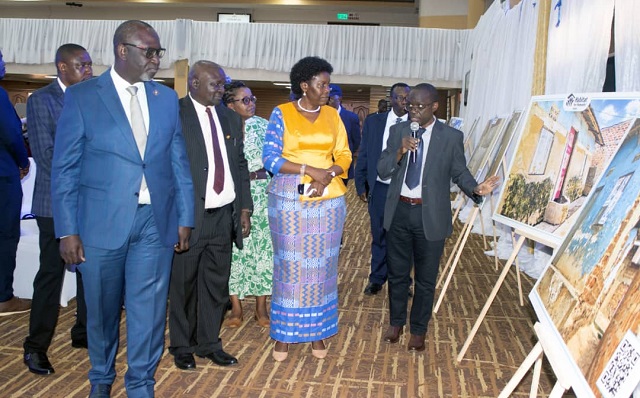
Kampala, Uganda | JULIUS BUSINGE | Uganda’s housing shortage should be treated as an economic development issue requiring practical solutions, affordable financing and better urban planning rather than as a challenge that government can address alone, housing sector stakeholders have said.
The call was made at the inaugural National Housing Dialogue held at Hotel Africana in Kampala on October 5, 2026, as Uganda joined the rest of the world to commemorate World Habitat Day under the theme, “Closing Uganda’s Housing Gap through Affordable, Inclusive and Sustainable Housing Solutions.”
The dialogue, organised by Habitat for Humanity Uganda in partnership with the Ministry of Lands, Housing and Urban Development, brought together government officials, financial institutions, development partners, housing practitioners and other stakeholders to discuss how to move from policy to actual delivery of homes.
Uganda’s housing deficit was put at about 2.48 million units, with the shortage expected to remain a major challenge as the population and urban centres continue to grow.
Judith Nabakooba, Minister of Lands, Housing and Urban Development, said the housing question is closely linked to how Uganda develops its cities, creates jobs for young people and enables households to withstand economic shocks.
She said housing should occupy a central position in national development planning, particularly as Uganda pursues sustainable urbanisation.
The minister also said Uganda needs about 300,000 new housing units annually to reduce the deficit, compared with current production of about 60,000 units.
She said the shortage should also be viewed as an opportunity for investment, employment and innovation, with stakeholders needing to focus on housing that reflects the incomes and needs of Ugandans.
Nabakooba called for cheaper and longer-term mortgage financing, noting that high interest rates make home ownership difficult for many households.
She also stressed that affordability should not compromise quality.
“Affordable housing must not mean poor-quality housing,” she said, calling for homes that are safe, durable, healthy, serviced and dignified.
The dialogue also highlighted the need to strengthen physical planning and ensure that housing developments are supported by roads, water, sanitation, electricity, schools and health facilities.
Robert Waggwa Nsibirwa, Board Chairman of Habitat for Humanity Uganda, said the housing challenge requires greater collaboration among stakeholders and the use of technology to share information and innovations.
He proposed the establishment of an electronic platform to collect housing-related strategies and data from different stakeholders and make the information accessible to the wider sector.
He also called for a monthly electronic newsletter highlighting key housing developments in Uganda and beyond, as well as quarterly workshops focusing on different sectors linked to housing.
“We need to be in the face of each other and reminding us about the importance of having a decent home,” Nsibirwa said.
He said housing is central to household welfare and national development, noting that a home provides safety for children and enables people to work and live better.
“We have to think not inside the box but without the box,” he said, calling for greater innovation in construction technology and the transfer of lessons from classrooms to the field.
The dialogue also examined the gap between Uganda’s existing housing policies and actual delivery.
Participants noted that the National Housing Policy 2016 and the Physical Planning Act provide a policy framework, but implementation remains constrained by land disputes, weak coordination and challenges across the housing and land ecosystem.
Richard Hamba, an executive member of the Uganda National Urban Forum, said housing should be treated as an economic growth sector because it supports small businesses and manufacturing, creates employment and strengthens value chains.
He said housing contributes an estimated 10% to 11% of Uganda’s gross domestic product, making it an important part of the economy.
Hamba called for an integrated approach to housing infrastructure, from planning through to delivery, while cautioning against relying excessively on mortgages to solve the housing challenge.
He said Uganda’s transition towards oil exports would require the country to mobilise additional resources for housing, arguing that financing currently provided by commercial banks would not be sufficient to meet the scale of the challenge.
Kenneth Kaijuka, chief executive officer of National Housing and Construction Company, said housing is fundamentally about access and requires professionalism in urban planning and public health.
He warned that poorly planned settlements were contributing to congestion, energy losses and pressure on urban infrastructure.
Kaijuka said Uganda needs to limit horizontal urban sprawl and the growth of unplanned settlements, which he linked to traffic congestion and other urban challenges.
He also called for better planning to address the interaction between land tenure, infrastructure and urban development.
Kaijuka said Uganda’s housing strategy should also be aligned with the country’s Tenfold Growth Strategy as the economy seeks to expand.
The dialogue further called for wider use of housing microfinance, savings groups and cooperatives to support households that cannot qualify for conventional mortgages.
Paul Okiring, managing director of Habitat for Humanity Uganda, said land remains one of the major constraints to housing development and called for systematic land registration and titling, digitisation of land administration, stronger protection of women’s land rights and increased investment in serviced land around fast-growing urban centres.
He said Habitat for Humanity Uganda’s three-year strategy to 2028 will focus on building more and better homes, transforming housing systems and encouraging action on housing.
The discussions also highlighted the potential role of pension funds and other long-term sources of capital in expanding housing finance.
Urban development stakeholders called for stronger links between household incomes and housing finance, arguing that longer-term financing could help make home ownership more accessible.
The dialogue underscored a growing consensus that closing Uganda’s housing gap will require coordinated action involving government, financial institutions, developers, communities, pension funds and development partners.