The Independent Uganda: You get the Truth we Pay the Price


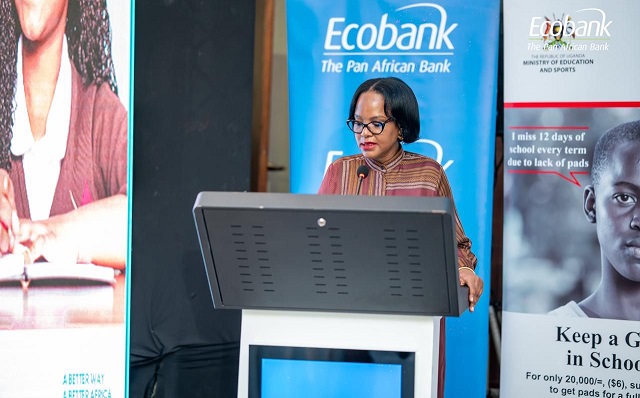
Kampala, Uganda | PATRICIA AKANKWATSA | Menstruation continues to be a major, largely invisible barrier to girls’ education in Uganda, organisers and humanitarian agencies warned at a fundraising breakfast in Kampala on Tuesday.
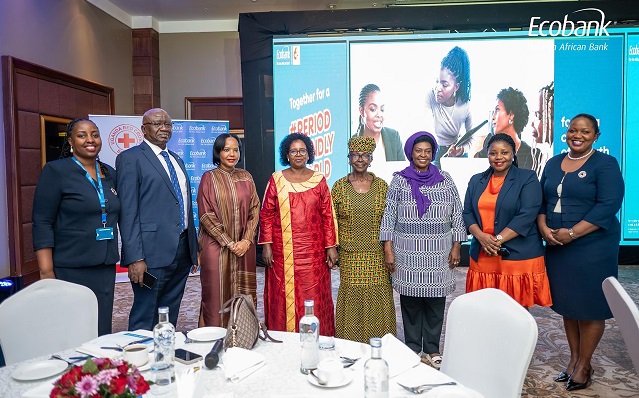
The event, convened by Ecobank Uganda Limited and the Uganda Red Cross Society under the “Keep a Girl in School” (KAGIS) initiative, called for expanded private-sector financing and local manufacturing to tackle period poverty that forces girls to miss class or drop out altogether.
GraceMuliisa, the managing director Ecobank Uganda, highlighted the scale of the problem:
“So some studies show that girls can miss school close to a fifth of the school year due to lack of menstrual protection and adequate hygiene support”.
“Those days accumulate. They affect performance. They affect confidence. They affect retention for the girl child in school. And in many cases, they lead to school dropout. Some may never go back to school.”
KAGIS which was launched in 2019, is anchored on the Memorandum of Understanding (MoU) signed in 2024 between Ecobank Uganda and the Uganda Red Cross Society to collaborate on humanitarian and community development initiatives. The partnership focuses on several areas, including health, disaster response and management, blood donor recruitment and mobilization, pandemic and epidemic response, water, sanitation and hygiene (WASH), menstrual hygiene management, youth and women empowerment, and sustainability.
A key project is a reusable sanitary-pad manufacturing plant in Mukono which organisers say already supports tens of thousands of girls and is designed for expansion.
Organisers framed the campaign as a cost-effective, high-impact intervention. A donation of 20,000 Ugandan shillings (about US$5.50) can keep one girl in school for a full year. Muliisa urged corporate leaders and philanthropists to contribute:
“Give to gain. When we support girls’ education, we are not simply responding to need. We are investing in Uganda’s future.”
Uganda Red Cross Society Secretary General Robert Kwesiga said that the challenges facing girls aren’t just theirs or their mothers’—they are all of ours.
“Every girl is someone we know: a daughter, a sister, a wife. We can’t stand aside and say it’s not our problem. Men must step up, because while women understand the struggle, we have the power to act and provide solutions”.
He also stressed the need for sustainable solutions like the Mukono plant.
He explained that 80% of pads produced at the Mukono plant are sold at minimal prices to cover costs, while 20% are donated to the most vulnerable girls. Kwesiga also highlighted governance measures, including a board of trustees and external audits, to ensure accountability.
The Mukono plant can scale production many times over and already reaches around 120,000 girls.
Kwesiga called on corporate partners to underwrite expansion, noting that contributions can be channelled through a dedicated fund with independent oversight.
Kedrace Turyagyenda, Permanent Secretary at the Ministry of Education and Sports, linked menstrual hygiene directly to learning outcomes:
“The curriculum is made in such a way that every day you are being taught. When a girl misses three days a week, by the end of the term she’s lost maybe 10 or 15 days. It definitely affects your performance.”
She welcomed the factory’s output and encouraged private-sector engagement on tax and regulatory measures to scale production and distribution.
Speakers emphasized that period poverty extends beyond pads. Safe, private WASH (water, sanitation, and hygiene) facilities including toilets, changing rooms, and disposal systems are critical. Girls in refugee settlements and remote rural schools face compounded challenges of limited access, poor facilities, and social stigma.
Muliisa highlighted the disproportionate impact on girls in refugee camps and rural areas, calling for targeted funding.
The fundraising breakfast promoted a multi-channel approach: corporate sponsorship, crowd funding, and matched donations.
Kwesiga higlighted the urgency of private-sector leadership:
“The world we are living in now, if we don’t take the lead ourselves, nobody is going to take the lead for us.”
Beyond immediate interventions, speakers called for policy action.
Turyagyenda urged government investment in capitation grants and teacher pay while encouraging private partners to support regulatory measures that make sanitary products more affordable nationwide.
Muliisa framed menstrual hygiene as a dignity issue:
“When that girl looks back, she will remember that someone cared enough to help her stay in school.”
The KAGIS initiative offers a practical model local production, partial cross-subsidy, and crowd funding but organisers said scaling manufacturing, financing distribution, and mainstreaming menstrual health as an education priority requires ongoing partnership and commitment.