The Independent Uganda: You get the Truth we Pay the Price


Kampala, Uganda | URN | When State Minister for Sports Peter Ogwang addressed Parliament on April 15, 2026, he laid out an expansive, inter-ministerial spending plan aimed at meeting standards set by the Confederation of African Football (CAF).
At its core, the Shs905 billion package reflects a classic “mega-event model” of development, where transport, health, tourism, and urban infrastructure are accelerated under tight deadlines.
Key allocations include: Shs213.76Bn for upgrading 47.53km of roads around Hoima and Kampala, Shs184.9Bn for a passenger terminal at Kabalega Airport and Shs91.05Bn for upgrading health facilities in Hoima and Masindi.
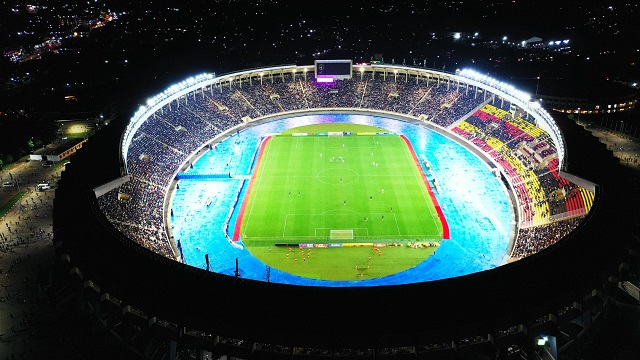
Others are Shs109Bn for the Local Organising Committee operations, Shs56.2Bn for remodelling Mandela National Stadium and Shs101.1Bn for hotel upgrades via the Uganda Development Bank.
Uganda will co-host AFCON 2027 under the “Pamoja” bid alongside Kenya and Tanzania, a regional integration milestone that policymakers say could unlock tourism, trade, and global visibility.
Despite the optimism, lawmakers raised concerns that go to the heart of public finance accountability. Leader of Opposition Joel Ssenyonyi had earlier flagged infrastructural gaps identified by CAF, particularly at Hoima City Stadium.
During the debate during a plenary sitting on Wednesday, MPs questioned: Whether Uganda can meet CAF’s inspection deadline in August 2026, the absence of clear completion timelines for critical works, alleged design flaws and non-compliance at Hoima Stadium and limited involvement of technical experts and football authorities.
Under Uganda’s Public Finance Management Act, government spending must demonstrate value for money, transparency, and measurable outcomes, standards that mega-event spending often struggle to meet due to compressed timelines and political pressure.
Speaker Anita Annet Among urged broader technical consultations, underscoring Parliament’s constitutional role in ensuring executive accountability. Uganda’s situation echoes past AFCON experiences across Africa. In 2019, Cameroon lost hosting rights due to delays, forcing Egypt to step in at short notice.
According to research by the Brookings Institution and the African Development Bank, mega sporting events in developing economies often face three recurring risks: cost overruns and budget reallocations, underutilised infrastructure post-event and weak coordination across government agencies.
Dr. Mthuli Ncube, an African economist (quoted in AfDB studies), argues that “sports infrastructure must be embedded in long-term urban and economic plans, otherwise it risks becoming a fiscal burden.”
Uganda’s AFCON investment comes at a time of rising public debt currently at Shs130 trillion, with debt-to-GDP ratios hovering above 50 percent in recent years, according to Ministry of Finance data. This raises questions about opportunity cost of (not) hosting the event.
Potential gains include tourism inflows and foreign exchange earnings, job creation in construction, hospitality, and services, urban infrastructure improvements in Hoima and Kampala and regional trade and integration benefits under the East African Community.
However, economists caution that such gains are not automatic. Prof. Augustus Nuwagaba, a Ugandan economist, notes that “the real return on AFCON will depend on post-event utilisation of infrastructure and the strength of domestic linkages, particularly in tourism and SMEs.”
The AFCON budget spans multiple ministries, Works and Transport, Health, Education and Sports, Finance, and local governments. Uganda’s National Development Plan IV emphasises integrated planning and infrastructure-led growth. Yet, fragmented execution has historically undermined such ambitions.
The decision to channel UGX101.1Bn through the Uganda Development Bank to upgrade hotels is one attempt to leverage private sector participation. Still, implementation will depend on transparent loan allocation criteria, timely disbursement, and compliance with international hospitality standards.
One of the most immediate concerns raised in Parliament relates to mobility, how fans will move efficiently between venues. Uganda’s allocation of UGX23.33Bn to rehabilitate railway lines between Kampala and Mukono, alongside upgrades to Namboole, suggests a shift toward multimodal transport solutions.
Yet, urban planners warn that without a comprehensive public transport strategy, potentially including bus rapid transit systems, traffic congestion could undermine the tournament experience.
The allocation of UGX91.05Bn to upgrade health facilities aligns with CAF requirements for emergency response and intensive care readiness.
This investment could yield long-term benefits if integrated into Uganda’s broader health system strengthening agenda under the World Health Organization guidelines.
Global evidence from events like the FIFA World Cup shows that health infrastructure upgrades can leave lasting legacies, but only when accompanied by staffing, equipment maintenance, and financing reforms.
Beyond infrastructure, AFCON 2027 is also a political project. Hosting a continental tournament offers governments an opportunity to project national prestige, strengthen regional diplomacy and consolidate domestic political legitimacy.
However, such projects also attract scrutiny over procurement, contractor selection, and potential corruption risks, issues that Uganda’s anti-corruption courts have repeatedly highlighted in public investment cases.
Government has pledged that all competition stadiums and training facilities will be completed by January 2027, just months before kickoff in June.
CAF’s scheduled inspection in August 2026 will be a critical milestone, effectively determining whether Uganda remains on track or risks reputational damage.