 The Independent Uganda: You get the Truth we Pay the Price



COMMENT | DR AMBROSE OTAU TALISUNA | The untimely death of the Woman Member of Parliament for Kalangala, Hellen Nakimuli, has understandably left many Ugandans in shock. It is reported that she drove herself to a private hospital in Kampala for what was supposed to have been a normal surgical procedure, but she did not come out alive. While the postmortem results are awaited from Mulago National Referral Hospital to tell us the cause of her death, I would like to raise a red flag that such preventable deaths may not be isolated events. It is also odd that the postmortem is being done at a facility that most Members of Parliament shun while alive.
On the 10th of April 2026, I gave a talk at the Uganda Medical Association (UMA) elders forum event named “ Meet and Greet” The title of my talk was “Quality of medical education and internship in Uganda: A candid dialogue on the perspectives for the future”.
The health and care workforce (HCWF) is one of the World Health Organisation (WHO) core components of a well-functioning health system. The WHO highlights that improving education and training of the HCWF is critical to improving health systems. Quality medical education is a strong pillar of HCWF development.
Historically, the quality of Uganda’s medical education has been revered globally. The educational environment is an important factor determining the medical education’s effectiveness. Its academic and clinical effects significantly determine medical students’ attitudes, knowledge, skills, progression, and behaviors. To ensure strong health systems, there is a need to improve the quality of medical education in Uganda, and such improvement must be contextual and informed by locally relevant data.
In 2004, my former teacher, Dr Edward Kigonya (MHSRIEP), warned us of the growing concern about the declining standards of undergraduate medical education in Uganda. He noted then that our two established medical schools were having difficulties in achieving their educational objectives. Undergraduate teaching had become uneven in quality, variable in commitment and lacking in coordinated objectives. He warned then that “it was the medical students who were losing out, but in future it will be the patients who will lose out.” That warning seems to have now come to bite us!
Following that critique, there has been a proliferation of medical schools in Uganda from just 2 in 2004 to now about 14 in 2026. However, these medical schools have been opened without proper regulation and supervision. Unregulated medical education is a recipe for disaster.
The factors affecting the quality of medical education in Uganda at present include:
- Curriculum gaps: There are major gaps in the quality and adequacy of medical curricula, with a lack of a national standard framework to guide reviews. Curricula often fail to directly address national health needs.
- Clinical training challenges: The clinical education environment is one of the weakest aspects of medical education in Uganda, with major issues in clinical instructor selection, teaching methods, and student exposure to clinical practice.
- Lack of proper coordination: There is poor coordination between medical schools and teaching hospitals, including scheduling problems, limited funding, and inadequate sharing of human resources.
- Low research productivity: Faculty research productivity is low, with a need for more structured support to improve output.
- Staffing and mentorship shortages: The supervision and mentorship frameworks in teaching hospitals are inadequate.
- High student-to-lecturer ratios: There is limited adherence to the National Council for Higher Education (NCHE) guidelines on students’ numbers relative to academic staff ratios. As a country, we need to compare ourselves with regional and global standards.
- Clinical training deficiencies: There is insufficient supervision by clinical instructors and a lack of patients for learning and examination, often resulting in students having limited opportunities for hands-on experience.
- Resource constraints: There is inadequate infrastructure, including lack of modern laboratories, libraries, and simulation technology, hindering effective learning.
- Curriculum and teaching methods: The teaching approaches often prioritize memorization over understanding and clinical skill development, leaving students underprepared for real-world scenarios.
- Educational environment: Students perceive the learning environment as having sub-optimal social support and a poor atmosphere, negatively impacting their training.
- Student related factors: Poor performance in biomedical sciences, linked to, in part, low student commitment to learning and a lack of passion for the career.
- Institutional disparities: Variation in quality between universities, with students frequently reporting average satisfaction with the quality of their educational experience.
- Inadequate supervision and lack of resources during medical internships.
These challenges are compounded by the high cost of education for students and the need to improve the overall quality of clinical education through better staffing and improved training facilities, laboratories and research units.
In 2004 Dr Kigonya warned us that a large proportion of young medical graduates had inadequate communication skills, a poor grasp of clinical logic, were uncertain in their choice of diagnostic tests, made poor decisions in prescribing treatment and had a poor grasp of ethical principles. Even more alarming, was the significant number of senior medical students and house officers who were deficient in the basic clinical skills of taking a focused history and doing a physical examination.
We need a fundamental rethink about the quality of our medical education in producing medical professionals for the future capable of handling the health challenges in the country.
We need a national admission policy aligned with internship capacity so that training numbers match the national ability to supervise. One that aligns with the recommendations of the East African Medical Councils about the minimum standards for teaching hospitals: subjecting all medical interns to a national examination before registration by the councils to ensure quality of internships across sites and having a mandatory induction course into the civil service before deployment.
The 5+1 model proposed by the Ministry of Health for internships is not a solution. The training capacity increased from 2 to 14 medical schools, but the funding capacity did not improve. The outcome was predictable – a budget shortfall because of rapid expansion without anticipatory planning. The 5+1 model does not solve the underlying problem.
In fact, it risks weakening patient care and safety, professional standards, and Uganda’s credibility within global health systems. Edmund Burke (1729–1797), an Irish philosopher, said, “The only thing necessary for the triumph of evil is for good people to do nothing.”
The quality of our medical education in Uganda needs to be reinstated to its former glory. We cannot stand on the fence on these critical issues because the predictable outcome will be preventable deaths.
******
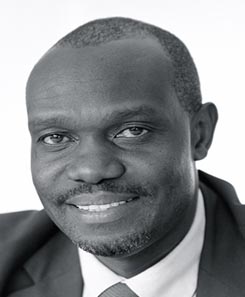
Dr Talisuna is a Senior Health Policy Advisor, World Health Organisation (WHO) Liaison Office to the African Union (AU) and the United Nations Commission for Africa (UNECA).


I have been looking for more info on this. Also, if you love premium GTS videos, take a look at giantess.video.
They have some amazing clips there. Thanks!