The Independent Uganda: You get the Truth we Pay the Price


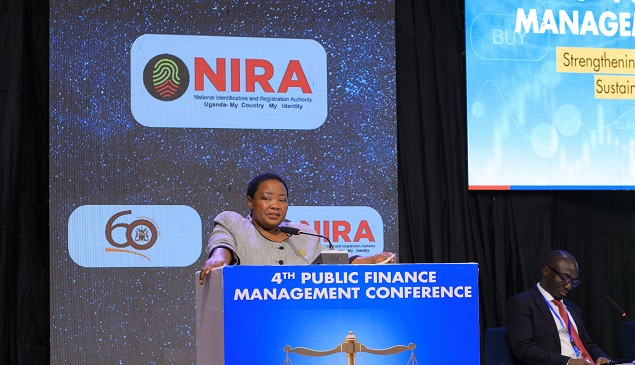
Entebbe, Uganda | THE INDEPENDENT | Uganda’s Prime Minister Robinah Nabbanja has challenged accountants and public finance professionals to take a more strategic role in safeguarding public resources, declaring them “custodians of accountability” as the 4th Public Finance Management (PFM) Conference opened in Entebbe.
Officiating at the three-day conference running from May 6–8 at Imperial Resort Beach, Nabbanja called for a shift in audit functions from traditional compliance roles to becoming drivers of value in public institutions.
“There is need to embrace digital transformation, respond to emerging risks, and ensure value for money in government expenditure…this requires accounting officers to uphold integrity, transparency, and efficiency,” she said.
The Prime Minister also underscored the central role of effective public finance management in Uganda’s economic transformation, particularly as the country transitions into the Fourth National Development Plan (NDP IV).
She highlighted priorities including expanding domestic revenue, promoting equitable and sustainable taxation, and ensuring that public spending translates into tangible benefits for citizens.
Her remarks set the tone for the conference, which has drawn policymakers, accountants, and development stakeholders to deliberate on strengthening Uganda’s fiscal systems amid growing economic pressures.
CPA David Timothy Ediomu, President of the Institute of Certified Public Accountants of Uganda (ICPAU), echoed the urgency for reform, calling for innovative and deliberate action in managing public finances.
“With rising fiscal pressures and increasing demand for service delivery, there is a need for smarter revenue strategies, stronger institutions, and digital solutions to ensure every public resource delivers impact,” Ediomu said.
In opening remarks delivered on behalf of ICPAU Chief Executive Officer CPA Derick Nkajja, CPA Charles Lutimba reiterated the institute’s commitment to influencing national economic policy and promoting excellence in financial management. He noted ongoing engagements with Parliament on key fiscal matters, including proposed tax amendments.
Keynote speaker CPA Godfrey Ssemugooma, who also serves as Acting Accountant General positioned public finance management as a critical driver of Uganda’s “tenfold growth” agenda under NDP IV.
Ssemugooma emphasized the role of digital systems in enhancing efficiency, transparency, and accountability, while outlining strategic priorities such as targeted investment in high-impact sectors, improved project execution, and accelerated digital governance.
He said Uganda’s transition toward middle-income status must be anchored in disciplined and inclusive financial management to ensure sustainable growth.
Meanwhile, Winnie Nabiddo of the National Planning Authority stressed that effective public financial management goes beyond identifying gaps, calling for coordinated implementation of solutions that deliver measurable outcomes.
In her presentation on the transition from NDP III to NDP IV, Nabiddo highlighted the importance of strong governance systems, accountability, and continuous monitoring to ensure public resources are used efficiently and responsibly.
“Better coordination across institutions and closing accountability gaps are essential to translating policies into real impact for citizens,” Nabiddo said.
Nabiddo was recognized at the conference with a Certificate of Merit for her presentation, reflecting the growing emphasis on research-driven approaches in public finance reforms.
The conference, organized by ICPAU, serves as a key platform for dialogue on strengthening accountability systems, enhancing revenue mobilization, and leveraging digital innovation to improve public service delivery.
Participants are expected to generate actionable recommendations to support Uganda’s long-term development goals, with a strong focus on transparency, efficiency, and inclusive growth.