The Independent Uganda: You get the Truth we Pay the Price


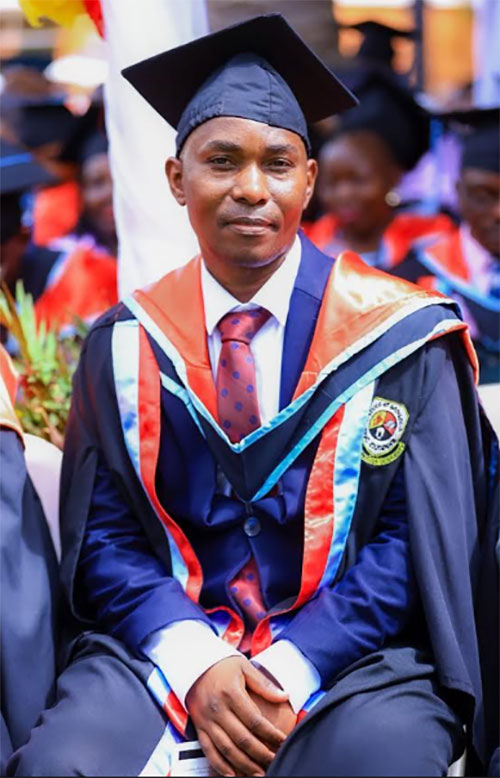
Musoke went to Uganda Martyrs University (UMU) in 2017 expecting to graduate in 2020. Six years beyond that deadline, he finally crossed the finish line
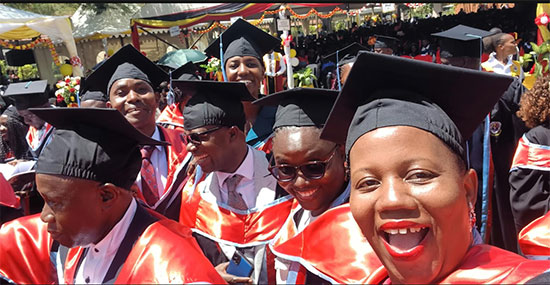
Nkozi, Uganda | THE INDEPENDENT | The mid-October equatorial sunshine bathed Uganda Martyrs University’s main campus at Nkozi on Sunday, October 18, as excited graduands, parents and guardians streamed into the campus square. Families gathered, gowns were adjusted and photographs taken as the university prepared for a day that brought together two milestones: the university’s 33rd founding anniversary and its 32nd graduation.
In keeping with the university’s Catholic identity, the celebrations began with Mass before proceeding to the graduation ceremony of the Class of 2026. The decision by the University Council to combine the anniversary and graduation gave the occasion a significance beyond the award of academic qualifications, bringing together the institution’s founding tradition, its history and the achievements of its graduates.
For Ronald Musoke, a senior journalist with The Independent Magazine, the day marked the end of a nine-year academic journey that had tested his resolve in ways he could scarcely have imagined when he enrolled in September 2017.
His master’s degree in diplomacy and international studies was not an achievement delivered on the timeline he had planned. He had expected to graduate in 2020. Instead, the COVID-19 pandemic, the demands of journalism and the rejection of his research thesis prolonged his studies until 2026.
By graduation day, the degree represented more than academic progress. It was the culmination of years of financial investment, professional juggling, disappointment and renewed determination. Looking back on the experience, Musoke said the journey had been long, winding and deeply testing. Yet, from the relief of finally completing it, he drew comfort from the familiar saying: “All is well that ends well.”
Nine years in the making
When Musoke began his master’s studies in late 2017, he had every reason to expect a straightforward academic journey. He had previously completed his bachelor’s degree and postgraduate diploma at Makerere University on schedule, and he passed his UMU coursework comfortably.
In October 2020, the university’s Academic Registrar sent him his final coursework results, congratulating him on his performance and wishing him well as he embarked on his dissertation. Then the pandemic disrupted everything.
As a practising journalist, Musoke was navigating professional uncertainty while confronting the personal toll of COVID-19. Among those who died during those disruptive two years were people he knew, including sources he had worked with. His father also nearly succumbed to the disease. With health, employment and everyday survival taking precedence, he put his dissertation aside. The interruption lasted months, and returning to the research became increasingly difficult.
The delay took a psychological toll as he watched successive cohorts enrol, complete their studies and graduate while his own research remained unfinished. Even his professional ambitions became entangled in the experience. Each time he updated his curriculum vitae for fellowship applications, he had to describe himself as a “Master’s Candidate”. Year after year, the designation became a source of embarrassment and self-doubt, especially when applications ended in rejection.
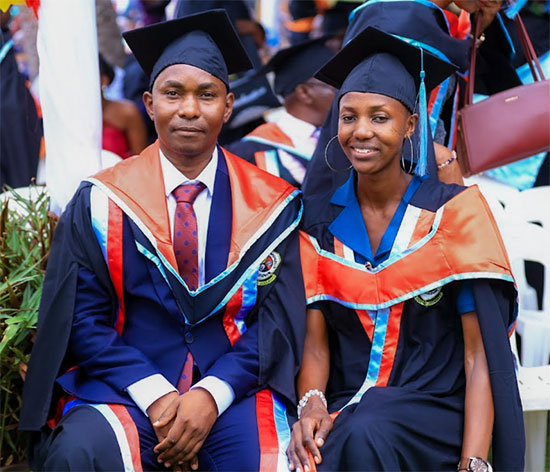

In 2023, Musoke resolved to finish. He returned to his research, collected field data and worked with his supervisor, hoping to graduate in 2024. But he submitted his draft too late for that year’s graduation cycle. Then came a more painful setback. An external examiner rejected his thesis and recommended substantial revisions, including a return to the field. After years of work, the verdict was devastating.
But Musoke, who had financed his own education, spending millions of shillings on tuition, university fees, research materials, transport and printing, walking away meant abandoning an investment that extended well beyond money.
He returned to the field, reworked his research and persevered through another demanding year. In September 2026, he defended his thesis and passed his viva. On October 6, he submitted the final hardbound copy of his dissertation to UMU’s School of Post-Graduate Studies. At last, the finish line was within reach.
When achievement leaves you speechless
The emotional complexity of the milestone emerged in an unexpected moment. When a university staff member who knew something of his prolonged academic struggle asked how he felt about finally graduating, Musoke could not immediately answer.
Usually talkative among people he knows, he found himself momentarily speechless. His first response, he says, was that he felt nothing. “It was a profound, overwhelming state of numbness.” After nine years of pursuing a goal, he found himself struggling to articulate what its completion meant. The exhaustion accumulated over the years seemed to have crowded out the immediate joy he might have expected.
The staff member offered a recollection from her school days, remembering a phrase her chaplain used to repeat: “Nothing comes easy in life.”
Those words helped Musoke put the experience into perspective. For him, the degree represented not only academic success but also the determination required to finish something that had repeatedly threatened to overwhelm him. Whether the achievement amounts to a “pyrrhic victory”, he reflected, is something only God knows. But he believes it has been worth it.

His advice to other working students is direct: “Don’t ever underestimate your dissertation writing process. Plan for the unexpected, guard your momentum fiercely.” His experience illustrates how postgraduate research can become unpredictable for students balancing employment and other responsibilities. Even after coursework is complete, research, fieldwork, supervision and examination can introduce setbacks that demand time and fresh effort. For Musoke, success ultimately meant returning to the work after disappointment.
UMU’s message: competence beyond the certificate
Musoke’s achievement formed part of a wider celebration at a university whose Catholic identity shaped the occasion. The university graduated 2,920 students in the Class of 2026, with 46% graduating in science, technology, engineering and mathematics disciplines. The ceremony was held under the theme “Competence Beyond the Certificate: Graduates Ready for the Community and World of Work”.
The Chancellor, Rt Rev. Prof. Joseph Antony Zziwa, challenged graduates to look beyond their qualifications and demonstrate the practical value of their education. “A credential cannot do a job interview for you, and neither can it solve a problem at the workplace,” Zziwa said.
Drawing on the biblical parable of the talents in Matthew 25:14–30, he urged graduates to use their abilities, uphold their values, read widely and adapt to technological change. “Do not just look for a job. Look for a problem to solve,” he said.
The message was that a degree should equip its holder to contribute, not simply provide a line on a CV. In a changing world of work, academic knowledge must be translated into practical skills, sound judgement and solutions to real problems.
Vice Chancellor Prof. Patrick Edrin Kyamanywa reinforced that argument through the four Cs he hoped the university had instilled in the graduating class: character, competence, creativity and confidence. “A certificate says you were taught; competence shows that you can do it,” Prof. Kyamanywa said.
A qualification might open doors, he argued, but character and competence determine whether graduates can remain effective once inside. Creativity and confidence enable them to make a meaningful contribution.
Prof. Kyamanywa also warned that rapid technological change, particularly artificial intelligence, made lifelong learning essential. Graduates must continue acquiring skills and adapting rather than relying solely on what they learnt at university.
He urged them to serve their communities, contribute wherever their abilities were needed and maintain their integrity. The university’s motto, “In Virtue and Wisdom, Lead the World”, reinforced the point that professional competence must be accompanied by character.
The Chairperson of the University Council, Rt Rev. Joseph Oliach Eciru, similarly argued that Uganda and the wider world did not lack certificates so much as graduates capable of solving problems and acting with integrity. “The world does not pay you for your certificate. The world pays you for the problems you solve,” Rev. Eciru said. He challenged graduates to resist corruption, serve their communities and keep learning in a world shaped by artificial intelligence, climate change and innovation.
The chief guest, Fred Byamukama, the Minister of Works and Transport, made a similar appeal, arguing that education finds its greatest purpose in service to others. “A qualification is important, but its true value lies in the problems you solve, the lives you improve, and the contribution you make to society,” Byamukama said. Across the speeches, the message was consistent: graduation is not the end of learning but the beginning of a responsibility to apply knowledge ethically and usefully.
A hard-won beginning
Musoke’s story gives that message a personal dimension. His degree is evidence of academic achievement, but the journey to obtaining it also demanded patience, humility and the willingness to start again after a major setback. His experience is not a prescription for how postgraduate education should unfold. It is a reminder that work, unexpected crises and research challenges can disrupt even carefully planned ambitions.