The Independent Uganda: You get the Truth we Pay the Price


The sub-sector continue to grapple with high production costs, limited access to long-term capital, dependence on imported inputs and fragmented supply chains
Kampala, Uganda | THE INDEPENDENT | Uganda’s manufacturers are calling for deeper collaboration across supply chains, innovative financing mechanisms and greater investment in value addition as they seek to overcome structural constraints that continue to limit the sector’s growth potential.
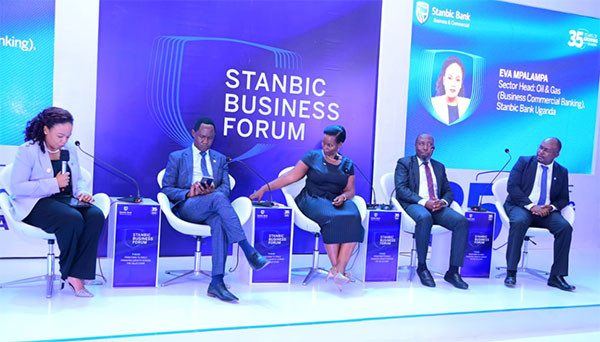
The appeal emerged at Stanbic Bank Uganda’s inaugural Business Forum in Kampala, where industry leaders, policymakers and financiers gathered to examine how stronger links between agriculture, manufacturing and trade could accelerate industrial development.
Held under the theme “From Farm to Shelf: Financing Growth Across the Value Chain,” the forum highlighted both the opportunities and persistent weaknesses within a sector widely regarded as central to Uganda’s economic transformation.
Despite benefiting from a sizeable agricultural base, a growing consumer market and access to regional trade blocs, manufacturers continue to grapple with high production costs, limited access to long-term capital, dependence on imported inputs and fragmented supply chains.
“Uganda’s manufacturing sector is built on strong fundamentals, but businesses continue to face challenges ranging from high production costs and limited access to suitable financing to weak linkages across the value chain,” said Tunde Thorpe, Stanbic Bank Uganda’s Executive Head of Business and Commercial Banking.
GDP contribution
Manufacturing contributes between 15 and 16.5 per cent of Uganda’s gross domestic product, while the broader industrial sector accounts for roughly a quarter of economic output. The sector also supports more than one million jobs and generates close to a third of the country’s tax revenues.
For policymakers, the challenge is increasingly shifting from expanding production to capturing more value domestically. Industry stakeholders argued that Uganda can only strengthen its competitiveness by processing more of its agricultural output locally rather than exporting raw commodities.
Patrick Joram Mugisha, Commissioner for Business Development and Quality Assurance at the Ministry of Trade, Industry and Cooperatives, said industrialisation and value addition remain critical to creating jobs and improving the country’s position in regional and international markets.
Participants stressed that stronger integration between farmers, processors, manufacturers, distributors and retailers would help reduce inefficiencies while creating more resilient value chains. Such coordination, they argued, is essential if Uganda is to compete effectively within the East African Community and the wider African market.
Access to finance remained a recurring concern throughout the discussions. Manufacturers noted that expansion, technology upgrades and investments in value addition often require financing structures that are not readily available through conventional lending channels.
Agnes Mbabazi, Managing Director of Agrifarm Uganda Ltd, said affordable and appropriately structured financing remains vital for businesses seeking to scale operations and improve productivity.
Industry representatives also called for more innovative financing models and stronger partnerships between government and the private sector.
“All stakeholders must work together to address the barriers limiting industrial growth,” said Allan Ssenyondwa, Director of Policy and Advocacy at the Uganda Manufacturers Association. He argued that supportive policies and targeted financing solutions would enable firms to compete more effectively both at home and abroad.
Tech key for growth
Alongside financing, participants identified logistics, technology and market access as increasingly important drivers of competitiveness.
Emmanuel Negombye, Stanbic Bank Uganda’s Head of Agribusiness, highlighted the growing role of digital platforms in connecting producers to markets and improving efficiency across supply chains.
He pointed to Stanbic’s OneFarm platform as an example of how technology can strengthen links between farmers, manufacturers and exporters while improving market access. The bank has also expanded its risk mitigation and insurance offerings to help businesses manage operational risks and strengthen resilience.
For Stanbic, the forum forms part of a broader effort to position itself as a partner in Uganda’s industrialisation agenda rather than solely a provider of credit.
Closing the event, Stanbic Executive Director Paul Muganwa said the objective was to move beyond diagnosing challenges and focus on practical interventions capable of unlocking growth.
He cited the expansion of Roofings Group from a domestic manufacturer into a regional industrial player as evidence of what can be achieved when businesses combine ambition with access to capital, strategic investment and market opportunities.
As Stanbic marks 35 years in Uganda, Muganwa said the lender intends to deepen support for businesses seeking to scale beyond local markets.
“We see ourselves not simply as a lender, but as a partner for growth,” he said, adding that sustainable industrial development will depend on stronger connections between production, processing, distribution and regional trade.