The Independent Uganda: You get the Truth we Pay the Price


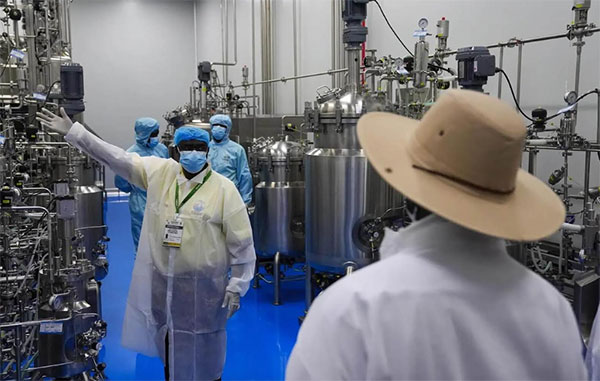
CONNECT-VAS project brings together four African countries to build stronger vaccine systems and reduce reliance on imports
Kampala, Uganda | RONALD MUSOKE | When scientists, policymakers, regulators and development partners gathered in Kampala on June 11 for the inception meeting of the Collaborative Network for Vaccine Research in West and East Africa (CONNECT-VAS) project, the message was clear that the continent can no longer afford to remain on the margins of global vaccine development.
The COVID-19 pandemic exposed Africa’s heavy reliance on imported vaccines and global supply chains. While African countries carry a significant share of the world’s infectious disease burden, many struggled to secure timely access to vaccines during the pandemic as wealthier nations moved quickly to secure supplies for their own populations.
For Uganda and other countries in the region, the experience highlighted the risks of depending on external manufacturers during health emergencies. It also renewed calls for greater investment in local research, vaccine development and manufacturing capacity.
Now, the CONNECT-VAS project seeks to change that. Implemented under the Science Granting Councils Initiative (SGCI), the multi-country initiative brings together Uganda, Kenya, Tanzania and Sierra Leone to strengthen vaccine research systems, regulatory capacity, communication strategies and delivery mechanisms.
The project aims to build a more resilient regional vaccine ecosystem capable of responding to emerging disease threats while generating new opportunities for scientific innovation, industrial growth and economic transformation.
Dr David Serukka, the acting Executive Secretary of the Uganda National Council for Science and Technology (UNCST) noted in remarks made on his behalf by Dr Martin Ongol (PhD) that the initiative represents a turning point in Uganda’s health innovation journey.
“Today marks more than the launch of a project; it marks the beginning of a conversation about Uganda’s future in vaccine research, development, manufacturing and access,” said Dr Serukka. “It is a conversation about how we can collectively strengthen our vaccine value chain and position Uganda to contribute meaningfully to regional and global health security.”
From health priority to development imperative
Participants emphasized that vaccine development is no longer solely a public health issue. Instead, they argued, it has become a strategic economic and national security priority. “The ability to research, develop, manufacture, regulate, distribute and effectively utilise vaccines is no longer merely a health sector concern; it is a strategic development priority,” Dr. Serukka said.
Uganda’s Fourth National Development Plan (NDPIV) identifies research, innovation, manufacturing and value addition as critical drivers of economic transformation, and vaccine development, which is under the so-called “Pathogen Economy,” sits at the intersection of these ambitions.
According to Dr Serukka, strengthening the vaccine value chain presents an opportunity to translate scientific knowledge into products and services that improve health outcomes while creating jobs, attracting investment and stimulating industrial growth.
But he acknowledged that significant challenges remain. Uganda continues to face infrastructure gaps, limited financing, shortages of specialized human resources, inadequate manufacturing capacity and fragmented coordination among key actors. “Addressing these challenges requires more than isolated interventions,” Dr. Serukka said. “It requires a shared vision and a coordinated approach.” That vision, participants at the meeting argued, must extend beyond national borders.
Recent outbreaks of Ebola, Marburg and mpox have demonstrated how quickly health threats can spread across the region. “As you know, some of these challenges come from neighbouring countries,” Dr. Serukka noted, referring to recurrent Ebola outbreaks in the Democratic Republic of Congo. The CONNECT-VAS project, he said, offers a platform for shared learning, evidence generation and partnership building that could shape future investments in vaccine research and development.
Learning the lessons of COVID-19
For many participants, the urgency of the initiative was rooted in lessons learned during the COVID-19 pandemic. “The COVID-19 pandemic exposed significant weaknesses in local vaccine production capacity,” said Dr. Ongol, who serves as principal investigator for the vaccine roadmap under CONNECT-VAS. “We had to wait until advanced countries had met their own demands before vaccines became available to us.”
Uganda’s vaccine ecosystem is already active, with ongoing research into Ebola, HIV, mpox, schistosomiasis and locally developed COVID-19 vaccine candidates. The country has also emerged as a regional hub for vaccine evaluation and clinical trials. Yet despite these strengths, Uganda continues to rely heavily on imported vaccines. “We need not only to develop vaccines but also to build an economic base around them,” Dr. Ongol said.
He argued that vaccine research should be viewed not only through the lens of health outcomes but also as a catalyst for job creation, import substitution and industrial development. “We have strong upstream research and diagnostics, but weak downstream manufacturing,” he said. “The research is happening, but much of the value creation takes place outside Africa.”
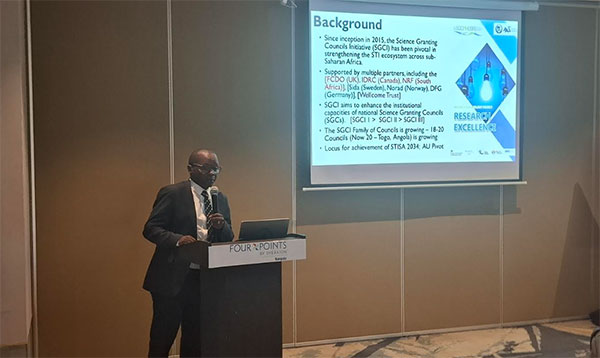
CONNECT-VAS aims to close that gap by focusing on four strategic priorities; strengthening vaccine delivery systems, enhancing regulatory frameworks, building vaccine confidence and expanding research and manufacturing capacity.
Among the challenges identified are weak cold-chain infrastructure, fragmented logistics systems and difficulties in delivering vaccines to hard-to-reach areas such as Karamoja in northeastern Uganda and the Kalangala District islands in Lake Victoria. “Vaccine delivery is not just about moving doses from one place to another,” Dr Ongol said. “It includes cold-chain infrastructure, transportation systems, logistics, data management and human resource capacity.”
Ethics, safety and the cost of innovation
While participants embraced the ambition of strengthening vaccine systems, they also stressed the need for caution. Prof. Grace Ndeezi, the Chair of the Forum for Research Ethics Committee Chairpersons of Uganda (FRECU), reminded stakeholders that vaccine development remains one of the most rigorous and heavily regulated areas of scientific research.
“You are manufacturing something that will be introduced into a human being,” she said. “That means safety must remain the central consideration at every stage.” Prof. Ndeezi, who is based at Makerere University College of Health Sciences, walked participants through the lengthy process of vaccine development; from laboratory discovery and animal studies to phased clinical trials involving human volunteers.
She noted that advances in biotechnology, including messenger RNA platforms and viral vector technologies, have significantly shortened development timelines. “In the past, vaccine development could take between five and 15 years,” she said. “Today, technologies such as messenger RNA platforms and viral vectors are making it possible to develop vaccine candidates much faster.” However, speed cannot come at the expense of safety. “When you begin human trials, you must be certain that what you are giving people is safe,” Prof. Ndeezi said. She highlighted the high cost of vaccine trials, noting that participant monitoring, safety assessments and long-term follow-up require substantial investment. “Clinical trials are expensive because participant safety is expensive,” she said.
Despite these challenges, Prof. Ndeezi expressed confidence in Uganda’s growing research capacity. “We have the capacity to participate in Phase One, Phase Two and Phase Three trials,” she said. “Uganda is ahead of many countries in Eastern and Central Africa when it comes to research.” She also called for stronger collaboration between researchers, ethics committees and regulators to reduce delays in protocol reviews and approvals.
Regulation and coordination
For Prof. Sam Okware, the Director-General of the Uganda National Health Research Organisation (UNHRO), effective regulation and coordination are the cornerstones of any successful vaccine ecosystem. “The cardinal principle is: do no harm,” Prof, Okware said. “No harm to the researcher, no harm to the participant, no harm to your country and, indeed, no harm to the community.” He emphasized that vaccine research must deliver benefits that are widely shared. “There should always be benefit, and that benefit should be accessible to everybody and everywhere,” he said.
Prof. Okware warned that scientific advances alone would not be enough without stronger coordination among government agencies, researchers, regulators and manufacturers. He revealed that discussions are underway to establish a national consortium and secretariat to coordinate vaccine research efforts and reduce duplication. “We need a platform where, at the touch of a button, I can know what you are doing, at what point and why you are doing it,” he said.
Uganda’s experience with Ebola vaccine research has highlighted both the opportunities and challenges of coordination. Prof. Okware, said multiple institutions are currently interested in conducting trials for vaccines targeting the Bundibugyo strain of Ebola. “Everybody wants to be first,” he said. “But because we do not yet have sufficient capacity, a lot of this pressure is coming from outside.” The answer, he argued, lies in collaboration. “What we are doing is not church work,” Okware said. “With science, you must always do consultation.”
Fighting misinformation and building trust
Beyond research and regulation, participants agreed that vaccine acceptance remains one of the biggest challenges facing public health systems. COVID-19 demonstrated how misinformation, social media and mistrust can undermine even the most sophisticated vaccination campaigns. “There are people who have invested heavily in misinformation and disinformation,” said Dr. Ongol. “The emergence of artificial intelligence and social media platforms has made communication even more complex.” He recalled how trusted leaders played a crucial role in improving vaccine uptake during the pandemic. “One of the moments I will never forget was when the Kabaka of Buganda (Ronald Muwenda Mutebi II) invited people to Bulange Palace to receive their vaccines,” Dr. Ongol said. “The queues stretched until 8 p.m., and that was when vaccine stockpiles began to move.”
One participant who works in the field of risk communication and community engagement argued that communication strategies must be rooted in a deeper understanding of cultural beliefs and community perceptions. “If communities believe a disease is caused by supernatural forces, that belief will influence how they respond to vaccines,” he said. “We need to understand how people think, who they trust and how they receive information.”
Dr Steven Ssebale (PhD), the SGCI coordinator, echoed those concerns. “The pace and velocity of information is no longer what it used to be,” he said. “The question is; who is the trusted voice, who is the influencer and who is the changemaker?” CONNECT-VAS plans to support research into the drivers of vaccine hesitancy and identify communication approaches that resonate with different communities.
A new model for African collaboration
The project also represents a significant milestone for the Science Granting Councils Initiative. Established in 2015, SGCI brings together science granting councils across sub-Saharan Africa to strengthen national science, technology and innovation systems.
Over the past decade, the initiative has supported work on research commercialization, digital grant management, gender and inclusion, open science and policy development. “The African Union has placed its science and technology agenda on these councils,” Dr. Ssebale said.
The CONNECT-VAS project marks the first time multiple councils have jointly managed a regional research fund. “We are the first multi-country research platform of this kind to be funded,” Dr. Ssebale said. “In many ways, we are a test case.”
Uganda has been selected to lead the initiative, with UNCST serving as principal investigator and coordinating activities across all four countries. “By putting UNCST at the helm of this initiative, our partners have shown confidence in Uganda’s ability to lead,” Dr. Ssebale said.
The project team plans to establish an international scientific review panel and a technical advisory committee to guide implementation and evaluate research proposals. A first call for proposals is expected to be issued later this year following more consultations with stakeholders. “This project is not just about giving out money,” Dr Ssebale said. “It is about allowing researchers to step outside their silos, collaborate across borders and build lasting partnerships.”
As participants left the meeting, there was broad agreement that building a resilient vaccine ecosystem will require sustained investment, stronger partnerships and a long-term commitment to scientific excellence. But there was also a sense that Uganda and its regional partners are uniquely positioned to lead that transformation. “This project belongs to all of us,” Dr. Ssebale said. “The conversations we have started here must now translate into action.”