The Independent Uganda: You get the Truth we Pay the Price



Uganda’s insurance boom is failing to reach the majority
Kampala, Uganda | JULIUS BUSINGE | Uganda’s insurance industry is being forced to confront an uncomfortable truth: it is growing, but it is not yet protecting most Ugandans.
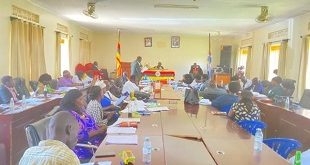
That was the central message at the 4th Annual Insurance Agents Association convention in Kampala on April 29, where industry leaders, regulators and financial institutions gathered to reflect on the sector’s future. Beneath the optimism about rising revenues lay a more urgent question. Who is insurance really working for?
Speaking at the event, David Wandera, managing director of Absa Bank Uganda, argued that the industry must fundamentally rethink its purpose. For him, the challenge is no longer simply about selling policies but about delivering meaningful protection in moments of crisis.
“We are living through a defining shift,” he said, pointing to changing customer expectations and evolving risks. “The real test of insurance is what happens when things go wrong.”
Growth without reach
On paper, the industry appears to be expanding. Gross written premiums crossed the Shs2 trillion mark by the end of 2025, up from around Shs1.76 trillion the previous year. That growth suggests rising demand and increasing confidence in the sector.
But the headline numbers tell only part of the story. Insurance penetration in Uganda remains below 1%, meaning that the vast majority of citizens have no form of cover. For many analysts, this gap highlights a deeper structural issue: growth is not yet translating into widespread financial protection.
Wandera framed it in stark terms. For every Shs 1,000 spent in the economy, less than Shs 9 goes towards insurance. The implication is clear. Most households remain exposed to financial shocks, from illness to accidents to loss of income.
For families, this often means relying on savings, community support or borrowing when emergencies strike. In some cases, it can push households into long-term financial distress.
The human cost of being uninsured
Behind the statistics are everyday realities. A medical emergency, for example, can quickly become a financial crisis. Without insurance, the cost of treatment may force families to sell assets, take on debt or forgo care altogether.
Industry leaders at the convention repeatedly returned to this point. Insurance, they argued, should act as a buffer against such shocks. Yet for most Ugandans, that buffer does not exist.
Wandera described insurance agents as playing a critical role in bridging this gap. Positioned at the frontline of the industry, they are often the first point of contact between insurers and customers.
“You stand between families and financial ruin,” he told them, framing their work not just as sales but as a form of social protection.
The theme of the conference, focused on becoming “champions of protection”, reflected this shift in thinking. It signals a move away from viewing insurance purely as a financial product towards seeing it as a service with broader social impact.

A market still largely untapped
For industry players, the low penetration rate is both a concern and an opportunity.
“If we are still below one per cent, then 99 per cent of the population remains exposed,” Wandera said. “That is where the real market is.”
Others echoed this view. Joshua Muyomba, chairman of the agents’ association, pointed out that the sector’s contribution to the wider economy remains limited but has room to grow.
Membership of the association has nearly doubled in recent years, rising from about 1,500 to close to 2,900 agents. Even so, the figure remains well below that of neighbouring markets such as Kenya, where agent networks are far more extensive.
For Muyomba, expanding this network will be key to reaching more people, particularly in underserved areas.
“If we double our efforts, we will get there,” he said, suggesting that scale and outreach will determine the industry’s next phase of growth.
Beyond expansion, however, there is a growing recognition that the industry must change how it operates.
Traditionally, insurance has been seen as reactive. Customers pay premiums, and insurers step in after a loss has occurred. But some leaders are now calling for a more proactive approach, focused on preventing risks before they materialise.
“The question is no longer just how we pay claims,” Wandera said. “It is how we reduce losses before they happen.”
This shift has implications for both customers and providers. For customers, it could mean products that are easier to understand, more relevant to their needs, and designed to offer support before crises escalate.
For insurers, it requires better use of data and technology. By analysing patterns and risks, companies can design more targeted products and price them more accurately.
“Data is now our compass,” Wandera noted, highlighting its role in shaping decision-making across the sector.
The trust problem
Despite these ambitions, one of the biggest barriers to growth remains trust.
Many Ugandans are sceptical about insurance, often due to past experiences or perceptions that claims are difficult to access. This mistrust can discourage people from taking up cover, even when they recognise its importance.
“People do not avoid insurance because they do not need it,” Wandera said. “They avoid it because they do not trust it.”
Rebuilding that trust will require consistent delivery, particularly when it comes to claims. Customers need to be confident that when they need support, it will be provided quickly and fairly.
Simplifying products is also seen as part of the solution. Complex terms and conditions can deter potential clients, especially those unfamiliar with financial services.
“We must stop selling policies and start selling security,” Wandera said, arguing that customers are looking for certainty, not paperwork.
At the same event, Jonan Kisakye, chief executive of the Uganda Insurers Association, pointed to another challenge: execution.
Strategies and ambitions, he suggested, are only as effective as their implementation on the ground.
“The future of insurance in Uganda will not be shaped by intention alone,” he said. “It will be shaped by execution in the field.”
This places renewed emphasis on agents, who are responsible for engaging customers, explaining products and building relationships.
Their role is particularly important in a market where financial literacy levels vary widely. Clear communication and personalised engagement can make the difference between adoption and rejection.
Balancing growth and responsibility
Industry leaders also acknowledged the need to balance commercial objectives with social responsibility.
Ruth Namuli, chief executive of SanlamAllianz General Insurance and chairperson of the Uganda Insurers Association, said that increasing penetration will require both government and private sector participation.
She stressed that growth must be accompanied by professionalism and discipline within the industry.
“We have a lot of work to do,” she said, noting that improving standards will be key to building confidence and expanding access.
Her remarks underline a broader point. As the industry grows, expectations are rising. Customers are becoming more informed, regulators are demanding greater accountability, and competition is intensifying.
For ordinary Ugandans, the changes being discussed could have far-reaching implications.
If successful, efforts to expand insurance coverage could provide a critical safety net, helping households manage risks and avoid financial shocks. This, in turn, could support broader economic stability, as fewer families are pushed into poverty by unexpected events.
For businesses, particularly small and medium sized enterprises, greater access to insurance can reduce vulnerability and encourage investment. Knowing that risks are covered allows entrepreneurs to take calculated decisions and plan for the future.
At a national level, higher insurance penetration can strengthen the financial system, mobilise long term savings and support economic growth.
But these outcomes are not guaranteed. They depend on the industry’s ability to address its current challenges, from trust deficits to limited outreach.