 The Independent Uganda: You get the Truth we Pay the Price


Uganda’s seven-decade electricity journey reveals the gap between generating electricity and getting it reliably into homes, businesses and communities
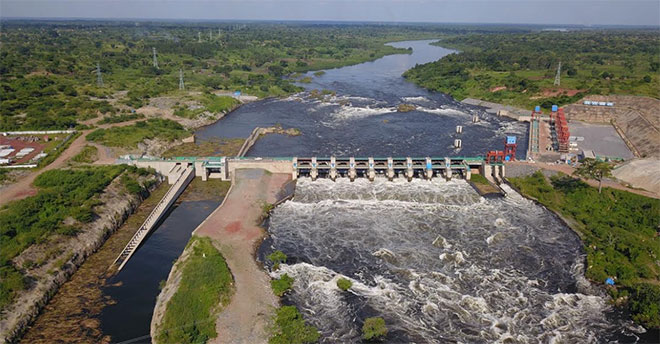
Kampala, Uganda | RONALD MUSOKE | On April 29, 1954, Uganda switched on a new chapter in its economic history. At Owen Falls, where the Nile leaves Lake Victoria, the country’s first major hydropower station was commissioned by Queen Elizabeth II. The power plant, later renamed Nalubaale Power Station in 2001, began with a capacity that was modest by today’s standards but transformative for a young country.
More than seven decades later, the Nile tells a very different story. Uganda has built four more major power stations along the river system: Kiira, Bujagali, Isimba and, most recently, Karuma. Together with smaller hydropower stations on other rivers and other generation technologies, they form part of a national electricity system whose installed generation capacity reached 2,098.2 megawatts at the end of 2025, according to the Electricity Regulatory Authority (ERA). Hydropower accounted for 82.1% of that capacity.
The Nile has, in effect, become a spine of Uganda’s electricity system. Nalubaale and Kiira form the historic complex at Jinja. Bujagali came downstream in 2012. Isimba followed in 2019. Karuma, the newest of the large stations, added another 600 MW of installed capacity in 2024.
It is an extraordinary story of investment in power generation. But it also leaves Uganda with a question that is becoming increasingly difficult to avoid: What does it mean for a country to have more than 2,000 MW of installed generation capacity when millions of its people still do not have reliable electricity at home? That question is not uniquely Ugandan. It is becoming an African question.
The paradox in Uganda
Uganda once had the opposite problem. About 15 years ago, the country experienced a severe power crisis, with demand exceeding available supply by roughly two to one. By 2019, however, generation capacity had risen to 1,254 MW, and Uganda was described as having a surplus of electricity relative to what it could consume at peak demand.
Yet the expansion of generation did not translate automatically into household access. That was the finding of the pan-African research firm, Afrobarometer, whose analysis was published in 2021 by its research partner, Hatchile Consult Ltd. The report was titled, pointedly, “Despite hydropower surplus, most Ugandans report lack of electricity.”
Ronald Makanga Kakumba, the lead researcher, found that 49% of Ugandans lived in areas served by the national electricity grid, but only 26% lived in households actually connected to it. The urban-rural divide was particularly sharp: 67% of urban residents reported a connection, compared with just 13% of rural residents.
Even more revealing was what happened after the connection. Among Ugandans who were connected to the grid, 68% said electricity was available “most of the time” or “all of the time”. The problem, therefore, was not simply whether Uganda could generate electricity. It was whether the electricity could travel the rest of the distance; through transmission and distribution networks, into communities and finally into households that could afford to connect.
Afrobarometer’s report also found that 38% of Ugandans used electricity from sources other than the national grid. Solar alone reached 33% of the population, meaning more Ugandans reported using solar than reported having a connection to the national grid. That finding now looks less like an oddity and more like a preview of a broader African trend.
The numbers have changed, but the paradox remains. Uganda has made progress since that 2019 survey. The latest available Afrobarometer country analysis found that 62% of Ugandans lived in areas served by the national electricity grid, compared with 49% in the earlier survey. Yet only 28% were connected to the grid, and just 15% enjoyed electricity that worked most or all of the time.
In other words, a trading centre or community can be served by a grid without every household being connected. A household can be connected without receiving electricity reliably. And electricity can be available without necessarily being affordable enough to use productively.
The latest continental Afrobarometer analysis published on Sept.21 makes precisely that distinction. Across 38 African countries surveyed in 2024/2025, 72% of people live in areas served by an electric grid. But only 60% of households are connected to the grid, and only 43% of respondents say electricity works “most” or “all” of the time. For every 10 people in the countries surveyed, four either have no connection or say their connection never works. Africa’s electricity problem, then, is not simply that it does not have enough power stations. It is also a problem of connection, reliability and affordability.
Where you live still matters
The continental averages conceal an enormous geographical divide. Only 37% of rural respondents across the countries surveyed by Afrobarometer report a grid connection, compared with 83% of urban residents. Among the poorest respondents, the connection rate is 46%, compared with 86% among the well-off.
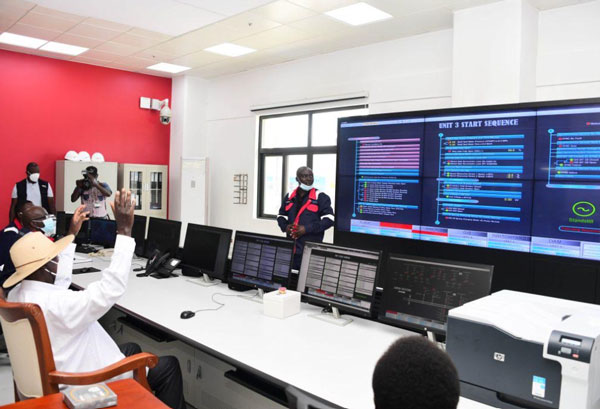
Reliability follows the same pattern. Six in 10 of the urban respondents report electricity that works most or all of the time, compared with only 26% of rural residents. Among the poorest respondents, only 27% report a reliable supply, against 75% among the well-off.
The country differences are even more dramatic. Mauritius and Seychelles report household connection rates of 98%. At the other end of the scale, fewer than one-third of households report connections in Guinea, Uganda, Zambia, Madagascar, Sierra Leone, Chad and Malawi.
On reliability, fewer than one in 10 respondents report a regular supply in Madagascar, Sierra Leone, Guinea, Mali, Zambia and Chad. In Mauritius, Seychelles and Morocco, by contrast, at least nine in 10 respondents report a regular supply. Africa therefore does not have one electricity story; it has many. Some countries are approaching universal grid coverage. Others are still struggling to establish basic connections. Some households have relatively reliable electricity; others live with a connection that works only intermittently or not at all, and within the same country, the experience can depend heavily on whether someone lives in a city or village, and whether they are poor or relatively well-off.
The grid is not the only answer
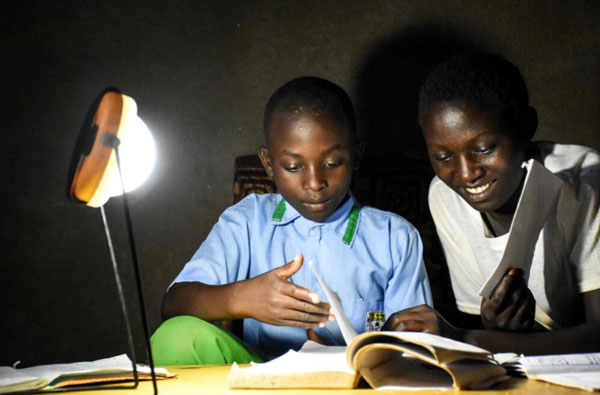
Meanwhile, when the grid does not reach, households find alternatives. Across the 38 countries surveyed, 23% of citizens report using electricity from sources other than the main grid. Of those alternative users, 70% rely on solar. Rural residents are twice as likely as urban residents to use non-grid electricity: 31% compared with 15%.
Uganda has already demonstrated how significant that shift can be. In the 2021 Afrobarometer survey, almost four in 10 Ugandans (38%) said their households used electricity from sources other than the national grid, while 33% used solar power. This does not mean that decentralised solar and other alternatives have made the national grid unnecessary. It means something simpler: people need electricity whether or not the grid reaches them.
For rural communities, a solar system may provide lighting, phone charging or other basic services without waiting for a transmission line and distribution network to arrive. For businesses, however, the electricity requirements may be greater. And that is where the distinction between basic access and productive electricity use becomes important.
Africa is not merely trying to light homes. It wants electricity to power irrigation, refrigeration, manufacturing, communications, transport, schools, health facilities and a new generation of digitally enabled businesses. That requires electricity that is not only available but also reliable and affordable.
The cost of getting connected
Yet, Uganda’s earlier experience shows why the physical presence of the grid is only part of the problem. The 2021 Afrobarometer analysis identified connection charges and electricity tariffs among the barriers preventing households from accessing grid electricity. It also noted that the Electricity Connection Policy introduced in 2018 encountered funding problems and was suspended in late 2020. The issue has remained central to Uganda’s electricity policy.
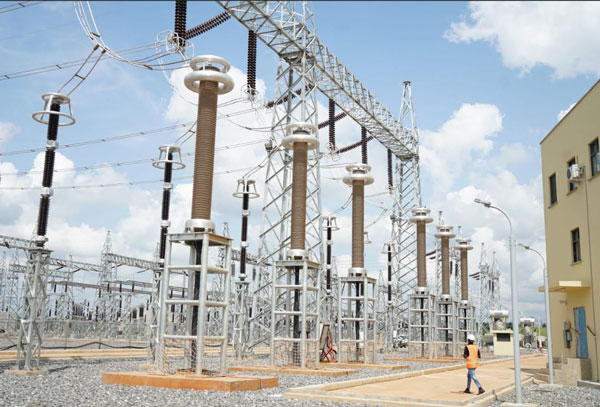
The electricity regulatory agency, ERA, says the World Bank-funded Electricity Access Scale-Up Project is intended to establish 300,000 new connections annually. The authority reported that grid connections had reached 2.52 million customers by the end of 2025.
The regulator also reported that Uganda’s weighted average end-user tariff fell from Shs459.8 per kilowatt-hour in the first quarter of 2025 to Shs395.8 by the end of the year, while maintaining a lifeline tariff of Shs250 for the first 15 units purchased in a month.
But the policy challenge remains larger than the price of a unit of electricity. For someone without a connection, there is first the cost of getting connected. For someone who is connected, there is the cost of consuming enough electricity to make that connection economically meaningful, and for a business, there is the question of whether the quality and reliability of supply justify investment in machinery and other electricity-dependent activities.
Generation versus access — a false choice?
That brings us back to Uganda’s generation debate. Last year, Julius Wandera, the Director of Corporate & Consumer Affairs at ERA, responded to an argument that Uganda should prioritise electricity consumption and affordability before committing to additional generation projects.
Wandera acknowledged the concerns about high connection costs and low electricity uptake. But he argued that Uganda should not frame generation and access as competing priorities. “Access, affordability, and reliable supply are deeply interdependent,” he wrote in a blog posted on the ERA website in October last year.
His argument is that Uganda cannot afford to stop planning for future generation simply because today’s access remains inadequate. Large power projects take years to develop. Karuma itself, he noted, took nearly 12 years to come online. Meanwhile, he said, Uganda’s electricity consumption is growing by an estimated 8% to 12% annually, driven by population growth, urbanisation, industrialisation, digital infrastructure and emerging e-mobility technologies.
Wandera noted that “generation and access are two sides of the same coin.” It is an important counterweight to the idea that Uganda’s generation investments should be judged only by how many households are currently connected. But it does not remove the access problem. It sharpens it. If Uganda is going to continue building generation capacity, the country must also ensure that the networks, connections and affordability mechanisms needed to turn that capacity into actual consumption keep pace.
Africa enters the “Age of Electricity”
The Ugandan debate is unfolding against a much larger global shift. The International Energy Agency’s latest electricity analysis describes the world as entering a new “Age of Electricity.”
The phrase is not merely about switching from one source of energy to another. Electricity is increasingly becoming the platform on which modern economic activity takes place.
In its report it published on September 22, this year, the IEA says electricity demand grew by more than 3% annually between 2015 and 2025; twice as fast as overall energy demand. Since 2019, electricity demand has grown more than twice as fast as total energy use, driven by cooling, appliances, manufacturing, digital services, artificial intelligence and electric vehicles.
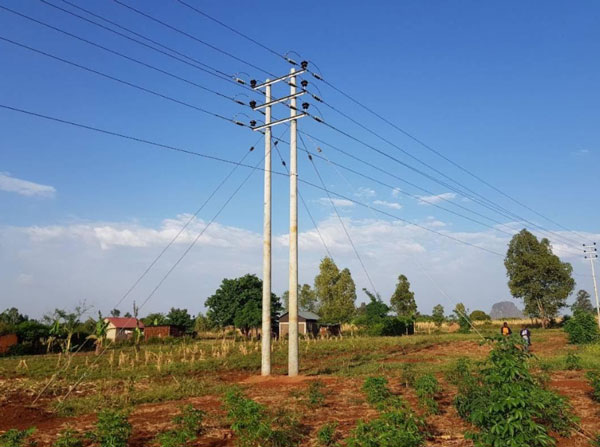
The agency sees significant opportunities for emerging and developing economies. Among them are electric agricultural water pumps, electric two- and three-wheelers, and greater use of electricity by small businesses in sectors such as food and textiles.
But there is a catch. The IEA says faster electrification will require investment in both generation and grids, as well as smarter and more flexible power systems. It also warns that policymakers will need to help some households and businesses manage the upfront costs of electrification.
That sounds remarkably familiar from Uganda’s perspective. The country is being asked to do two things simultaneously: finish the work of connecting people to electricity and prepare for an economy that will require substantially more of it.
Africa’s electricity paradox
The latest Afrobarometer findings show just how far there is to go. Across the 38 countries, only 43% of respondents enjoy electricity that works most or all of the time. Rural residents and poorer households are substantially less likely to have reliable power.
Yet the same continent is preparing for much greater electrification. That means Africa faces two electricity revolutions at once. The first is unfinished; that of connecting the people who remain outside the electricity system.
The second is accelerating the use of electricity to transform economies. The danger is not necessarily that the second will make the first impossible. The danger is that they may advance at different speeds. A country can have modern power infrastructure and still have households without connections.
It can have electricity lines passing through a village without every home being connected. It can have a connected customer who cannot afford much electricity, and it can have electricity available in principle but unreliable enough to undermine business, education, health care or household life.
That is why the language of “electricity access” needs to be handled carefully. Access to what? A grid? A household connection? A reliable supply? Affordable electricity? Or enough electricity to power productive economic activity?
The Uganda lesson
Uganda’s journey from Owen Falls to Karuma shows what is possible when a country invests steadily in power generation. In 1954, Uganda had its first major hydropower station. Today, the country has an electricity system with more than 2,000 MW of installed generation capacity and a network that continues to expand.
ERA says installed capacity increased by 54% between 2021 and the end of 2025, from 1,361.6 MW to 2,098.2 MW. But the same country still faces a substantial access challenge. That is not necessarily a failure of generation investment. It is a reminder that electricity systems are chains.
Generation must connect to transmission; transmission must connect to distribution; distribution must reach communities; households and businesses must be able to connect, and once connected, they must be able to afford electricity and depend on its availability. Uganda’s challenge is therefore not simply to produce more electricity. It is to make the electricity it produces accessible, affordable, reliable and useful. That is also Africa’s challenge.
The next 70 years
The first great chapter of Uganda’s electricity story was about building the ability to generate power. Owen Falls opened that chapter, Kiira expanded it, Bujagali added another major step, Isimba pushed the system further, and Karuma marked another leap in generation capacity. The next chapter has to be about what happens beyond the power station.
Can Uganda connect the millions of households still outside the grid? Can rural communities receive reliable electricity? Can poor households afford to consume more than the bare minimum? Can businesses trust the supply enough to invest? Can electricity become an input into manufacturing, agriculture, transport and digital services rather than primarily a household utility? And can the country continue preparing for rising demand while closing today’s access gap?
Those are not questions Uganda can answer by counting megawatts alone. Nor can Africa. The continent has enormous renewable-energy potential, including solar, hydropower, wind and other resources. But the latest Afrobarometer findings show that almost one-quarter of citizens are already relying on alternative sources, while fewer than half enjoy dependable electricity from the grid.
The IEA, meanwhile, is describing a world in which electricity will become even more central to economic life. Africa therefore faces an unusual historical moment. It must build the electricity system of the future while millions of its people are still waiting for the electricity system of the present.
Uganda’s experience captures that tension unusually well. The country has spent more than 70 years turning the Nile into electricity. The next challenge is ensuring that the electricity generated by that river, and by the country’s other energy resources, travels the final distance to the people and enterprises that need it.
This is because the real measure of an electricity system is not simply how much power it can generate. It is how many people can reliably, affordably and productively use it. That is the paradox at the heart of Africa’s electricity story: More power is being generated, but the continent is still trying to make sure that the power reaches everyone.



Twelve years ago (2014) while in South Africa, I authored an academic article on solar powering rural Africa. At that time, my focus was on domestic applications of solar energy in terms of lighting and heating. I argued and presented evidence that rural grid electrification for such purposes was a hopeless venture in part because of the disparsed population that was even economically unable to pay for the distribution and recurrent energy consumption. Also that most African governments were too economically weak to subsidise that distribution and consumption.
Looking at daily household energy requirements for lighting – the most important need for electricity at that level – I showed that even at the then high solar PV panel prices, it was much more feasible for governments to supply the panels, train installers and distribute them free to all rural homesteads than entertain the idea of universal grid electrification. I recommended grid supply only to trading centres where mini industrial activities could be done.
As a proud PRACADEMIC, I followed up those recommendations in 2016 by installing a 280 W system at my village home in Kyegegwa district, 5 km from the nearest grid supply point. Apart fron the initial setback of a battery theft by some villagers, I have to date not lacked electricity for lighting even for a single night.
Today, solar electric systems have become even much cheaper and yet so versatile that I am on a solar industrialising drive deep in the village. I run a multiplicity of micro agro-factories at the farm – more reliably and a lot more cost effectively than those I run in grid-supplied Kyegegwa town. (In fact, I am in the process of migrating Kyegegwa activites to solar powering).
The long and short of all this, is that we need to reserve central grid supply for really big industrial projects as in industrial parks or in big commercial applications in urban centres while pushing for rural solar electrification, heating and refrigeration.