The Independent Uganda: You get the Truth we Pay the Price


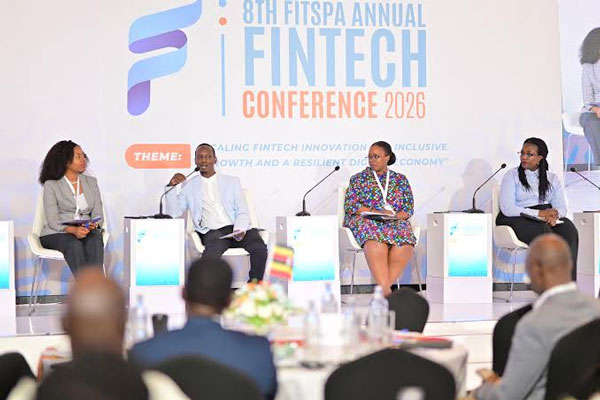
The proposed UGX 8.3 billion FinTech Fund presents an opportunity to address Uganda’s structural financing gap
COMMENT | ELECTINE OYAGA | Uganda’s digital financial economy is expanding, but the businesses powering this growth face a critical constraint: access to capital. While millions of Ugandans are increasingly using digital platforms to transact and access financial services, many of the fintech enterprises developing these solutions remain dependent on personal savings and struggle to secure financing to scale.
This creates a fundamental imbalance in Uganda’s digital transformation. While the demand for innovation is growing, the domestic financing ecosystem is not yet adequately equipped to support the businesses expected to deliver it.
Addressing this imbalance requires more than financing individual enterprises. It needs the country to build a competitive, resilient and locally anchored digital economy. Without appropriate growth capital, promising fintechs risk stalling before reaching commercial scale, limiting their ability to expand services, create jobs, attract further investment and develop solutions tailored to the needs of underserved communities. The country could consequently see digital financial services expand without a corresponding strengthening of the local enterprises that make this progress possible.
The proposed UGX 8.3 billion FinTech Fund, designed by Asigma for the Financial Technology Service Providers Association (FITSPA), with support from the Science, Technology and Innovation (STI) Secretariat, presents an opportunity to address this structural financing gap. Its significance lies not only in the capital it could provide, but also in its potential to connect domestic investment with the growth of Ugandan fintech businesses through financing instruments designed around their commercial realities.
The scale of the opportunity is evident in the growth of digital financial services. Bank of Uganda reported 36.38 million mobile money accounts in March 2026, up from 33.7 million a year earlier. Meanwhile, the 2023 FinScope Uganda Survey by Financial Sector Deepening Uganda (FSDU) found that financial inclusion had increased from 77% in 2018 to 81%. However, formal financial inclusion stood at 68%, while 64% of adults used mobile money services. These figures demonstrate progress, but also highlight the need to improve the accessibility, affordability and relevance of financial services.
Sustaining this progress requires viable fintech businesses capable of developing solutions that respond to market needs. Yet Asigma’s market assessment found that 68% of fintech businesses rely on self-financing, while 48% wait more than 12 months to secure funding. This disconnect between demand for digital financial services and access to growth capital threatens to constrain innovation precisely when the sector has an opportunity to expand.
Discussions at the eighth FITSPA Annual Fintech Conference 2026, held under the theme Scaling Fintech Innovation for Inclusive Growth and a Resilient Digital Economy, emphasized the importance of moving beyond identifying challenges towards developing practical financing solutions. Although the question was how Uganda can mobilise its domestic resources to support fintech enterprises while building a more resilient and inclusive digital economy.
Fintech businesses have different financing requirements depending on their stage of business growth. A payments company may need working capital to manage settlement cycles, while a growing enterprise may require investment in technology infrastructure, regulatory compliance, customer acquisition or market expansion. Conventional lending models may not adequately accommodate businesses with limited operating histories, evolving revenue streams or unfamiliar business models. Consequently, promising innovations can struggle to transition from pilots to commercially sustainable enterprises.
Domestic capital offers an opportunity to bridge this gap. Uganda already has substantial pools of savings that, through appropriate and regulated investment structures, could contribute to productive enterprise financing. The retirement benefits sector held UGX 30.7 trillion in assets during the 2024/25 financial year, equivalent to 13.6% of GDP. By June 2026, collective investment schemes had mobilised more than UGX 7 trillion from over 240,000 funded accounts.
The opportunity, therefore, is not simply to generate more savings, but to establish responsible mechanisms that connect a portion of domestic capital to viable businesses. This must not come at the expense of savers’ security. Institutional investors require clear fiduciary safeguards, appropriate risk management and investment structures that align with their mandates. Banks, insurers, pension funds, domestic investors, government and development partners can each contribute, including through appropriately structured concessional or first-loss capital to attract additional investment.
Asigma’s assessment estimates that between 80 and 100 Ugandan fintechs could become investment-ready within the first three to five years of the proposed fund. Developing this pipeline would create opportunities for domestic investors to participate in the growth of local innovation, complementing international investment and technical partnerships rather than replacing them.
However, mobilising capital alone will not guarantee success. The financing model must be commercially sustainable and responsive to the realities of fintech businesses. The proposed blended-finance approach includes revolving credit lines for working capital, wholesale lending to digital lenders, staged term facilities linked to business milestones, and partial credit guarantees to help eligible enterprises access larger commercial facilities.
Flexible repayment arrangements, including instalments, revenue-linked repayments, bullet repayments and hybrid structures, could further align financing with businesses’ cash flows. The proposed revolving structure aims to recycle capital approximately 5.2 times over ten years. Achieving this ambition will depend on repayment performance, operating costs, losses, timely redeployment of recovered funds and the mobilisation of additional capital.
Affordability must remain central. The proposed lending rate of 17.6% should be assessed alongside facility duration, collateral requirements, grace periods and repayment flexibility. Financing must be affordable enough to support productive growth while adequately covering risk and operating costs. Flexible terms are valuable only when they enable businesses to generate sufficient revenue to meet their obligations.
Equally important is governance. A dedicated company separate from FITSPA, supported by a Fund Board, Investment Committee, independent Risk and Audit Committee, and appointed fund manager, could provide the institutional foundation for accountability. Transparent eligibility criteria, independent credit assessments, conflict-of-interest safeguards, regular financial reporting and external audits will be essential to building investor confidence.
Fintech businesses must also demonstrate investment readiness through sound governance, reliable financial data, regulatory compliance, viable business models and credible growth plans. The proposed phased implementation, beginning with legal and regulatory requirements, capital mobilisation and a pilot involving three to five fintech businesses, provides an opportunity to test the model before expansion. Evidence from the pilot should inform future lending decisions, risk assumptions and operational improvements.
Ultimately, success must be measured by more than the capital raised or disbursed. Relevant indicators include business survival, revenue and employment growth, repayment performance, follow-on investment, market expansion, customer reach and the participation of women- and youth-led enterprises.
Uganda has demonstrated that digital financial services can expand access at scale. The next phase requires an equally deliberate effort to finance the businesses sustaining that progress. If implemented with commercial discipline, transparent governance and a clear focus on measurable outcomes, the FinTech Innovation Fund could help establish a stronger connection between domestic capital and homegrown innovation. The opportunity is not simply to finance more fintechs, but to build a digital economy in which Ugandan businesses have a stronger chance of growing, competing and creating lasting value.
*****
 Electine Oyaga | Lead, PR and Strategic Communication at Kinetic Advisory Limited