The Independent Uganda: You get the Truth we Pay the Price



Manufacturers and policymakers urged cheaper finance, predictable trade policies and reliable local raw materials to help factories compete with imports
NEWS ANALYSIS | THE INDEPENDENT | East Africa has plenty of hides, cotton and oilseeds. What it lacks is the industrial capacity to turn them into shoes, clothes and cooking oil. Instead, the region spends billions of dollars importing goods made from commodities that its farmers and livestock keepers already produce.
The imbalance was laid bare at a two-day meeting organised by the East African Business Council (EABC) and the African Development Bank (AfDB) in Dar es Salaam, Tanzania, last week. Manufacturers and policymakers called for cheaper industrial finance, more predictable trade policies and better supplies of locally produced raw materials to help factories compete with imports.
The figures make uncomfortable reading. East Africa produces about 370,000 tonnes of hides and skins annually, yet imported roughly $566 million worth of footwear, footwear parts and leather goods in 2025. Exports of hides and semi-processed leather amounted to just $46 million.
Textiles tell a similar story. Only 37% of the region’s annual cotton lint production, estimated at 119,000 tonnes, is spun locally. Imports of textiles, clothing and second-hand garments reached $3.24 billion in 2025, more than three times exports of about $970 million.
Edible oils are no better. Imports cost approximately $3.1 billion, against exports of $1.2 billion. Local production meets only 37% of regional consumption.
These are not merely trade deficits. They are evidence of the value that East African economies fail to capture between the farm and the shop shelf. Cotton is grown but too little is spun into yarn; hides are collected, but relatively few become finished leather goods. The processing, manufacturing jobs and profits often accrue elsewhere.
Idle capacity
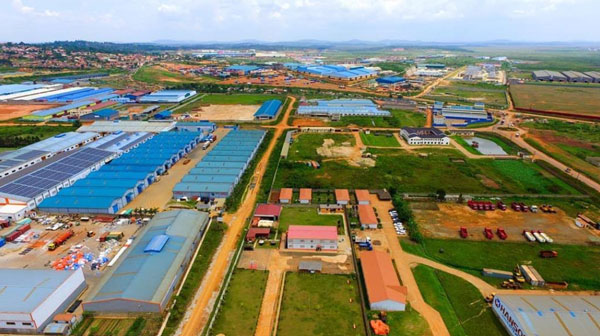
The region’s industrial problem is not just a shortage of factories. Many existing ones are failing to make full use of the machinery they already have.
A study presented by Onesmos Shuma of Excellon Group found that 79% of surveyed firms operated below 75% of production capacity. Two-thirds had delayed investment, while 78% reported technology gaps. Some 76% believed they could source more inputs from within the East African Community (EAC).
Leather and footwear firms were in the worst position: 86% operated below 75% of capacity, and 79% had postponed or cancelled investment. In textiles and apparel, 74% were operating below that threshold and 61% had delayed or cancelled investment. Among edible-oil firms, the corresponding figures were 75% and 59%.
The study identified familiar obstacles: unreliable supplies of industrial raw materials, expensive or unsuitable finance, old machinery, shortages of skills and weak links between suppliers and buyers. High operating costs compound the problem.
Frank Dafa, executive director of the Confederation of Tanzania Industries, argued that agriculture, livestock production and manufacturing needed to be more closely connected. Investment in technology, skills and infrastructure would have to accompany a more consistent application of regional trade rules.
That is easier said than done. A factory cannot operate competitively simply because the raw materials are nearby. It needs reliable supplies at the right price, working capital to pay suppliers, machinery that works and customers able to buy its output. If any link fails, importing a finished product may be cheaper than making it locally.
A common market in name?
Trade policy can make those calculations harder. Research presented by Margaret Chemengich of Charmy Investments found that 25 of 39 temporary tariff exemptions affecting the three industries had been renewed in every budget since the 2022/23 financial year.
Duties on refined sunflower oil also varied considerably, from about 26% in Tanzania to 60% in Uganda. Such differences can influence where goods are processed and which inputs manufacturers choose. They can also distort competition between firms operating in neighbouring countries.
Sylvester Kazi, a member of the EABC-AfDB project steering committee, called for the region’s trade instruments to work as a coherent system. That means reviewing rules of origin affecting edible oils, improving access to industrial inputs and basing tariff exemptions on evidence rather than repeatedly renewing them by default.
There is a wider contradiction here. The EAC’s common market is supposed to make it easier for businesses to trade and invest across borders. Yet differences in national tariff decisions and other requirements can undermine the regional scale that manufacturers need to compete with larger producers elsewhere.


Governments must also be careful about how they protect local industries. High tariffs may shelter a factory from finished imports, but they can raise the cost of machinery and intermediate goods. Protection that makes production more expensive can end up weakening the very manufacturers it is intended to support.
Amedeus Arbogast Mzee of Tanzania’s Ministry of Foreign Affairs and East African Cooperation, the chief guest at the meeting, urged participants to turn their recommendations into practical proposals with clear deadlines, funding requirements and measurable results.
They called for more local production of agricultural raw materials, financing suited to manufacturing cycles, better machinery and skills, stronger links between suppliers and buyers, and shared testing and environmental facilities. Progress, they said, should be judged by investment, factory utilisation, regional sourcing and trade performance.
The logic of regional production is straightforward. One country need not grow the cotton, spin the yarn, weave the fabric and make the clothes. Different stages can take place where they are most competitive, provided that goods and inputs move across borders without unnecessary cost or uncertainty.
But that requires governments to treat industrial development as a shared enterprise rather than a collection of national projects. It also requires manufacturers to invest in productivity instead of relying on tariff protection.
East Africa does not need to manufacture everything it imports. It does need to explain why a region that produces so many of the ingredients still buys so much of the finished meal from abroad.