The Independent Uganda: You get the Truth we Pay the Price


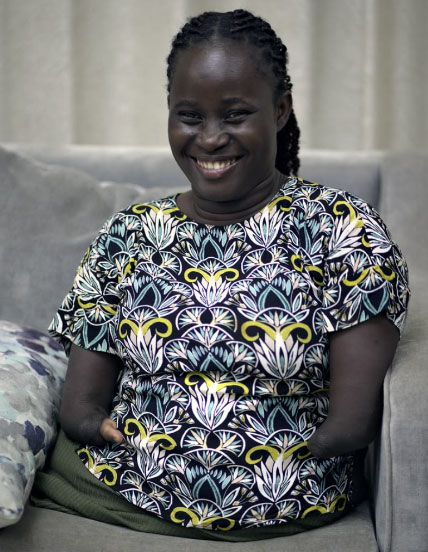
Kampala, Uganda | FEATURE | When Fatuma Nabuulime’s name was announced during the 76th graduation ceremony at Makerere University’s Freedom Square, the applause went beyond the usual celebration of academic achievement. For those familiar with the realities of disability, rural poverty and institutional gaps in East Africa, her walk across the graduation platform represented a remarkable break from the barriers that had shaped her life. Widely known online as “Wonder Gal,” Nabuulime graduated with a Bachelor of Social Work and Social Administration. Her achievement, however, is significant not simply because of the degree, but because of the socio-economic structures she spent more than two decades navigating and overcoming.
Her graduation stood in sharp contrast to her early life. Born without upper and lower limbs in Kisekka Village, Lwengo District, Nabuulime grew up at the intersection of disability, poverty and social exclusion. In rural Uganda, congenital disabilities are often accompanied by stigma, superstition and perceptions of economic hardship. Lwengo’s dependence on subsistence agriculture, limited economic opportunities, inadequate healthcare and weak social protection further intensified her vulnerability.
Rural healthcare infrastructure offered little specialized support, including limited access to medical professionals, rehabilitation and early intervention for children with disabilities. For a farming family already struggling economically, caring for a child requiring specialized assistance could become overwhelming. When Nabuulime’s father abandoned the household, the burden fell entirely on her mother. Without disability allowances, accessible therapy, mobility aids or inclusive early education, the family was left in extreme poverty and Nabuulime spent her early years largely isolated.
This institutional vacuum created the conditions for her exploitation.
The Urban Extraction Economy
At five years old, extended relatives took Nabuulime to Kampala, promising medical care, rehabilitation and education. Instead, she was introduced into the city’s informal street economy and became a victim of forced begging.
Her visible physical disability made her valuable to those operating begging networks. She was placed in busy areas of Kampala where commuters and pedestrians could easily see her vulnerability and respond with donations. For years, she was exposed to intense heat, rain, vehicle exhaust and constant public scrutiny while her handlers controlled the money collected.
The funds generated from her presence were not directed toward her welfare, education or healthcare. They were reportedly appropriated by those controlling her, demonstrating both the predatory nature of organized exploitation and weaknesses in the enforcement of child protection and anti-trafficking systems. Her experience showed how disability could be turned into an economic commodity within an unregulated urban economy.
Entering Formal Education
Nabuulime was eventually rescued from this cycle not through state intervention, but through the efforts of civil society. Representatives of US2UG4LYF identified her on Kampala’s streets and helped remove her from the trafficking environment, providing support for her entry into formal education.
School, however, presented another set of barriers. Uganda’s educational infrastructure is largely designed around able-bodied students. Classrooms, multi-storey buildings and sanitation facilities often lack accessibility features, while teaching and examination systems frequently assume that students can write normally and complete tasks within standardized conditions.
Without feet, Nabuulime developed alternative ways of functioning. She taught herself to write using her mouth and little hands and completed assignments and examinations alongside other students. This required extraordinary physical endurance and adaptability. She also faced stigma, isolation and limited institutional understanding, often depending on the goodwill of classmates for assistance with mobility and daily activities.
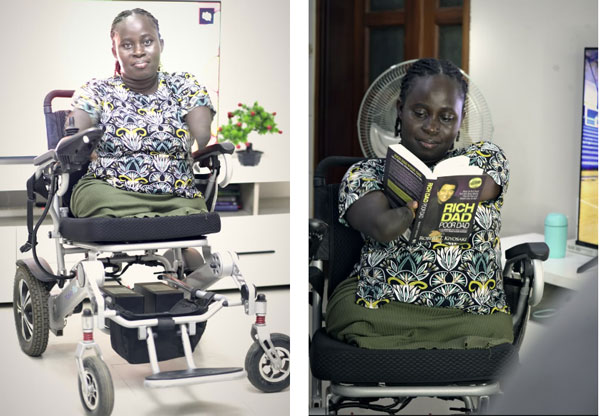
Despite these obstacles, she maintained a strong academic record and eventually gained admission to Makerere University through a government disability scholarship.
From “Wonder Gal” to Digital Autonomy
Her university years coincided with her emergence as “Wonder Gal” on digital platforms. Rather than relying on conventional disability narratives centred on pity and charity, Nabuulime used social media to demonstrate what she could actually do.
Through platforms such as TikTok, she documented everyday activities including cooking, household tasks and peeling matooke. These ordinary activities became powerful demonstrations of independence and capability.
Her approach transformed the public perception of disability. Instead of being seen primarily as a recipient of charity, she became an active creator and independent personality. Her audience grew to more than 810,000 followers, turning her digital presence into a significant platform for advocacy and social influence.
In doing so, she effectively reclaimed the public gaze that had once been used to exploit her. The same society that had previously responded to her physical condition through pity could now engage with her through admiration, respect and recognition of her creativity and autonomy.
Turning Visibility into Social Action
Nabuulime’s influence did not remain online. Drawing from her studies in Social Work and Social Administration, she began using her digital platform to mobilize resources for vulnerable communities, particularly within Kampala’s informal settlements.
She organized food distributions, medical assistance and sanitation support, with particular attention to families caring for children with severe developmental and physical disabilities. Her work demonstrated how digital platforms can become practical tools for grassroots social intervention.
Her presence at Makerere also highlighted the university’s own accessibility challenges. Historic buildings, multi-level lecture halls, long distances between faculties and limited accessibility features can create significant obstacles for students with disabilities. Her graduation therefore represented more than individual success. It exposed the fact that physical disability itself is not necessarily the greatest barrier; often, it is an institutional environment that fails to adapt.
Beyond Inspiration
Nabuulime’s graduation comes at an important moment in Uganda’s discussion about disability, social welfare and inclusion. Persons with disabilities continue to experience exclusion from employment, higher levels of poverty and difficulties accessing justice and social services.
With a professional degree in Social Work and Social Administration, Nabuulime is now positioned within the very institutional framework responsible for addressing many of these challenges. Her experience gives her both personal knowledge and academic training that could enable her to contribute to broader policy and social welfare reform.
Her story is therefore more than an inspirational account of an individual overcoming adversity. It exposes the vulnerability created when disability intersects with poverty, weak social protection and inadequate enforcement. It also demonstrates the value of civil society intervention and the power of digital media to reshape perceptions of human capability.
Fatuma Nabuulime’s journey ultimately presents a powerful challenge to society and policymakers. Her achievement should not be celebrated merely as an extraordinary exception. The greater objective should be to dismantle the structural barriers that made her journey so difficult, so that education, dignity, opportunity and independence become ordinary expectations for people with disabilities rather than rare achievements.
Human potential is universal; what remains unequal is the opportunity to realize it.