The Independent Uganda: You get the Truth we Pay the Price


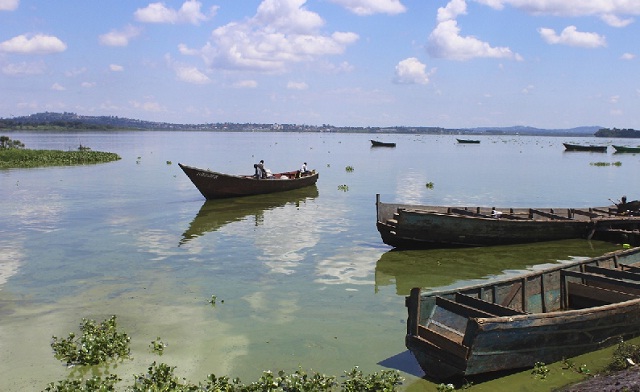
Smarter farming can protect a fishery whose export earnings reached US$216.4m last year
COMMENT | CHRISTOPHER BURKE | The ecological integrity of Lake Victoria is compromised by terrestrial nutrient inflows driving eutrophication and harmful algal growth. As of 2026, algal blooms around Lake Victoria have been linked by Uganda’s Ministry of Water and Environment (MWE) to pollution, rising nutrients, wetland degradation and hot, dry conditions. These pressures threaten a freshwater system that supports 40 million people across the basin and underpins one of the world’s largest inland fisheries.
The impact on food security is serious. Nutrient enrichment contributes to algal blooms, oxygen depletion and fish kills, while longer-term eutrophication has been linked to major ecological change in the lake, explains Patrick Nyakoojo, a Fisheries Specialist with the Government of Uganda.
Native cichlid populations have faced severe decline, while Nile perch and tilapia fisheries remain exposed to water-quality deterioration and instability. Lake Victoria’s fisheries remain vital. The Lake Victoria Fisheries Organization estimates fish production at about 1 million tonnes, valued at US$840 million and generating US$300 million in foreign exchange earnings, while Uganda’s Ministry of Agriculture, Animal Industry and Fisheries (MAAIF) reports Uganda’s fish export value rose from US$155.20 million in Fiscal Year 2023/24 to US$216.42 million in Fiscal Year 2024/25.
A critical strategic window still exists. Agricultural intensification across much of the Lake Victoria Basin has not reached high-input saturation levels seen elsewhere. Governments, agribusinesses, farmer organisations and development partners can codify sustainable technical norms. The basin can avoid “chemical lock-in” by building soil testing, nutrient-use efficiency and runoff control into agricultural expansion.
The challenge lies in land-use mismanagement and lake degradation. With high-volume fertilizer use not yet deeply entrenched, the basin still has an opportunity to institutionalise Precision Nutrient Management before inefficient practices become widespread. This requires adopting the “4R” framework focused on the right source of nutrients, at the right rate, at the right time and in the right place, suggests Shadiah Walusimba, head agronomist at AgriBloom Fertilizers in Kampala.
Micro-dosing is relevant for low-input smallholder systems because it allows farmers to apply small quantities of fertilizer, improving nutrient-use efficiency while reducing waste. IFDC notes that micro-dosing can reduce losses through leaching and runoff, while ICRISAT-linked research has reported yield gains of 50–100 percent. Implementing this requires low-cost soil testing through cooperatives, agro-dealers and extension services so fertilizer is treated as a precision input rather than a bulk commodity.
There is growing need to align regional agriculture with global environmental, social and governance (ESG) and nature-related reporting standards. For large-scale tea, sugar, coffee and flower estates within the catchment, stronger reporting on water use, effluent management, biodiversity impacts and nature-related risk is becoming relevant to market access, finance and reputation. Global Reporting Initiative (GRI) and Taskforce on Nature-related Financial Disclosures (TNFD) standards can help disclose water use, biodiversity impacts.
The physical landscape must be managed as a barrier against nutrient transport. The protection and restoration of riparian buffer zones remains one of the most important nature-based solutions available, according to Mable Namubiru, an Environmental Assessment Officer at the National Environment Management Authority (NEMA). Vegetated buffer strips, wetlands and papyrus systems can reduce sediment and nutrient flows before they reach rivers and lake margins. This matters because Lake Victoria’s water quality is affected by pollutants from settlements, industry and agriculture, while unsustainable farming contributes to sedimentation and eutrophication.
Policies should move beyond general recommendation toward clearer enforcement of no-plough and no-build zones along major tributaries, including the Kagera and Nzoia rivers. These buffers function as the basin’s biological kidneys, and their preservation is more cost-effective than attempting to reverse ecological collapse after nutrient loading becomes entrenched.
A stronger regional regulatory framework is essential to harmonise trans-boundary agricultural standards. Lake Victoria is a shared resource, so unilateral conservation efforts are insufficient. The Lake Victoria Basin Commission (LVBC) is mandated to coordinate sustainable development and management across EAC Partner States. A practical next step could be “Lake-Friendly” certification standards that reward farmers and estates for erosion control, nutrient-use efficiency, wetland protection and runoff prevention. These rules could be integrated into subsidy and extension programmes, shifting incentives from input volume toward ecosystem services maintained.
Addressing the nutrient load requires a broader circular economy approach that reduces runoff at source while recovering organic matter for productive use on land. The priority should be better management of crop residues, livestock manure, agro-processing waste, market waste and other organic materials that can be converted into compost, bio-fertilizer and soil conditioners.
A waste-to-value approach can help reduce pressure on imported synthetic fertilizers while improving soil organic matter, nutrient cycling and farm resilience. It will not solve Lake Victoria’s nutrient crisis alone, but it can link cleaner catchments, better soils and local enterprise if supported by soil testing, compost quality controls and farmer extension. The basin’s low-input status is a strategic asset. It should be utilized to establish responsible fertilizer use, organic nutrient recovery and runoff prevention before chemical dependency becomes harder to reverse.
Christopher Burke is a senior advisor at WMC Africa, a communications and advisory agency located in Kampala, Uganda.
****

Christopher Burke is a senior advisor at WMC Africa, a communications and advisory agency located in Kampala, Uganda.