The Independent Uganda: You get the Truth we Pay the Price


Kampala, Uganda | URN | Nearly two decades before the latest controversy over the appointment of dual citizens to ministerial positions, Parliament was already wrestling with many of the same questions.
Can a person owe allegiance to two countries? Should dual citizens serve in sensitive government positions? Does citizenship strengthen a country’s ties to its diaspora, or does it create divided loyalties? Those questions dominated a lengthy parliamentary debate in 2009 as Parliament considered the Uganda Citizenship and Immigration Control (Amendment) Bill.
The arguments that emerged then have not changed. For some MPS, dual citizenship was a matter of national security.
The parliamentary chamber was almost empty on the afternoon of 14th May 2009. As Speaker Edward Kiwanuka Ssekandi settled into the chair, the majority of the ruling National Resistance Movement MPS were nowhere to be seen. They were meeting elsewhere in a caucus session, discussing a bill that would soon come before Parliament.
Former Chua County MP Livingston Okello Okello raised the matter. “I understand there is a caucus of the NRM going on, and yet we have the plenary of Parliament. To me, Parliament has now been subordinated, and the caucus is the main one. We can all caucus, but when there is a Parliament sitting, any caucus should stop their meeting and come to the plenary. This is not good,” said Okello Okello.
The Speaker agreed with Okello Okello. He ordered the late former Kakuuto MP, Mathias Kasamba, to proceed with presenting a report from the Committee of Defence and Internal Affairs, which he chaired.
In justifying the bill, Kasamba said, “Many of our people in the diaspora have lost citizenship due to a lack of an enabling law providing for dual citizenship. This bill intends to give such people an opportunity to regain Ugandan citizenship.”
He added that the legislation was to give citizenship to non-Ugandan nationals who are making an enormous contribution to our nation and wish to attain Ugandan citizenship.
From the cabinet side, Ali Kirunda Kivejinja, the then Third Deputy Prime Minister and Minister of Internal Affairs, had moved that the bill be read for the second time.
Okello Okello makes passionate plea
The first to catch the speaker’s eye was Livingstone Okello-Okello, then MP for Chua County. He said he was struggling to see what Uganda stood to gain.
“What benefits shall we, as a country, get by having citizens who belong to two countries?” he asked.
He noted that attracting investments did not require citizenship, arguing that foreigners were already investing in Uganda without becoming citizens.
He then raised the question about the loyalty of the person who would have been granted double citizenship. What would happen, he asked, if two countries to which a person owed allegiance went to war?
“I wonder what would happen if I belonged to two countries and the two countries went to war. Which one will I support? It is even worse if the two countries have a law of conscripting me to fight. If both of them have conscripted me to go and fight for my nation, where do I go? Do I go with the first one to grab me?” he asked.
Okello-Okello then stated that he suspected a sinister motive. “To me, it looks as if this law is being made because it was demanded by people who are living outside Uganda and not by us; it is not in our interest. If they are Ugandans, why do you make a law for them? Let them denounce whatever they have and come back and belong here. Why should you, someone who is already a citizen of another country, cry to become a Ugandan citizen?”
From the Benjamin Odoki Commission report, Ugandans had opposed the idea of dual citizenship.
The report said, “The issue of dual citizenship was dealt with under Article 12. It provided for loss of Ugandan citizenship by any person holding citizenship of another country as soon as they became 21 years of age, unless they renounced that other citizenship within a prescribed time.”
“To remain a Ugandan citizen, such a person was also required to take the Oath of Allegiance, and in cases of persons as citizens under Article. 7(2) had to make a declaration of intention, willingness, and capacity to reside in Uganda.”
Back in parliament, MPs all of a sudden filled the front and back benches of the ruling NRM. The House would then plunge into a debate that exposed deep anxieties about loyalty, citizenship, national identity, and belonging.
Charles Ekemu, the MP for Soroti Municipality, argued that citizenship by its very nature demanded loyalty to a nation. He warned that granting dual citizenship inevitably created divided allegiance.
Louis Opange of Pallisa said he was worried about criminals exploiting dual nationality to evade justice by crossing borders and seeking protection in another country where they also held citizenship.
Museveni nominees not sworn in
When President Museveni recently nominated his new cabinet, some of the nominees were said to be holding dual citizenship.
The concerns raised in May 2009 have resurfaced after the Appointments Committee declined to approve the nomination of Dr Lawrence Muganga for appointment as state minister for internal affairs. Three other ministers were approved but were also not sworn in for the same reasons.
There was divided opinion in Parliament in 2009. One group backed the argument raised by Okello-Okello and Chares Ekemu. Another group of MPs saw the matter very differently.
Beatrice Anywar, the then woman MP for Kitgum, debated with a lens based on many people in Northern Uganda who were living abroad, having been uprooted by the LRA war.
Northern Uganda was emerging from decades of conflict. Thousands of Ugandans had fled abroad, building lives in Europe, North America, and elsewhere.
“They are our sons and daughters,” Anywar told Parliament.
She argued that Ugandans who had left because of war or instability should not be treated as outsiders. She suggested that rather than creating obstacles, Parliament should allow them to reconnect with their homeland without conditions.
Then Erute North MP Charles Angiro bitterly opposed the proposal that non-Ugandan nationals who were making enormous contributions to Uganda be granted dual citizenship.
“What is going to happen after these contributions fade out? Will they still be considered citizens? What will happen if one million Chinese decide to come and make this enormous contribution to Uganda? Are we going to consider them to get dual citizenship?” he asked.
Henry Banyenzaki (Rubanda county) and William Nsubuga (Buvuma MP) agreed with Anywar, who said many Ugandans had lost their citizenship not because they had abandoned Uganda but because circumstances forced them to seek opportunities elsewhere.
For them, dual citizenship was not about divided loyalty. It was about restoring a bond that had never truly been broken.
Uganda has changed
Professor Tarsis Kabwegyere told Parliament there had once been a time when he did not even want to identify himself as Ugandan. “But Uganda had changed,” he said.
The growing demand for dual citizenship, he argued, reflected renewed confidence in the country.
“Dual citizenship is the only instrument of reconnecting with their motherland,” he said. He pointed to the growing remittances flowing from Ugandans abroad and argued that many simply wanted a legal pathway back home.
The former Soroti woman Mp Alaso perhaps raised a more direct question related to the ongoing debate, though she did reject dual citizenship outright. Instead, she wondered whether Parliament was creating contradictions.
“If we now exclude certain offices, wouldn’t we be moving to amend the Constitution to exclude them from the duties of a citizen?” she asked.
She was guided by the speaker that “it is the Constitution itself which has the provision that created dual citizenship and envisaged that we shall make a law that may make certain prohibitions. It is the Constitution itself.”
Alaso, then challenged provisions that would allow citizenship to be granted to foreigners making “enormous contributions” to Uganda.
“Who would decide what qualified as an enormous contribution? The reason people have been keen to relinquish Ugandan citizenship is that the other country offers you an opportunity to have a dignified life, to have a job, to educate your children,” she said.
Cecilia Ogwal, who had opposed dual citizenship during the Constituent Assembly debates of the 1990s, admitted that her thinking had evolved.
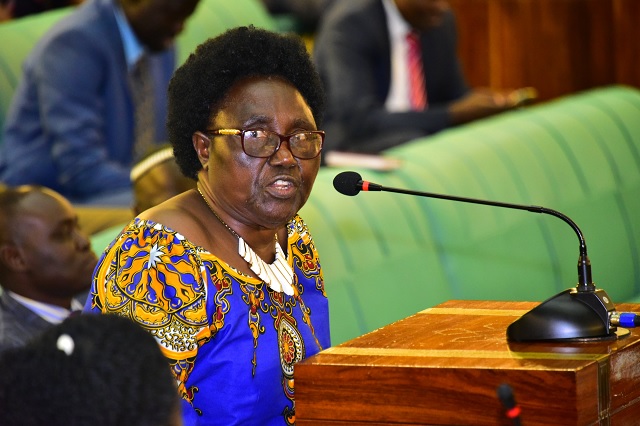
At the time, many feared foreigners would acquire land or gain undue influence. She argued that Uganda could not isolate itself from global realities.”The world is now going global,” she said.
“The issue of dual citizenship will not engage us as much as it did in the Constituent Assembly. Mr Speaker, you had the benefit of being in the Constituent Assembly to debate this matter. We were very distressed at that time because we felt that we would be invaded by the neighbouring countries, either to grab our land or whatever,” she said.
However, Ogwal, then an Independent MP representing Dokolo, cautioned Ugandans not to open the floodgates for any Tom, Dick, and Harry to invade the country.
“I know that we are guided by what has happened in America. Many of us would wonder, If the law of America barred Obama from being President, what would be happening in America today?”
Speaker Edward Kiwanuka Ssekandi inturrupted her. “If we are making the law, we should also be conscious of the constitutional provisions. The Constitution says all Ugandans are equal before the law. Once we have accepted somebody to be a Ugandan, that person must be treated in the same way that all Ugandans are being treated and must hold any office or calling in Uganda.”
“But, honourable, even in the United States you referred to, some American citizens cannot stand as president simply because of the place of birth.” said Ssekandi.
Sanjay Tanna
Another striking contribution was by Sanjay Tana, who has just reclaimed his Tororo Municipality seat in this parliament.
President Museveni nominated him for the post of state minister for industry this time round. Some had suspected that Tana held dual citizenship and, therefore, expected that the appointment committee would not approve his appointment.
While debating the bill in 2009, Sanjay Tanna said the bill would help address injustices experienced by some Ugandans of Asian origin who had lost citizenship during the 1972 expulsion.
Yet even Tanna, a supporter of dual citizenship then, argued that holders of dual nationality should face restrictions when it came to certain high offices.
“I strongly support the inclusion of the fifth schedule and disagree with my colleagues who said that somebody with dual citizenship could hold a high office. Their loyalties would not be there. Like you rightly said, even America does not accept it, so why would we be the first to accept somebody who holds dual citizenship to hold those offices?”
He even suggested that Members of Parliament also be included on that list to be excluded if they held dual citizenship.
“It says that ministers cannot be dual citizens, and yet the pool of ministers is mainly from Parliament. So I would like to add to the list the Members of Parliament, the Chief Justice of Uganda,” before he was interrupted by the Speaker, “What is the problem with the Chief Justice being an American or an Indian? You mean you cannot have a Chief Justice from Jamaica?” asked Ssekandi
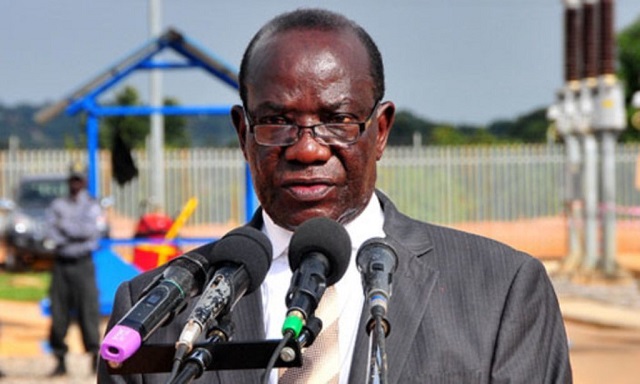
“Mr Speaker, when I hold dual citizenship, my loyalty is automatically divided,” answered Tana.
He then suggested that should the appointing authority appoint a dual citizen, or should a dual citizen want to stand as a Member of Parliament, he should renounce his second citizenship.”
The debate repeatedly returned to one unresolved question: can a person be fully Ugandan while also being fully committed to another country?
Parliament eventually passed the law, creating the framework that exists today. But as the country once again debates whether dual citizens should occupy senior government positions, the Hansard reveals that today’s arguments are not new.
As the debate rages, many have asked Dr Lawrence Muganga, one of the nominees who feels aggrieved, to go by what the law says.
For example, former Minister and Rubabo Cunty MP, Professor Mondo Kagonyera, was still a member of parliament when the contentious law was passed to allow some people to have dual citizenship.
“It was very deliberate, in my opinion, when we excluded certain jobs or responsibilities in this country. We excluded them from people who held nationalities other than Ugandan ones. I can argue that you don’t have to be a Canadian in order to do wrong things in this country. You can even hold just one citizenship, Ugandan, and you still mess around. But I think the people who wrote that law were very deliberate to make sure that you really don’t have dual royalty,” he said.
“For example, if you hold a very responsible position in this country, as a citizen of Uganda, but you are a citizen of a country X, and that country X has something of interest in your country that is not necessarily positive, on which side are you? Therefore, in my opinion, when you are called upon to hold a very high position, definitely, as far as I’m concerned, I have people in my family who have dual citizenship. But I think it is very important that the higher you go in responsibility in this country, the more it should be demanded of you to be Ugandan and hold no other citizenship.
The concerns about loyalty, national identity, public office, investment, and belonging were all voiced before the law was enacted. What has changed is not the questions. It is the political context in which those questions are being asked.