The Independent Uganda: You get the Truth we Pay the Price


A new investigation reveals that Facebook, Instagram and Meta’s other social media platforms have evolved into the world’s largest online marketplace for illegal wildlife trade, with recommendation algorithms, engagement tools and monetization systems helping traffickers reach millions of potential buyers while endangered species pay the ultimate price, reports Ronald Musoke
There was a time when Meta’s social media platform, Facebook, existed to reconnect old classmates, share family photographs and keep up with friends. Today, according to a sweeping new investigation by an international coalition of conservation organisations, the world’s largest social media company has evolved into the largest known marketplace for the illegal trade in endangered wildlife.
The accusation is as serious as it is disturbing. Researchers who have spent years tracking wildlife trafficking across Facebook, Instagram, WhatsApp and Messenger say Meta’s platforms are no longer merely being exploited by criminals. The researchers argue the company’s own recommendation algorithms, engagement-driven business model and monetization programmes have helped transform isolated wildlife traffickers into participants in a sprawling global marketplace that stretches across continents and reaches billions of users.
The report, “Clicks That Kill: Meta’s Algorithm of Extinction,” published on June 29 by Freeland, Education for Nature Vietnam, International Wildlife Trust, Liberia Chimpanzee Rescue & Protection, and PEGAS (Project to End Great Ape Slavery), paints an alarming picture of a digital ecosystem where some of the world’s rarest animals are openly advertised for sale, while the technology designed to maximize user engagement guides buyers from one trafficker to another.
The researchers note that what was once a platform for social interaction has become infrastructure for organised environmental crime. If their findings are correct, the implications extend far beyond Meta. They point to a future in which the same artificial intelligence that keeps users scrolling, recommends new friends and personalizes advertisements is also helping to accelerate the destruction of wildlife populations already hanging on the edge of extinction.
A marketplace hiding in plain sight
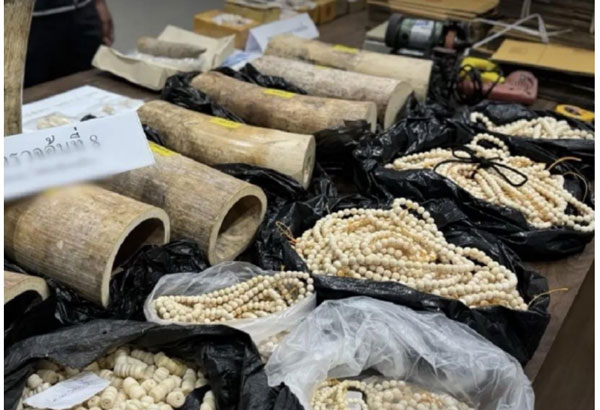
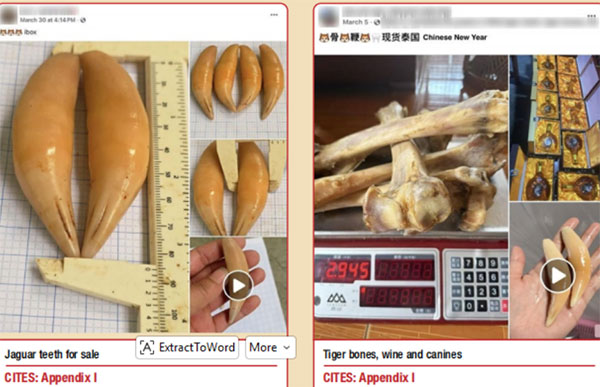
The report documents hundreds of Facebook and Instagram accounts advertising everything from tiger cubs and orangutans to chimpanzees, gorillas, pangolins, elephants, rhinos and countless other protected species. Many of the animals are alive. Others have already been reduced to commodities that include; ivory tusks, skins, bones, meat, claws, horns and internal organs destined for collectors, traditional medicine markets or luxury consumers.
The investigators stress that these examples represent only a fraction of what they encountered during years of research. Their evidence archive consists of screenshots, URLs, user profiles and documented interactions collected over several years. While only a selection appears in the report itself, the authors argue the material reveals an entrenched and rapidly expanding trade operating across Meta’s family of platforms.
Supporting their conclusions is a parallel investigation by the ECO-SOLVE project of the Global Initiative Against Transnational Organized Crime, which detected 21,904 wildlife trafficking advertisements on Facebook alone between April 2024 and March 2026. Those posts advertised 266,535 wildlife products, making Facebook by far the dominant online platform identified in the study.
Numbers of that magnitude challenge the notion that wildlife trafficking survives merely in hidden corners of the internet. Instead, the report argues, Facebook has become the principal public-facing infrastructure through which illegal wildlife commerce is concentrated, discovered and conducted.
More than hosting content
For years, technology companies have defended themselves by arguing that they simply provide platforms where users communicate. Illegal content, they say, is created by individuals, not by the companies that host it. However, the coalition behind Clicks That Kill argues that that explanation no longer fits reality. The report’s central allegation is not that Meta passively hosts wildlife trafficking; it is that Meta’s own systems actively amplify it.
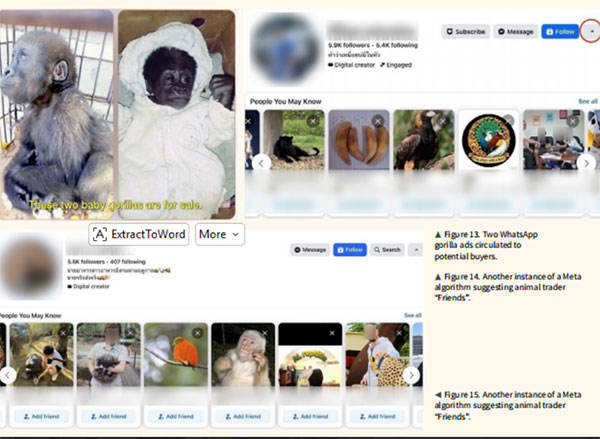
Researchers documented instances in which someone browsing an elephant ivory trafficker’s Facebook page was automatically introduced to additional accounts selling elephant tusks. Wildlife traders were recommended through Facebook’s “People You May Know” feature, while algorithms suggested similar wildlife-related profiles to users already engaging with such content. In effect, investigators argue, Meta’s recommendation systems were performing the work of connecting buyers with sellers.
For conservationists who have spent decades fighting organised wildlife crime, that changes everything. “Meta’s platforms have become a one-stop shop for wildlife criminals,” said Steven Galster, the founder of Freeland. “The algorithms don’t just allow this trade, they fuel it. Meta can and must halt this illegal business now and be held accountable. Meta must now help reverse the damage from this illegal trade.”
The significance of that finding lies in how modern social media functions. Facebook and Instagram no longer rely on users simply finding one another. Sophisticated recommendation systems constantly analyse behaviour, predicting what people might want to see next and directing them towards new content, groups and accounts likely to maximize engagement. Those same systems, the report argues, appear capable of recognising wildlife-related content, but instead of suppressing illegal trading activity, they often recommend more of it. The result, the researchers contend, is an ever-expanding web of traffickers whose businesses benefit not despite Meta’s technology, but because of it.
An illegal trade measured in extinction
The wildlife appearing on Meta’s platforms is not limited to common or captive-bred species. Many belong to populations already under immense pressure from habitat destruction, climate change and decades of poaching.
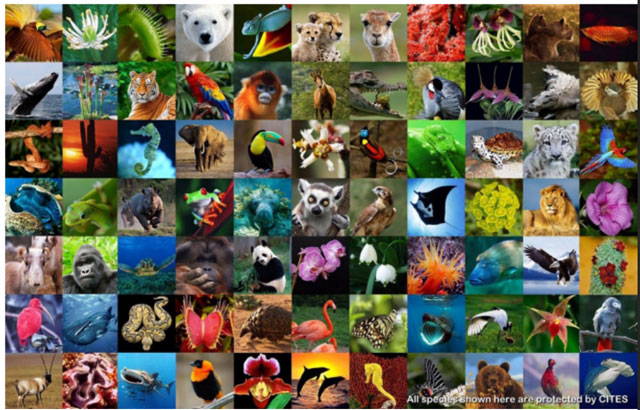
The report identifies tigers from Southeast Asia, orangutans, chimpanzees, gorillas, bears, jaguars and elephants among the species routinely advertised, alongside their body parts and derivatives. Many are protected under the Convention on International Trade in Endangered Species of Wild Fauna and Flora (CITES), the international treaty governing cross-border trade in threatened wildlife.
Under CITES, international trade in many of these species is either prohibited outright or permitted only under tightly controlled circumstances requiring official permits from exporting and importing countries.
The report argues that very few of the wildlife traders operating on Meta’s platforms possess those permits. Once protected animals or their body parts cross international borders without the required documentation, the transactions become acts of wildlife trafficking rather than legitimate commerce.
Yet despite international protections covering more than 40,000 animal and plant species, the researchers say countless posts, pages and groups across Meta’s platforms continue to advertise CITES-listed wildlife for sale. The consequence is measured not simply in seized ivory or confiscated tiger skins, but each online listing may represent another animal removed from the wild, another breeding population weakened, or another species pushed closer towards extinction.
From social network to global wildlife bazaar
If wildlife traffickers have flourished on Meta’s platforms, it has not happened overnight. The report traces the problem to many years back, describing an online ecosystem that has steadily evolved alongside Facebook itself. As the social media giant expanded from a university networking site into one of the world’s most powerful digital corporations, wildlife traffickers adapted with it, learning to exploit every new feature designed to connect people, build audiences and keep users engaged.
Facebook was launched in 2004 as a platform for Harvard students before opening to the general public in 2006. It rapidly became the world’s dominant social networking site, driven by a business model centred on advertising revenue generated through user engagement. The more people interacted with content, the more valuable the platform became to advertisers. That formula transformed Facebook into one of the richest companies in history, a dominance strengthened by its acquisitions of Instagram in 2012 and WhatsApp in 2014 before the company rebranded as Meta in 2021.
What began as a digital town square gradually evolved into something much larger; a global marketplace where virtually anything could be bought, sold or promoted. That transformation, conservationists argue, created fertile ground for wildlife traffickers.
Unlike traditional black markets, which require physical networks of brokers, transporters and buyers, social media offers immediate access to potentially millions of customers across continents at almost no cost. The barriers that once limited traffickers to local markets disappeared almost overnight. According to the report, traffickers increasingly realised that Meta offered something previous generations of wildlife criminals could scarcely imagine: instant access to global audiences, encrypted communication channels, sophisticated recommendation systems and business tools capable of expanding their reach far beyond national borders.
An underground economy learns to adapt
The report describes an arms race between wildlife traffickers and platform moderation. In Facebook’s earlier years, wildlife dealers often advertised with remarkable openness. Listings plainly stated that an animal or wildlife product was “for sale,” sometimes accompanied by prices and negotiations in public comment sections. Buyers would bargain openly before moving conversations into private messaging services such as Facebook Messenger or WhatsApp to complete transactions.
As scrutiny of wildlife trafficking increased, so too did the sophistication of the criminals. When Meta tightened enforcement after joining the Coalition to End Wildlife Trafficking Online in 2018, traffickers did not disappear. They evolved.
Instead of openly advertising prices, sellers began posting photographs of exotic animals with deliberately vague captions, or none at all. Prospective buyers understood the code. They would simply ask, “For sale?” in the comments, prompting the seller to respond with a brief invitation: “DM me,” or “PM me.” Negotiations then continued beyond public view.
In parts of Asia, investigators found traffickers adopting coded language for both species and prices, enabling them to advertise wildlife while reducing the likelihood of detection by automated moderation systems. Elsewhere, particularly in parts of the Middle East, researchers observed another tactic; photographs of wild animals posted without any explicit indication of trade. Within established networks of followers, the meaning required no explanation. The image itself functioned as an advertisement. The report argues that while traffickers continuously refined their methods, Meta’s enforcement mechanisms failed to keep pace.
The illusion of enforcement
Meta’s published Community Standards prohibit the sale of wildlife under most circumstances, and the company has repeatedly stated that illegal wildlife trafficking is not permitted on its platforms. The report acknowledges that these policies exist. The problem, investigators argue, lies in their implementation.
The researchers documented accounts receiving warnings for violating Meta’s rules, only to continue posting similar content with little apparent consequence. In other cases, accounts were temporarily suspended for around 30 days before resuming business. Even permanent account removals often had limited impact because users simply created new accounts and returned within a day. For organised wildlife traffickers, the report suggests, suspension became less of a deterrent than a temporary inconvenience. The coalition also raises concerns that Meta has weakened its own enforcement capacity.
According to the report, the company steadily reduced personnel dedicated to addressing wildlife trafficking and, more broadly, announced significant changes to content moderation. Independent fact-checking programmes were discontinued in early 2025, while Meta later announced plans to phase out many human moderators in favour of artificial intelligence systems. To the organisations behind the investigation, those decisions created a widening gap between corporate policy and practical enforcement.
Douglas Hendrie of Education for Nature Vietnam said that gap has become increasingly difficult to ignore. “We’ve been reporting wildlife trafficking on Meta for years,” he said. “The response has been token at best and non-existent at worst. This report is our case to the public, to lawmakers, and to Meta’s own shareholders: enough.”
The “zoo” loophole
One of the report’s more troubling findings concerns what investigators describe as the growing use of legitimate-looking wildlife facilities to disguise illegal trade. Researchers say some commercial wildlife parks and private zoos advertise themselves as breeding endangered species in captivity. On paper, captive breeding can, under limited circumstances, be compatible with international regulations.
But investigators note that some traffickers exploit this appearance of legitimacy by presenting wild-caught animals as captive-bred specimens destined for other zoological institutions. The advertisements often claim that animals will be supplied only to licensed zoos or conservation facilities.
According to the report, however, these claims may serve as little more than a cover story for laundering illegally acquired wildlife into commercial markets. Whether involving tigers, lions, cheetahs or great apes, researchers argue that such practices blur the line between legal commerce and organised trafficking, making enforcement substantially more difficult.
The business of keeping users engaged
Underlying every aspect of the investigation is a question that extends well beyond wildlife crime. Why, researchers ask, has a company with some of the world’s most sophisticated artificial intelligence capabilities apparently struggled to prevent endangered animals from being openly traded on its own platforms? The coalition’s answer lies in what it calls Meta’s “click economy.”
Meta’s business depends on attention. Every photograph viewed, comment posted, video watched and profile followed contributes to the engagement metrics that drive advertising revenue. Over time, the company has introduced increasingly sophisticated tools to encourage users to produce more content and spend more time on its platforms.
In 2017, Facebook introduced programmes that rewarded creators based on the popularity of their content. Instagram developed similar monetization opportunities, while Facebook later consolidated advertising incentives through its Content Monetization programme, combining revenue streams from in-stream advertising, Reels and performance bonuses. The objective was straightforward: to encourage creators to publish more content capable of attracting more viewers.
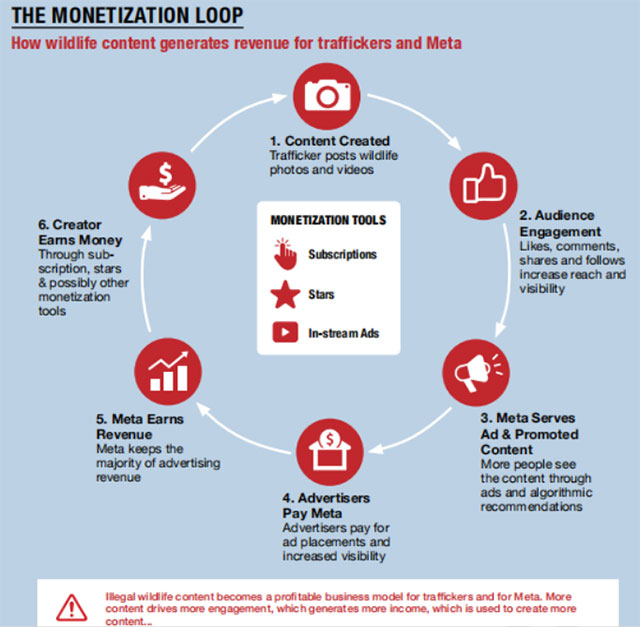
The coalition does not claim to have definitive proof that Meta knowingly pays wildlife traffickers. It does, however, present what it describes as circumstantial evidence suggesting that some wildlife accounts may participate in Meta’s monetization programmes based on characteristics such as exceptionally large followings, high engagement levels and creator-style appeals encouraging audience interaction.
If that is happening, the report argues, the implications are profound. Rather than merely hosting wildlife trafficking, Meta’s business model could be creating financial incentives that encourage traffickers to post more frequently, reach larger audiences and generate ever greater engagement.
Jennifer Desmond of Liberia Chimpanzee Rescue & Protection believes that represents a failure of corporate responsibility. “Critically endangered chimpanzees and other great apes are being openly and regularly sold on Facebook,” she said. “This is a threat not only to the individuals being trafficked but to entire populations across the globe. This is not a technical problem Meta can’t solve—it’s a choice Meta is making.”
The accusation strikes at the heart of the investigation. The coalition argues that Facebook’s greatest strength; its unmatched ability to connect people with content, is also the feature that has allowed wildlife traffickers to find customers on an unprecedented scale. In other words, the world’s largest social network has become something else entirely – a global marketplace where every click can bring another endangered species closer to extinction.
The legal shield and the growing questions
For years, Meta has defended itself against liability for harmful content posted by users by invoking Section 230 of the United States Communications Decency Act, a law enacted in 1996 that shields online platforms from being treated as the publishers of third-party content. The law has long been regarded as one of the legal foundations upon which modern social media was built. But the coalition behind the Clicks That Kill report argues that the internet of 2026 bears little resemblance to the internet of 1996.
Facebook, Instagram and Meta’s other platforms no longer function as passive bulletin boards where users merely post content for others to find. Sophisticated algorithms now determine what billions of people see every day, recommending new pages, suggesting friends, surfacing videos and deciding which posts deserve the widest audiences.
The report notes that this distinction matters. If Meta’s algorithms actively recommend wildlife traffickers to prospective buyers, if its engagement systems amplify their reach, and if its monetization programmes reward content that attracts high interaction, the coalition argues the company is no longer simply hosting content; it is helping shape how that content spreads. Whether courts ultimately agree remains an open legal question.
The report also notes that while Section 230 provides broad protections in the United States, it offers no comparable legal shield in many of the countries where Meta operates and where much of the wildlife trafficking documented by researchers occurs.
Bruce Ohr of the International Wildlife Trust believes lawmakers have failed to keep pace with the evolution of digital platforms. “CDA 230 was written before the modern internet existed,” he said. “It was never intended to give billion-dollar corporations a free pass to monetize criminal activity. Congress must act.”
Accordingly, the coalition is calling on the U.S. Congress to amend Section 230 by introducing an exemption for illegal wildlife trafficking, similar to the changes made through the Fight Online Sex Trafficking Act (FOSTA) in 2017. It also wants lawmakers to compel Meta to demonstrate that wildlife traffickers are not benefiting from its content monetization programmes.
A crisis for biodiversity
The report’s most compelling argument is that the issue extends beyond online crime. Every wildlife listing represents far more than an illegal transaction. Behind each photograph of a baby chimpanzee or tiger cub advertised online is a chain of events that often begins deep inside a forest where animals are trapped, poached or captured. Every elephant tusk displayed for sale represents an elephant that was killed. Every pangolin scale, leopard skin or bear gall bladder reflects another blow to species already struggling to survive in shrinking habitats.
The coalition argues that the enormous volume of wildlife traded through Meta’s platforms is accelerating the erosion of global biodiversity at precisely the moment scientists are warning that ecosystems are approaching critical tipping points. Rich biodiversity underpins healthy ecosystems, regulating climate, pollinating crops, maintaining water systems and sustaining countless forms of life, including our own.
If wildlife trafficking continues unchecked, conservationists warn, the consequences will not be confined to disappearing species. Entire ecosystems could unravel, with cascading effects on economies, food security and human well-being.
The report also highlights another danger that resonates far beyond the conservation community: public health. Animals trafficked across borders rarely undergo veterinary inspection or disease screening. They are moved through clandestine supply chains where regulations designed to prevent the spread of infectious diseases are routinely ignored.
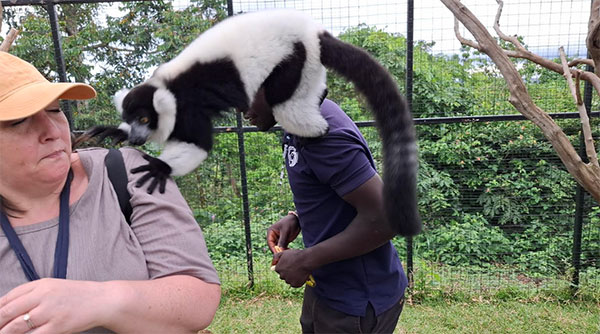
Researchers cite the COVID-19 pandemic—widely believed to have originated from wildlife trade—as a stark reminder of what can happen when humans and wild animals are brought together through unregulated commercial networks. Every illegal wildlife shipment that bypasses health controls, they warn, carries the potential to become the source of another zoonotic disease outbreak.
A growing body of evidence
The coalition is not alone in sounding the alarm. The report draws support from a growing body of independent investigations into online wildlife trafficking. Among them is the ECO-SOLVE project, whose research concluded that Facebook is not merely hosting illegal wildlife trade but concentrating, surfacing and amplifying it. Investigators found Facebook groups to be particularly high-risk environments where wildlife trafficking flourished with limited oversight and inadequate multilingual moderation.
Another investigation by Bellingcat and Mongabay exposed nine Indonesian Facebook groups with more than 70,000 combined members involved in illegal wildlife trading using coded language. Public exposure eventually prompted Facebook to remove the groups and several prominent accounts, illustrating both the scale of the problem and the platform’s ability to act when confronted with compelling evidence.
Meanwhile, law enforcement agencies continue to uncover links between online activity and wildlife crime on the ground. In May this year, authorities in Thailand arrested administrators of a Facebook group allegedly involved in selling African elephant ivory, seizing hundreds of kilograms of ivory products. During the same month, another raid targeted a trader accused of dealing in protected animal skins and body parts smuggled from neighbouring Laos. The types of products recovered, the report notes, closely resemble those routinely advertised on Meta’s platforms. Taken together, these investigations paint a picture of wildlife trafficking that is increasingly digital, increasingly organised and increasingly global.
A pledge and a test
Yet there is an irony at the heart of this story. Just six days before the Clicks That Kill report was released, Meta joined Google, Amazon, TikTok, eBay, Alibaba and several other technology companies at the United for Wildlife Business Forum in London, where they publicly committed themselves to eliminating illegal wildlife listings online and strengthening the use of artificial intelligence to detect and disrupt wildlife trafficking.
The commitments, developed in partnership with conservation organisations including WWF, TRAFFIC and the International Fund for Animal Welfare (IFAW), acknowledge that digital platforms have become a critical battleground in the fight against wildlife crime.
Christian Plowman, IFAW’s Global Wildlife Cybercrime Programme Manager, welcomed the commitments but cautioned that promises alone would not solve the problem. “What matters now is implementation, enforcement and accountability,” he said, adding that the organisations involved intended to hold technology companies to the standards they had publicly endorsed.
Those words now carry added significance. The coalition behind Clicks That Kill argues that Meta already possesses the technological capability to detect wildlife trafficking across multiple languages and scripts. What it lacks, they say, is not the technology but the institutional resolve to deploy it consistently against a form of crime that has quietly flourished on its platforms for years.
“This is the most comprehensive documentation of Meta’s role in wildlife trafficking ever assembled,” said Daniel Stiles, the report’s lead author. “The evidence is overwhelming. The question now is whether Meta, Congress, and the public will act on it.”
For the coalition, the path forward is clear. Meta must rigorously enforce its own Community Standards, deploy its artificial intelligence to detect wildlife trafficking before it spreads, ensure that no traffickers benefit from its monetization programmes, and remove repeat offenders permanently. Governments, meanwhile, should strengthen laws governing online wildlife crime and invest in open-source intelligence capacity to monitor trafficking across social media.
The report closes with an unmistakable warning. Wildlife trafficking is no longer confined to remote forests, hidden border crossings or clandestine markets. It now unfolds on smartphones and computer screens, often in full public view, powered by algorithms capable of reaching billions of people in seconds.
The same digital infrastructure that has revolutionized global communication has, according to the investigators, also revolutionized one of the world’s oldest criminal enterprises. Whether Meta ultimately becomes remembered as the company that enabled that transformation, or the one that finally used its immense technological power to dismantle it may depend on what it does next. For endangered species already pushed to the brink, conservationists warn, time is running out.