The Independent Uganda: You get the Truth we Pay the Price


Estonia’s digital state didn’t happen by accident and its lessons could help Uganda build smarter public services
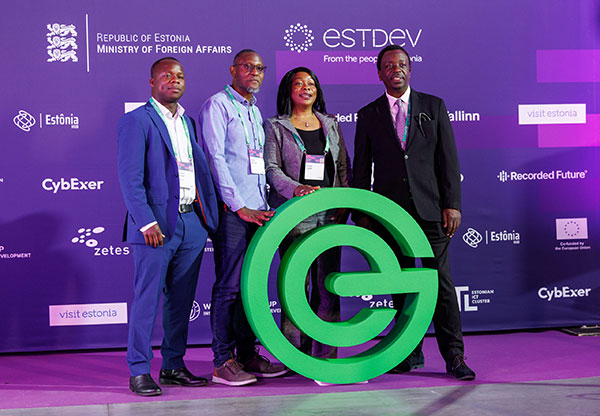
SPECIAL REPORT | RONALD MUSOKE | On a mild morning in late May 2023 in Tallinn, the medieval capital of Estonia perched along the Baltic Sea, nearly 600 policymakers, digital experts and government officials gathered to discuss the future of governance in the digital age.
The two-day e-governance conference, held under the theme “Digital Innovation as Catalyst for Social Change,” drew representatives from 90 countries. Among them was a Ugandan delegation keen to learn from one of the world’s most digitally advanced societies.
For Uganda and many other developing countries, Estonia’s story has become something of a reference point. In just three decades, the small northern European nation of about 1.4 million people has built a digital state that delivers efficiency, transparency and trust at remarkable scale. Today almost every government service; from filing taxes and accessing health records to registering a business; can be done online in minutes.
Much of this success stems from decisions taken soon after the country regained independence from the Soviet Union in 1991. At the time, Estonia faced enormous challenges such as; weak infrastructure, limited financial resources, and a bureaucracy still shaped by Soviet-era administrative systems.
Rather than attempting to modernize those outdated structures, Estonia’s leaders chose a different path. They opted to build a new Digital Public Infrastructure (DPI) from the ground up. Digital Public Infrastructure (DPI) refers to open, interoperable and scalable digital systems that allow citizens, businesses and governments to access services efficiently. It typically includes three core layers; digital identity, payments and secure data exchange, supported by tools such as digital document systems, authentication platforms and open application programming interfaces (APIs).
For Estonia, building these foundational systems became a national priority. Addressing the opening session of the conference in Tallinn on May 29, Estonia’s then Government Chief Information Officer, Luukas Kristjan Ilves—now an Advisor to Ukraine’s Ministry of Digital Transformation—captured the essence of the country’s digital transformation.
“Our goal is to make Estonia the best-run country in the world,” he told the delegates, emphasizing that public services should operate almost invisibly in the background, allowing citizens to focus on their daily lives rather than navigating layers of bureaucracy. “What Estonia lacks in size, it makes up in ingenuity,” Ilves added. He explained that modern government must increasingly function as a platform that works together with the private sector.
“The government can’t do this alone but must work as a platform for private sector partners, leveraging data and automation to improve education, healthcare and social inclusion while preparing Estonians for challenges such as the green transition and an ageing society.”
He also stressed that trust remains the foundation of Estonia’s digital governance model. “As we look forward toward the next decade of digital government, we will shepherd our main asset—our users’ trust and confidence—which contributes to near universal adoption of digital services.”
A leapfrog strategy
For many participants at the Tallinn conference, the key question was how a country that regained independence in 1991 with limited resources could emerge as a global leader in digital governance.
At the time of independence, Estonia’s GDP per capita stood at around US$2,800, compared with nearly US$23,800 in neighbouring Finland. The gap illustrated just how far behind the country was economically.
Yet Estonia’s post-independence leaders saw opportunity in that disadvantage. Former Estonian President Toomas Hendrik Ilves, who served from 2006 to 2016, is widely credited with championing the idea that digital technology could serve as a great equalizer. Instead of rebuilding a slow and cumbersome paper-based bureaucracy, Estonia chose to leapfrog traditional development stages and move directly into the digital era.
In the foreword to a book published by Estonia’s e-Governance Academy titled: “Twenty Years of Building Digital Societies,” former President Ilves reflected on how the seeds of Estonia’s digital transformation were planted much earlier in his life. “Once I learned as a 16-year-old that programming was a matter of logic and nothing mysterious, computers and digitalization simply became a part of life,” he noted.
By the early 1990s, he had become convinced that digitalization could form the backbone of Estonia’s national development strategy. “Digitalization was ultimately key to the national development, both economic and social, of an impoverished country coming out of half a century of foreign occupation,” he noted. For Estonia, digitalization was not simply about adopting new technology. It was a strategic decision to overcome the structural disadvantages inherited from decades of Soviet rule.
Education first: Preparing a digital generation
One of Estonia’s earliest priorities was education. Rather than focusing immediately on complex digital systems, the government began by investing in connectivity and digital literacy.
In the late 1990s, the “Tiger Leap” programme introduced computers and internet access into schools across the country. Teachers were trained, students learned programming skills, and public internet access points expanded rapidly. “In 1991 Estonia was a very poor country,” said Erika Piirmets, the Digital Transformation Advisor at the e-Estonia Briefing Centre. “We did not have the money to begin reconstructing the state, the processes were not in place, and legislation was lacking,” she told a group comprising mainly of African delegates during an information session on the sidelines of the conference.
She added that corruption was also a major challenge inherited from the Soviet system. “In addition, we had massive corruption as a legacy of the Soviet period,” she said. “It was not an ideal starting point but our leaders understood the internet was beginning to boom globally and could accelerate our development. So, we invested the little money we had in education.”
Banks, telecom companies and other private-sector actors joined the effort, helping expand internet connectivity and digital skills training across society. Over time, this produced a population that was comfortable using digital technology—a critical factor behind Estonia’s success in online public services.
The digital ID that powers everything
At the centre of Estonia’s digital ecosystem is the national digital identity card, which is now carried by almost every Estonian citizen. Embedded with a secure chip, the digital ID allows residents to authenticate themselves online and access a wide range of services.
These include signing legally binding documents, filing taxes, accessing medical records, opening bank accounts and starting businesses. The system is anchored in a unique personal identification number assigned to each citizen at birth. This number links an individual’s interactions with government institutions—from health and education to taxation and employment—throughout their lifetime. Digital signatures alone are estimated to save Estonia about 2% of its GDP annually by reducing paperwork and administrative costs.

More than 800 million digital signatures have been recorded since the system was introduced in 2002. According to Piirmets, the underlying principle is simple: government should never ask citizens to provide the same information more than once. “Re-using already existing data and not asking citizens to provide information all the time is key,” she said.
Security and transparency are also central to maintaining trust. “We believe in objective truth, not blind trust,” Piirmets explained. Estonia uses blockchain-based technology to create tamper-proof logs that record when and by whom data is accessed. If data were ever compromised, authorities would be able to determine exactly when the breach occurred and who accessed the information.
X-Road: The digital highway of government
The backbone that connects Estonia’s digital systems is known as the X-Road, a secure data-exchange platform that allows government databases to communicate with each other. Instead of storing all information in a single centralized database, the X-Road allows institutions to share information securely across different systems.
Kedi Välba, the CEO and Board member at Aktors ITL, whose firm helped in developing the platform, told African delegates during the information session that the goal was to provide citizens, public institutions and entrepreneurs with constant access to government services. “Citizens get information, state institutions access the databases according to their mandate, and entrepreneurs can carry out business operations online,” she explained.
The development of the X-Road relied heavily on collaboration between government agencies, private-sector companies and academic institutions. Banks and telecommunications companies played a major role in expanding digital literacy and internet access. Public internet access points increased from about 200 in the late 1990s to more than 700 within a few years. This ensured that citizens across the country could benefit from the digital services being developed.
Laura Kask, the CEO (Law & Strategy) at Proud Engineers, recalled that the digital ID system was initially met with scepticism. “People used to say the ID card was so worthless it could not even be used to scrape snow off a car,” she said during a presentation to African delegates attending the conference.
“But you have to outlive criticism,” she added. “It helps to have a clear vision, an implementation strategy and measurable goals.” Kask emphasized that digital transformation must involve the private sector as well as government. “Digitalization is never purely a public-sector exercise,” she said. “The private sector has to be part of the process.”
Making government services seamless
Today, the benefits of Estonia’s digital systems are visible in everyday life. “Starting a business, child birth (registration), buying a car, getting a driver’s licence, starting school, employment record, marriage, divorce, disability, change of residence, military service, retirement, death and succession, building houses, road crashes and crime data are all accessible,” Kask said.
Nearly all medical prescriptions are issued electronically, healthcare records are digitized and businesses can be registered online in a matter of hours. Tax filing provides one of the most frequently cited examples of the system’s efficiency.

About 98% of Estonians file their taxes online, often completing the process in just a few minutes thanks to pre-filled forms. Rather than forcing citizens to repeatedly submit documents to different agencies, the X-Road allows information to be securely shared across government systems. As Piirmets explained, the philosophy behind the system is straightforward. “Citizens should not have to be the government’s taxi drivers for their data,” she said.
Trusting government digital systems
Behind Estonia’s digital success lies an essential but often overlooked element: trust. Every time a government official accesses a citizen’s personal data, the action is recorded and visible to that citizen.
Daniel Erik Schär, Estonia’s then Ambassador-at-Large for Africa (now Estonia’s ambassador to South Africa), illustrated the importance of this transparency with a real-life example. In one case, a police officer attempted to access an ex-partner’s personal records without authorization. The breach was detected, investigated and the officer was dismissed.
“In Estonia, everybody owns their data,” Schär told the African journalists who were on an AU-EU D4D Hub fellowship to cover the conference. “Every transaction is registered and citizens have the right to challenge unauthorized access.” This transparency has helped maintain strong public confidence in government digital systems.
Kristina Mänd, a senior expert at the e-Governance Academy, said on the sidelines of the conference that Estonia’s digital governance model is rooted in democratic principles. “Digitalization serves democracy, not the other way around,” she said.
She warned that technology could easily become a tool for surveillance if not carefully designed. Mänd said Estonia’s trust culture dates back to the 1990s, when civil society organizations played an active role in governance and citizens became accustomed to participating in decision-making. “What has kept the trust is honesty and communication,” she said. “If something fails technologically, our public sector and businesses do not try to hide it.”
The next frontier: Artificial Intelligence
Estonia is now looking toward artificial intelligence as the next stage of digital government. Speaking during the conference, then Estonian Prime Minister Kaja Kallas said AI has the potential to make public services even more seamless. “We are already using artificial intelligence in some services and we see huge potential to make services more convenient,” she said.
For example, when a child is born, parents should not have to apply separately for multiple benefits. “With AI, application forms can be pre-filled and you just need to click a few boxes,” she explained. At the same time, Estonia remains cautious about protecting citizens’ privacy. “We are a rule-of-law country and every individual’s privacy is very important,” Kallas said.
Lessons for Uganda
For Uganda, Estonia’s experience offers important lessons but must be adapted to local realities. At the Tallinn conference, Dr. Aminah Zawedde (PhD), the Permanent Secretary at Uganda’s Ministry of ICT and National Guidance, emphasized that digital transformation involves more than technology.

“It is about culture, mindset and national values,” she said. “As we digitize, we must preserve our culture and ensure citizens’ trust is maintained.” Speaking on the Digital Government podcast on the sidelines of the conference, Dr Zawedde said Uganda has already made significant progress. For instance, she said more than 71% of government agencies now offer at least one digital service, including electronic tax filing, passport applications and business registration.
Digital platforms are also expanding into sectors such as health, education, agriculture and tourism. These initiatives, she said, have already saved the government an estimated five million working hours while improving Uganda’s ranking in the World Bank’s GovTech Maturity Index.
Digital Uganda Vision 2040
Dr. Zawedde noted that Uganda’s strategy is guided by the Digital Uganda Vision 2040 initiative. The programme aims to create a digitally enabled society supported by strong infrastructure, cybersecurity, online services and digital skills development.
The country’s rapidly growing mobile ecosystem provides a solid foundation for these efforts. Uganda now has more than 43 million mobile phone subscriptions, over 26 million internet users and about 33 million mobile money accounts. International partnerships are also playing a key role in Uganda’s digitalization drive. Collaboration with Estonia has helped Uganda strengthen areas such as secure digital identification, interoperable government systems and online public services.
Uganda has also embarked on updating its Government Enterprise Architecture and e-Government Interoperability Framework, first developed in 2021 by Estonia’s e-Governance Academy in collaboration with the National Information Technology Authority-Uganda (NITA-U).
According to a recent brief seen by The Independent, the renewal aims to ensure government systems can communicate effectively, enabling integrated digital services across ministries and agencies. By the end of the project, Uganda aims to have updated policy recommendations, technical guidelines, a sustainability roadmap, and a modernized implementation plan for digital governance.
A long journey ahead
Yet, despite these advances, digital transformation remains a long-term undertaking. Unlike physical infrastructure such as roads or bridges, the benefits of digital investments often take years to become fully visible.
Still, Estonia’s experience demonstrates that success depends less on size or wealth than on vision, leadership and sustained commitment. Three decades ago, Estonia was emerging from Soviet rule with limited resources. Today it is widely regarded as one of the world’s most advanced digital societies. For Uganda, the journey may take time, but Estonia’s experience provides a compelling example of how strategic investment in digital public infrastructure can help build a more efficient, transparent and inclusive state.
******
*Ronald Musoke’s reporting at the e-Governance Conference in Tallinn, Estonia (in May, 2023) was made possible thanks to the travel support of the AU-EU Digital for Development (D4D) Hub.