 The Independent Uganda: You get the Truth we Pay the Price


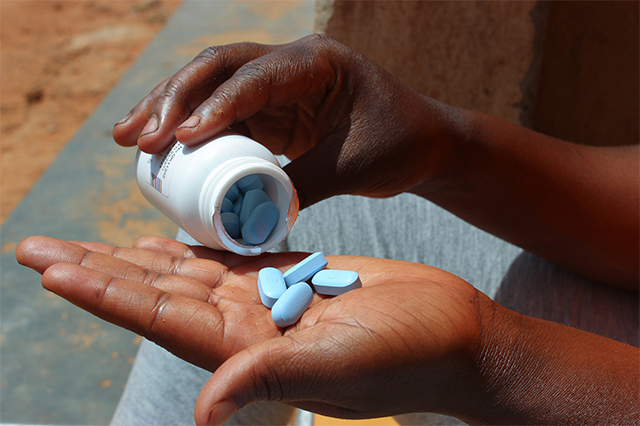
According to the World Health Organization, the African region remains home to nearly two-thirds of all people living with HIV globally
Kampala, Uganda | PATRICIA AKANKWATSA | As Uganda and other African countries seek to integrate HIV prevention into mainstream health systems, experts are warning that the shift could undermine progress against the epidemic if it weakens access for the populations most vulnerable to infection.
The warning emerged during an International AIDS Society (IAS)-organised panel discussion on HIV prevention integration, where health experts from Uganda, Rwanda, Ghana, Thailand and Australia debated how countries can build sustainable HIV programmes amid growing uncertainty over donor funding.
At the centre of the discussion was a question increasingly confronting governments across Africa: how can HIV prevention be absorbed into broader public health systems without losing the targeted approaches that have helped drive down infections?
“Integration becomes problematic when services are moved into underfunded, stigmatizing, or inaccessible public systems,” said Richard Lusibo Director General of the Uganda Key Populations Consortium.
Lusibo argued that the debate is particularly important for Uganda because key populations continue to account for a disproportionate share of new infections.
“Key populations account for approximately 55% of new HIV infections,” he said, adding that integration must not compromise the quality, accessibility and responsiveness of services for marginalized communities.
Balancing public health and efficiency
His concerns echo findings from a recent Lancet Global Health series on HIV prevention integration, which argues that successful integration requires balancing public health efficiency with the specialised services needed by populations facing stigma, discrimination and legal barriers. The research cautions that integrating HIV prevention into broader health systems should strengthen not replace community-led and differentiated service delivery models.
According to the World Health Organization, the African region remains home to nearly two-thirds of all people living with HIV globally. Yet many countries continue to rely heavily on donor funding to sustain prevention programmes, creating pressure to embed HIV services within national health systems.
For Professor Stephanie Toop of James Cook University in Australia, however, integration is often misunderstood.
“We need to distinguish between superficial integration and systemic integration,” she said.
According to Toop, many countries focus on integrating services at the point of delivery while leaving financing, procurement systems, workforce structures and health information systems fragmented.
“Mistaking add-on integration for system change is one of the biggest implementation mistakes countries make,” she said.
She also warned against assuming that integration means abandoning targeted interventions.
“The third mistake is assuming integration means eliminating targeted approaches for key populations.”
That distinction was reflected in Rwanda’s experience.

Speaking during the discussion, Gaetan Gatete from Rwanda Biomedical Center said the country’s HIV response has focused on strengthening existing public health systems rather than creating parallel structures.
“Our success stems from strengthening existing systems rather than creating parallel ones,” he said. Rwanda has relied heavily on community health workers, government leadership and digital health platforms to deliver HIV prevention services.
Gartheten noted that 72% of people accessing pre-exposure prophylaxis (PrEP) in Rwanda during 2023 received services through community-led clinics.
The statistic challenges a common assumption that integration requires shifting services away from communities and into health facilities.
Instead, Rwanda’s model suggests that community-led approaches can be institutionalised within national health systems while maintaining their ability to reach vulnerable populations.
Ghana’s experience offers another perspective. Dr. Kharmacelle Prosper Akanbong of the Ghana National AIDS Commission described HIV integration as a system-wide effort extending from community programmes to district hospitals.
“Our integration spans from community health programs to district hospitals, with services available at every level of the health system,” he said.
He explained that Ghana’s approach combines clinical and programmatic integration, supported by integrated information systems and coverage under the national health insurance scheme.
For many observers, Ghana’s experience highlights one of the most difficult aspects of integration: financing.
While countries across Africa have integrated HIV services operationally, funding systems often remain fragmented and heavily dependent on donor support.
That concern was echoed by Rena Janamnuaysook of Thailand’s Institute of HIV Research and Innovation. “Integration must be accompanied by domestic financing,” she said. “Integration should not mean standardization of service delivery.”
Janamnuaysook argued that countries should preserve differentiated models that give service users choices while formally recognising community-led providers within national health systems.
The comments align closely with recommendations from the Lancet Global Health series, which argues that effective HIV prevention integration depends on embedding prevention within public health systems while retaining targeted approaches for populations at greatest risk.
Integration still necessary
As donor funding pressures intensify, panellists agreed that integration is becoming increasingly necessary. But they also stressed that the process must be carefully managed.
The consensus, according to the panel, was that governments should align domestic financing with HIV prevention goals, move community-led services from the margins to the centre of national policy and ensure that integration strengthens rather than weakens access for vulnerable populations.
For Uganda, that balancing act may determine whether recent gains against HIV can be sustained.


It’s interesting to think about how access and integration can clash in healthcare. What kinds of solutions are they suggesting?
Strong reminder that healthcare integration should not reduce access for people who rely on HIV services. Convenience only works when essential treatment and support remain easy to reach. What safeguard best protects continuity of care during service integration?