The Independent Uganda: You get the Truth we Pay the Price


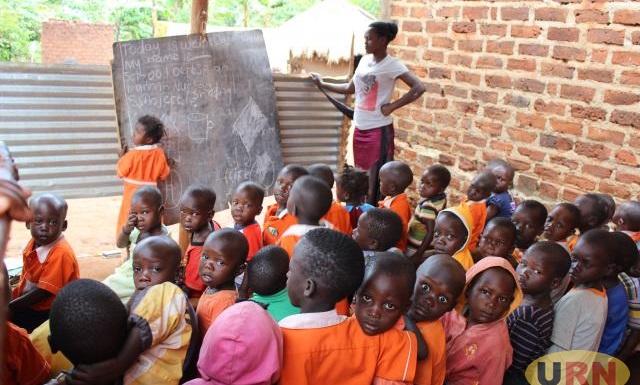
Kampala, Uganda | URN | The government is set to establish, run, and manage pre-primary or Early Childhood Care and Education (ECCE) centres, particularly in underserved rural communities, marking a significant shift in the country’s approach to early learning.
For decades, pre-primary education has largely been left to parents and private operators. The 1992 Government White Paper on Education and the Education Act of 2008 limited the state’s role to teacher training, setting standards, and light regulation, leaving families and private providers to shoulder both responsibility and costs.
Brighton Baruhagare, the Commissioner for Policy and Research at the Ministry of Education and Sports, says this approach has left large parts of the country, especially rural parishes, with little or no access to organised early learning.
He added that the Ministry of Education and Sports has finalised Uganda’s first comprehensive Early Childhood Care and Education (ECCE) Policy, which significantly expands the government’s direct involvement in the sector.
Baruhagare explained that the policy assigns government greater responsibility, including directly operating ECCE centres in underserved areas that may not attract private investment.
Under the new framework, the government will construct the centres, deploy teachers and support staff, and provide the necessary facilities and learning materials. In urban areas, some public schools have already established privately run early childhood centres, a practice that will continue, albeit now guided by clearer policy direction.
In addition to state-run facilities, the policy introduces public-private partnerships. In areas where full government provision may not yet be feasible, the state will collaborate with private providers through grants and incentives to subsidise services and expand access.
According to available statistics, at least 80 percent of children aged 3-5 years currently lack access to organised ECCE services, despite the critical role these early years play in shaping cognitive, social, emotional, and physical development.
Data from the National Population and Housing Census 2024 Community Module shows that although 21,905 pre-primary schools exist nationwide, 27 percent of parishes, mostly in rural areas, have no pre-primary facility at all. Regions such as Karamoja, Sebei, and Bugisu are among the most affected.
Over the years, educationists and policymakers have called for universal and compulsory early childhood education, with proposals for at least one year of free and mandatory pre-primary schooling to eliminate financial barriers and ensure equal opportunity for all children.
A joint study by Human Rights Watch and the Initiative for Social and Economic Rights (ISER), titled “Lay A Strong Foundation for All Children,” highlights how high fees in private pre-schools create exclusion, particularly for children from low-income and rural families.
In urban centres such as Kampala, pre-primary fees can reach 1.75 million Shillings per child per term, about five times higher than primary school fees and even exceeding some university tuition costs. In contrast, rural districts like Nakapiripirit charge as little as 5,000 Shillings, but limited availability of schools leaves many children without access.
Despite these challenges, the Ministry acknowledges that it currently lacks the resources to implement universal ECCE. But beyond expanding access, the new policy introduces several structural reforms.
“It clearly defines and separates the roles of teachers and caregivers at the pre-primary level. While teachers are expected to meet higher qualification standards, caregivers, who focus on nurturing and daily care, will receive targeted training without necessarily requiring university degrees,” Baruhagare said. He emphasised the importance of understanding these distinct roles.
The policy also bans boarding facilities in early childhood centres. It will be illegal for institutions to keep children aged 0 to 6 overnight, a move aimed at strengthening child protection and ensuring young children remain under family care.
Additionally, the policy categorises early childhood education into two age-specific levels: 0-3 years, focusing on care, stimulation, and holistic development; and 3-6 years, which introduces more structured learning to prepare children for primary school.
The Ministry will also assume full responsibility for registering and regulating ECCE centres through a centralised system, aligning the sub-sector with other levels of education and shifting oversight away from local governments.
Joseph Kabanda, the National Vice Chairperson of the Network for Early Childhood Development Actors Uganda (NECDA), welcomed the policy as long overdue and a step forward in improving early childhood services. He said it would clarify roles across the sector and address concerns about poor standards in some centres.
However, Kabanda expressed concern that centralised registration could place pressure on providers, especially those serving children aged 0-3. Many such centres are community-based, operate with limited resources, and sometimes run from private homes, requiring time to meet new standards.
State Minister for Primary Education Joyce Moriku Kaducu said the policy provides a clear national direction for early childhood education and strengthens coordination among stakeholders. She noted that it addresses long-standing gaps, including learner safety, transport, and standards of care.
Kaducu added that the policy will guide service delivery and monitoring, with an emphasis on improving quality and accountability. The Ministry of Education is expected to officially launch the policy next week.