The Independent Uganda: You get the Truth we Pay the Price


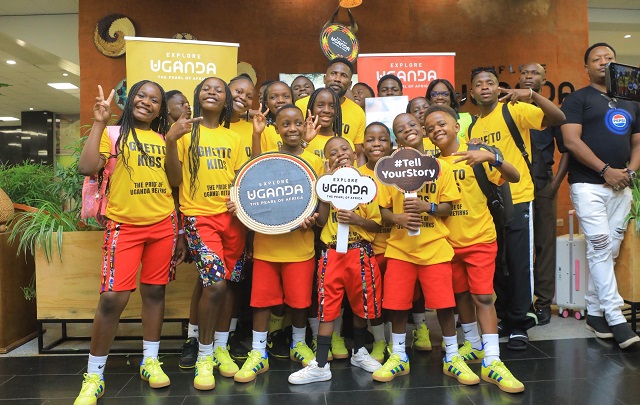
Kampala, Uganda | URN | For a dance troupe that emerged from the streets of Kampala’s Katanga neighbourhood, the FIFA World Cup 2026 final was an unlikely stage.
But when the Ghetto Kids performed at the tournament’s halftime show alongside Shakira and Burna Boy, their story travelled far beyond Uganda.
Now back home, the young dancers are at the centre of another question: whether Uganda can turn such moments of global visibility into a more lasting story about the country, its culture and its tourism potential.
The Uganda Tourism Board (UTB), which hosted a reception for the troupe after their return to Kampala, sees the dancers as part of a wider effort to use Ugandan creativity to shape the country’s image abroad.
For years, Uganda’s tourism marketing has largely revolved around wildlife, landscapes and adventure. But the country’s growing creative industry offers another way of presenting Uganda to international audiences through music, dance, food, fashion and the people behind them.
UTB Chief Executive Officer Juliana Kagwa said the Ghetto Kids’ World Cup appearance built on work the tourism body had already been doing with the troupe.
“In terms of our local talent and people that have been already positioning Uganda as a country full of vibe, full of joy, dance, music, food, and culture, some of the content that the Ghetto Kids produced ahead of going to the World Cup was in direct service of that,” Kagwa said.
The World Cup, however, gave that message an audience that a tourism campaign would struggle to buy.
“Our ambassadors, our influencers, and these young Ugandans got this opportunity, world visibility on the biggest football platform in the universe, literally speaking,” Kagwa noted.
The significance for tourism lies in what happens after the cameras leave.
Uganda is preparing to co-host the 2027 Africa Cup of Nations with Kenya and Tanzania, giving the country another opportunity to attract international visitors and present itself beyond the football tournament.
Kagwa argues that football should only be the entry point.
The Ghetto Kids represent youth. Uganda is vivacious. We have energy, which the Ghetto Kids represent.
“For us, AFCON 2027 is so much more than the football. You come for the football, you stay for the wildlife, you stay for the landscape, you stay for the heritage, you stay for the culture, you stay for the people,” Kagwa said.
That approach reflects a broader challenge facing Uganda’s tourism industry: how to make visitors stay longer, spend more and engage with the country beyond its most established attractions.
Culture can play a role in that equation.
The Ghetto Kids offer one example of how contemporary Ugandan culture can travel internationally without being separated from the place where it was created.
Their story began in Katanga, but social media helped take their performances to audiences around the world. The World Cup appearance represents the latest and most visible stage of that journey.
For the dancers themselves, however, the significance is more personal.
Dauda Kavuma, manager of the Ghetto Kids, described the performance as a defining moment.
“It feels good because that was my first time. We got the FIFA World Cup finals, the biggest stage in the whole world. I was feeling good. I was so excited. That was a dream come true,” he said.
Ivan, one of the troupe’s dancers, recalled the atmosphere inside the stadium.
“It was fun. The experience was good. There were a lot of lights. People were cheering. There were very many people who were at the stadium, being at the World Cup halftime show performing before a lot of celebrities. It was so nice, and it hits different.”
The bigger opportunity now lies in what the troupe does with that visibility — and what Uganda does with it.
Kavuma said the group is prepared to work with the tourism sector to promote the country.
“We are very ready and open to partner with the Uganda Tourism Board or any tourism industry in Uganda to promote our country because we are ready. We showed them that as we got the chance to perform for the World Cup, many people now have their eyes on Uganda in a positive way,” he said.
That positive attention, however, does not automatically translate into tourism.
For the country to benefit, international curiosity has to be converted into interest in actual destinations, experiences and products. That requires coordination between tourism agencies, the creative industry, hospitality businesses and the government.
The Ghetto Kids’ story also points to an underused resource in Uganda’s tourism strategy: its young creative population.
The dancers have shown that Uganda can produce cultural content capable of reaching global audiences without passing through traditional entertainment centres such as Lagos, Nairobi or Johannesburg.
Their World Cup appearance therefore represents more than a celebratory homecoming.
It is a test of whether Uganda can use the global appeal of its creative talent to tell a broader story about itself one that includes wildlife and landscapes, but also the music, dance, energy and people that make the country distinctive.
With AFCON 2027 approaching, Uganda will have another global platform.
The opportunity is not simply to bring people to the country for football.
It is to give them enough reasons to stay