The Independent Uganda: You get the Truth we Pay the Price


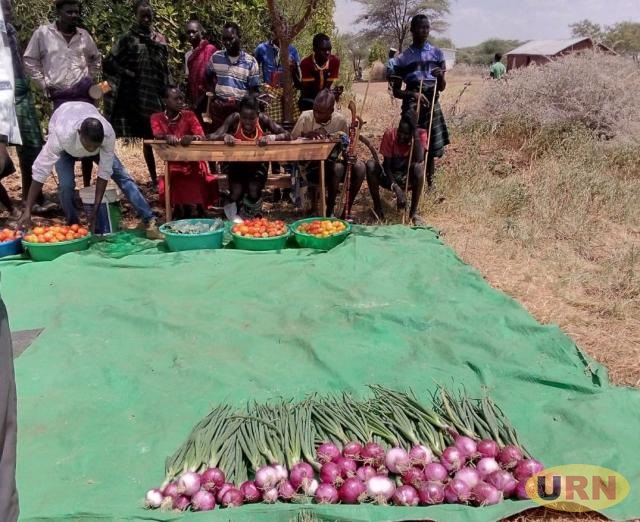
Moroto, Uganda | URN | Consumers in Karamoja are increasingly questioning the safety of vegetables brought into the region from outside, amid concerns that they have little information about how the produce is grown, what chemicals are used, and whether adequate safety controls are followed before the food reaches local markets.
The concern comes as a new global study estimates that between 402 and 433 million people suffer unintentional acute pesticide poisoning every year, with about 11,000 deaths annually. The study, published in Frontiers in Public Health, says farmers and farm workers bear the greatest burden, with East Africa among the regions recording high estimated numbers of non-fatal cases.
In Karamoja, the concern is particularly pronounced because much of the fresh produce consumed in the region is brought in from other parts of the country. Tomatoes, eggplants, onions, cabbage, and other vegetables are commonly transported to Karamoja from the Sebei, Bugisu, and Teso sub-regions, leaving consumers with little knowledge about the production practices used before the produce reaches Moroto and other markets.
For Simon Osege, a resident of Kakoliye Ward in Moroto Municipality, the concern became personal after he bought eggplant from Moroto Central Market and later developed stomach problems after eating it. Osege said he followed up with the seller, who told him the vegetables might have been sprayed shortly before harvesting and taken directly to the market.
“When I followed up with the seller, she told me the eggplant might have been sprayed just before harvesting and taken to the market. She advised me to always wash it thoroughly before cooking. From that time, I started washing my vegetables thoroughly because I am not sure of the chemicals used,” Osege said. Vegetable vendors in Moroto say they face the same information gap.
Alice Akol, a tomato vendor at Moroto Central Market, said traders normally receive the vegetables after they have already been harvested and packed for transportation. “We are not sure how they are produced in the farmlands. What I know is that farmers use chemicals for spraying, especially tomatoes, because they can last longer before getting damaged.” Akol said traders have noticed that tomatoes now remain fresh for longer periods than they did in the past, although they do not know which chemicals or production practices may be responsible.
“In those early days, tomatoes would rot very fast, but now you can even keep them for a week so long as you keep them well,” she said. She said vendors largely rely on washing the produce before cooking because they have no other way of establishing whether it contains harmful chemical residues. “We believe in washing it before cooking because we know there are chemicals, and we have not yet experienced the effect,” Akol added.
Moroto District Agricultural Officer Francis Okwii said the district is concerned about the safety of vegetables transported into the region. “We have been thinking about the issue of vegetables transported from other regions. Although we have not yet established the mode of their production, we are concerned about their safety when consumed by the community. They are displayed in the markets, and we cannot tell the kind of chemicals used in their production,” Okwii said.
Okwii said the district is meeting this week to explore possible measures for regulating and inspecting vegetables brought into Karamoja from other regions.
The concerns emerged during the 6th Cohort of the Agroecology School for Journalists and Communicators organised by the Eastern and Southern Africa Small-Scale Farmers Forum-ESAFF Uganda. The 12-week fellowship brings together journalists from across Uganda to strengthen reporting on agroecology, food systems and the experiences of small-scale farmers.
ESAFF Uganda National Chairperson Hakim Baliraine said journalists have an important role in helping consumers understand where their food comes from and how it is produced. “Consumers deserve to know where their food comes from and how it is produced. They should be able to distinguish agroecological produce from conventional products, giving consumers confidence in the safety of what they buy,” Baliraine said.
ESAFF Uganda National Coordinator Nancy Mugimba urged journalists to look beyond the food on the plate and examine the systems through which it is produced. “We had our way of producing food. People call it traditional, but it started vanishing, and we started seeing complexities in communities. We want to add a brick to what is being reported and also clarify facts on different food production systems in Uganda. We are counting on you to report on the system that keeps us healthy,” Mugimba said.
For regions such as Karamoja that depend heavily on food supplies from elsewhere, agriculture and food-safety advocates say this means tracing the journey of food from the farm to the consumer — including the chemicals applied, the condition of the soil and water, and how produce is handled after harvesting. Senior Agriculture Officer at the Ministry of Agriculture, Animal Industry and Fisheries, Sir Bob Sunday George, said equipping journalists with accurate information is essential to improving public understanding of food systems.
“Equipping journalists in Agroecology is a blessing to this country. A journalist has the responsibility to inform the public, and such a person should be equipped with accurate information,” he said. The global study underpinning the renewed concerns reviewed available evidence on unintentional acute pesticide poisoning and estimated 402–433 million cases annually, including about 11,000 fatalities. The researchers said the findings highlight the need for stronger measures to reduce exposure, particularly among farmers and farm workers.
The researchers also noted that highly hazardous pesticides should be phased out as part of efforts to reduce the global burden of poisoning. (Frontiers) In Karamoja, the challenge is not only pesticide exposure among farmers but also the limited ability of consumers and local authorities to trace how food entering the region has been produced. As the district considers stronger inspection of vegetables brought in from other regions, residents and traders say better information, regulation and traceability will be necessary to assure consumers that the food reaching their tables is safe.