 The Independent Uganda: You get the Truth we Pay the Price


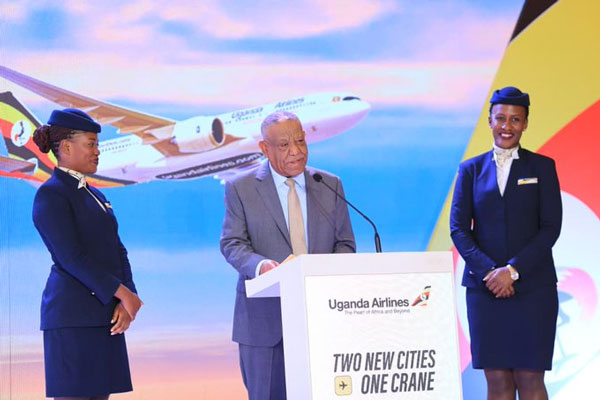
Five months into the job, Ato Girma Wake is quietly rebuilding Uganda Airlines from the inside out
COMMENT | DEREK NSEKO | When Ato Girma Wake accepted the role of acting chief executive officer of Uganda Airlines five months ago, he inherited something few airline executives would envy.
An airline with ambitious long-haul aspirations but a regional network struggling to support them. Aircraft sitting on the ground instead of generating revenue. Expensive wet-leased aircraft are keeping the schedule alive. A business carrying the burden of expectation while trying to rebuild public confidence.
For months, much of the conversation around Uganda Airlines has centred on fleet expansion. The airline’s landmark Boeing order dominated headlines, with attention naturally drawn to the arrival of eight new aircraft beginning in 2032.
But listening to Wake during his first major media appearance as chief executive, it became clear that his immediate priorities lie elsewhere.
Before an airline can become profitable…Before it can grow…Before it can compete…It first has to become reliable. That, more than anything else, defines the first chapter of Uganda Airlines’ turnaround.
Reliability before profitability
One statistic from Wake’s interview explains almost every challenge the airline has faced over the past year.
When he arrived, nearly 60 percent of Uganda Airlines’ fleet capacity was unavailable. It is an extraordinary figure. Aircraft that are grounded cannot generate revenue. They cannot carry passengers, build schedules or feed long-haul services. Instead, they force airlines into expensive alternatives.
Uganda Airlines had little choice but to rely on wet-leased aircraft to preserve its schedule. The alternative would have been widespread cancellations and further damage to passenger confidence.
But wet leasing comes at a significant cost. Wake noted that operating wet-leased aircraft is almost three times more expensive than operating aircraft under dry lease arrangements, where the airline provides its own crews and operational support.
The economics are simple. Every month spent relying on wet leases erodes profitability. Yet cancelling flights would have been even more damaging. In many ways, Uganda Airlines spent the last year paying a premium simply to remain operational.
Now that equation is beginning to change. The airline’s Airbus A330 is expected back in service in January. A grounded CRJ is due to return within weeks. Three additional engines are currently undergoing maintenance under a contract programme, allowing aircraft to gradually return to service as scheduled maintenance cycles are completed.
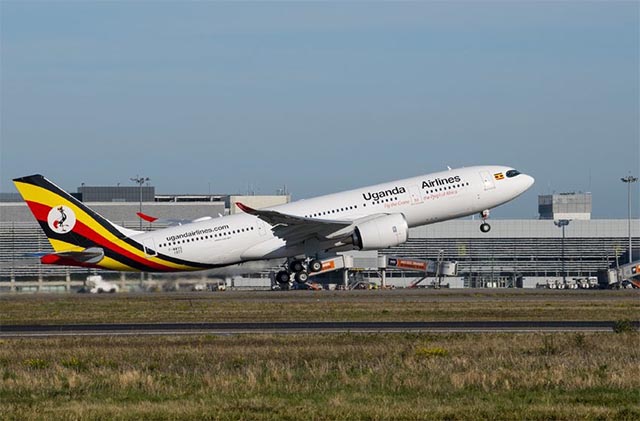
As capacity returns, dependence on wet leasing should reduce. Lower costs. More aircraft available. Better utilisation. Improved schedule reliability. In aviation, these are not isolated improvements. They reinforce one another.
The hidden science of airline schedules
Most passengers think of flights based on price or departure time. Airline executives think very differently. They think in banks.
A banking system is one of the most important concepts in network aviation, yet it remains almost invisible to the travelling public. Instead of aircraft arriving randomly throughout the day, airlines deliberately schedule arrivals within narrow windows. Shortly afterwards, another wave of departures allows passengers to connect quickly onto onward flights.
This is how the world’s successful hub airlines operate. Ethiopian Airlines has perfected it in Addis Ababa. Emirates built Dubai around it. Qatar Airways transformed Doha through the same principle.
Wake wants Uganda Airlines to build exactly that structure in Entebbe. The objective is straightforward. Passengers arriving from Nairobi, Juba, Kinshasa, Lagos or Johannesburg should seamlessly connect onto London, Mumbai or Dubai.
Likewise, long-haul passengers arriving in Entebbe should disperse efficiently across East and Central Africa. Regional routes are therefore no longer standalone businesses. They become feeders.
Long-haul routes are no longer isolated destinations. They become magnets for regional traffic. The network begins functioning as a single organism rather than a collection of independent flights. That is where airline economics begin to change.
Why frequency matters more than domination
One of Wake’s more revealing observations challenged a common misconception about airline competition. There is enough cake for everyone, he implied. It is an unusually pragmatic philosophy in an industry often obsessed with market share.
Airlines frequently assume success comes from dominating a route. In reality, passengers, particularly business travellers, often value choice more than dominance. More frequencies create flexibility. Flexibility attracts traffic. Traffic supports higher frequencies. Higher frequencies improve connectivity. Connectivity strengthens the hub. It becomes a virtuous cycle.
UGANDA AIRLINES.
The turnaround strategy is about rebuilding the foundations first. Operations, connectivity, fleet utilisation and network discipline.Here’s my analysis of the blueprint taking shape.https://t.co/AuwnJefh4s pic.twitter.com/8BSfNAAJIV
— Derek Nseko ✈ (@DerekNseko) August 6, 2026
Wake’s strategy appears less concerned with defeating competitors than with making Uganda Airlines a stronger participant within a growing regional market. If East African aviation expands, there is room for multiple successful airlines. The objective is not monopoly. It is relevance.
Nigeria is not the problem. The network is.
Nigeria illustrates Girma Wake’s thinking particularly well. On paper, Lagos should be one of Uganda Airlines’ strongest markets. Africa’s most populous country generates substantial passenger and cargo demand. Yet the route has underperformed expectations. Wake’s conclusion is not that Nigeria lacks potential. Rather, the operation around it needs refinement.
For now, Accra will support Lagos through a tagged operation, improving aircraft utilisation while the schedule matures and reliability improves. Ultimately, both destinations are expected to operate independently.
Perhaps more interestingly, Wake believes Nigeria requires something larger than the aircraft currently serving the market. Not simply because of passenger demand. Because of cargo.
Too often, route performance is judged solely by passenger numbers. Modern airlines evaluate total revenue. In markets such as Lagos, freight can fundamentally alter route economics. The right aircraft is therefore not simply about adding seats. It is about maximising the commercial potential of the route.
Southern Africa deserves another chance
Wake was equally candid about the airline’s southern African operations. Routes such as Lusaka and Harare have often been viewed as disappointing.
His assessment is more nuanced. The destinations themselves were not necessarily the problem. The schedule was.
Without properly timed onward connections to long-haul services, these routes struggled to benefit from sixth-freedom traffic, with passengers connecting through Entebbe between two foreign countries.
Viewed independently, they appeared weak. Viewed as part of a connected network, their economics change considerably. This reflects one of the central themes emerging from Wake’s strategy. Individual routes rarely succeed or fail in isolation. They succeed as components of a network.
The aircraft still matters
Network strategy alone cannot overcome poor fleet economics. Wake was refreshingly direct when discussing Johannesburg. A CRJ operating to South Africa, he explained, would struggle financially even if every seat were occupied. It is simply the wrong aircraft for the mission.
Aircraft size, operating costs, cargo capability and range all influence profitability. A full aircraft does not automatically produce a profitable route.
The planned arrival of dry-leased aircraft over the coming months should begin addressing that imbalance, providing Uganda Airlines with equipment better matched to its network while significantly reducing operating costs compared with existing wet leases.
Building traffic before Boeing arrives
Perhaps the most overlooked aspect of Uganda Airlines’ long-term strategy concerns timing.
The airline’s newly ordered Boeing fleet will not begin arriving until 2032, when the first 737 MAX aircraft enter service. The Boeing 787s are expected to follow in 2033.
For some observers, that timeline appears distant. Wake views it differently. Traffic cannot wait for aircraft. It must be built beforehand.
Over the next several years, Uganda Airlines intends to use leased aircraft to strengthen schedules, improve reliability and grow passenger demand. By the time the Boeing fleet arrives, the network should already exist.

Passengers should already trust the airline. Routes should already be mature. The new aircraft become an enabler of growth rather than a solution in search of demand. It is a subtle but important distinction.
Too many airlines order aircraft first and hope traffic follows. Wake appears determined to reverse that sequence. Build the market. Then increase capacity.
Playing the long game
Wake also offered an important reminder often forgotten in public discussions about airlines. New routes rarely become profitable immediately.
Airline executives generally expect routes to require one or even two years before they mature. Passengers must become familiar with the service. Travel agents need confidence in the schedule. Corporate contracts take time to develop. Connecting traffic gradually builds. Reliability establishes reputation. Only then do the economics begin to stabilise.
Expecting immediate profitability from every new destination misunderstands how network airlines grow. Patience is not a weakness. It is part of the business model.
The next two years
Perhaps the most important thing Girma Wake said had nothing to do with Boeing. Or Lagos. Or London. It was about time. Again and again, his comments returned to the next two years.
That is the window during which Uganda Airlines must restore operational reliability, rebuild regional connectivity, replace expensive wet leases with more economical dry leases, recover grounded capacity and strengthen Entebbe as a connecting hub.
If those foundations are successfully rebuilt, the Boeing deliveries later this decade will arrive at an airline prepared to use them.
If they are not, new aircraft alone will change very little. There is a temptation to judge airline turnarounds through quarterly profits, new route announcements or aircraft orders.
But listening to Girma Wake, it became clear that Uganda Airlines is attempting something more fundamental. It is rebuilding the architecture of an airline. Reliable operations. Disciplined fleet management. Connected schedules. Appropriate aircraft. Network economics.
Only once those foundations are secure does profitability become sustainable. Whether the turnaround ultimately succeeds remains to be seen.
But five months into his tenure, one thing is becoming increasingly clear. For the first time in several years, Uganda Airlines appears to be following a coherent strategic sequence.
Restore the operation. Build the network. Grow the traffic. Lower the costs. Then scale.
The turnaround, if it comes, will not begin with the arrival of a Boeing in 2032.
It has already begun.
*******

Derek Nseko.Aviation analyst & strategist | Founder and Publisher – Airspace Africa
SOURCE: dereknseko.substack.com
*****
RELATED STORY


Good news from Uganda. Uganda governement should also request the Ethiopian to send its civil servants to Uganda to teach Ugandans how the public service should be ran.